Day 9: FAVOURITE MOVIE SCORES
I've always loved film scores. I believe they can add a lot to power of specific scenes. It's tough to only come up with one, so I'll list a few that immediately come to mind.
FILM SCORES
-Nick Cave for The Assassination of Jesse James by the Coward Robert Ford (2007)
-Howard Shore for The Lord of the Rings Trilogy (2001-2003)
-Trevor Jones & Randy Edelman for The Last of the Mohicans (1991)
-John Williams for Raiders of the Lost Ark (1981) and Indiana Jones and the Last Crusade (1989)
-Hans Zimmer for Gladiator (2000)
-James Horner for Titanic (1997)
-James Horner for Braveheart (1995)
-James Horner for Legends of the Fall (1994)
-Michael Kamen for Robin Hood: Prince of Thieves (1991)
-Gustavo Santaolalla for Brokeback Mountain (2005)
-Abel Korzeniowski & Shigeru Umebayashi for A Single Man (2009)
-Ennio Morricone for Cinema Paradiso (1989)
Saturday, September 11, 2010

Saturday, September 4, 2010
Movie Review: Scott Pilgrim vs. the World

Scott Pilgrim vs. the World (2010)
Directed by: Edgar Wright
Starring: Michael Cera, Mary Elizabeth Winstead, Kieran Culkin, Ellen Wong, Anna Kendrick, Alison Pill, Brandon Routh, Mae Whitman, Chris Evans and Jason Schwartzman
This review has been a long time coming, considering I saw this film nearly three weeks ago. Better late than never, I suppose.
When I first saw the trailer I didn't understand what all the pre-release hype was over. Sure, it looked pretty fun and I knew it was based on a graphic novel series, but it didn't seem like that big of a deal. I'll be the first to admit that the main reason I eventually went to see Scott Pilgrim vs. the World is because it was set in Toronto. It's so rare for a non-Canadian, mainstream Hollywood film to actually let Toronto play Toronto, as opposed to Chicago (in Chicago) or Baltimore (in Hairspray).
Based on the comics by Canadian Bryan Lee O'Malley and directed by Brit Edgar Wright (Shaun of the Dead, Hot Fuzz), the story revolves around 22 year old Scott Pilgrim (Michael Cera). All you really need to know about Scott is pretty straightforward: He's from Toronto. He plays bass for his band Sex Bob-omb. He lives with his gay roommate, Wallace Wells (Kieran Culkin). He's dating a high-schooler named Knives Chau (Ellen Wong), but he's in love with an American girl, named Ramona Flowers (Mary Elizabeth Winstead), who recently moved to Toronto. However, Scott soon learns that, in order for him to date Ramona, he first has to defeat all seven of her "evil" exes. Despite Ramona's obviously bad taste in men (and one woman) aside, Scott thinks she's worth the battle.
That's literally all a viewer needs to know about the plot. Scott Pilgrim isn't so much a film as a series of colourfully vibrant vignettes. Scenes move at a rapid pace and not all of them actually add anything of substance to the plot; however, this isn't necessarily a bad thing. If you are looking for vivid characterizations or a complex plot, you aren't looking in the right direction. Scott Pilgrim plays out the way one would expect great summer entertainment to play out: action sequences, comedy, romance and the battle of good vs. evil. What's not to like?
For Torontonians, there are plenty of in-jokes and famous sites that only we may fully appreciate: from Casa Loma to Honest Ed's to Pizza Pizza to Second Cup and the prominent use of the TTC, the film isn't so much a "love letter to Canada" as some international critics have been saying, but a "love letter to Toronto." Our city was transformed into a winter wonderland full of swirling colours, fierce battles between local garage bands and, apparently, a safe haven for people with the ability to kick ass.
The cast is what makes Scott Pilgrim work so well. Granted, Michael Cera is essentially playing another version of himself, yet there was something a little more ironic about his performance this time around. It felt more like a send-up of his earlier, endearingly awkward roles, as though Cera himself realizes he's been typecast one too many times. The supporting cast is all strong, especially Kieran Culkin as Wallace and Ellen Wong as Knives. With the force of both of their comedic powers, they almost steal the entire film out from under Cera's feet. Wong, a Scarborough native making her film debut, is almost impossibly adorable as the deceivingly innocent girlfriend to Cera's Scott. She plays Knives as a teenage neurotic; a hyperventilating mass of energy, love and devotion. You almost expect her to explode into a million pieces at any moment. As Scott's best friend and gay roommate, Wallace, Culkin is so wonderfully hilarious you almost wish he got to be more of sidekick to Scott. His droll, dry sarcasm and one-liners work so well simply because Culkin knows how to play the character. In the hands of anyone else, Wallace could have been an annoyingly smart-ass stereotype. I haven't seen Culkin this good since Igby Goes Down.
The only two characters that really suffer from lack of great lines and anything resembling character motivations is Ramona and Kim Pine. Mary Elizabeth Winstead doesn't do much other than scowl and change her hair colour. It's a little hard to understand what exactly Scott sees in her in the first place. Kim Pine (played by Alison Pill, who is usually wonderful in smaller roles), on the other hand, is one of Scott's ex-girlfriends and all she does is scowl, play the drums and pretend to shoot herself in the head. She's probably the most pointless character in a film full of secondary characters running around, competing for attention.
The movie is, essentially, a live action video game, albeit one from the 1980s (think Super Mario Brothers or Pac-Man). I'm no gamer, but the majority of the references are funny and clever enough for anyone with a knack for pop culture to pick up on. Who wouldn't love a movie that also includes the KAPOW! of punches thrown, a la the 1960s Batman. Plus, any movie that includes defeated villains exploding into a pile of loonies and toonies earns extra brownie points in my book. If nothing else, it's movie made by geeks for geeks.
Tuesday, August 24, 2010
30 Day Movie Meme: Day 8
Day 8: FAVOURITE OPENING/CLOSING CREDITS
When I watch films at home I tend to fast-forward opening credits. There are some exceptions to the case, though. When a director makes a statement, either visually or in terms or story or character, I will stop and take notice and watch the credits every. single. time.
Some of my favourite opening credits are:
-A Clockwork Orange (1971) for scaring the shit out of me and being perfectly Kubrickian. Malcolm McDowell + a glass of milk = evil
-Whatever Happened to Baby Jane? (1962) for managing to put a car crash and a cracked glass doll into the same sequence
-Psycho (1960) for its score and the fact that it was ahead-of-its time
-Ed Wood (1994) because it couldn't be more Ed Wood if it wanted to be
-Amelie (2001) for its whimsical introduction of its heroine as a young child
-Se7en (1995) for its success in setting up the dark, ominous tone of the film
-Catch Me If You Can (2002) for animating the adventures of the anti-hero at the centre of the story
-Watchmen (2009) for simply being awesome and integrating actual historical footage into the sequence with Bob Dylan on the soundtrack
Sometimes, though, it's simply just a matter of "less is more". One of my favourite opening credits is Fargo (1996). Bright blue sky. Dead of winter. White snow. A car passing the camera's frame. The word Fargo in black against a screen of blue. Perfect choice of music. And, so starts the Coen Brothers masterpiece.

Some of my favourite closing credits are (although there aren't as many):
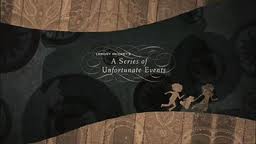
-Lemony Snicket's A Series of Unfortunate Events (2004) for its wonderful, old-school animation that makes you wish the film itself had been filmed that way

-Moulin Rouge! (2001) from being all overly melodramatic
-The Adventures of Priscilla, Queen of the Desert (1994) for featuring a drag queen lip-synching to Vanessa Williams and being a perfect conclusion to an outlandish little film
When I watch films at home I tend to fast-forward opening credits. There are some exceptions to the case, though. When a director makes a statement, either visually or in terms or story or character, I will stop and take notice and watch the credits every. single. time.
Some of my favourite opening credits are:
-A Clockwork Orange (1971) for scaring the shit out of me and being perfectly Kubrickian. Malcolm McDowell + a glass of milk = evil
-Whatever Happened to Baby Jane? (1962) for managing to put a car crash and a cracked glass doll into the same sequence
-Psycho (1960) for its score and the fact that it was ahead-of-its time
-Ed Wood (1994) because it couldn't be more Ed Wood if it wanted to be
-Amelie (2001) for its whimsical introduction of its heroine as a young child
-Se7en (1995) for its success in setting up the dark, ominous tone of the film
-Catch Me If You Can (2002) for animating the adventures of the anti-hero at the centre of the story
-Watchmen (2009) for simply being awesome and integrating actual historical footage into the sequence with Bob Dylan on the soundtrack
Sometimes, though, it's simply just a matter of "less is more". One of my favourite opening credits is Fargo (1996). Bright blue sky. Dead of winter. White snow. A car passing the camera's frame. The word Fargo in black against a screen of blue. Perfect choice of music. And, so starts the Coen Brothers masterpiece.

Some of my favourite closing credits are (although there aren't as many):
-Lemony Snicket's A Series of Unfortunate Events (2004) for its wonderful, old-school animation that makes you wish the film itself had been filmed that way
-Moulin Rouge! (2001) from being all overly melodramatic
-The Adventures of Priscilla, Queen of the Desert (1994) for featuring a drag queen lip-synching to Vanessa Williams and being a perfect conclusion to an outlandish little film
Sunday, August 15, 2010
30 Day Movie Meme: Day 7
Day 7: THE MOST SURPRISING PLOT TWIST/ENDING
 Inglourious Basterds (2009)
Written and Directed By: Quentin Tarantino
There aren't too many movies out there that have had endings that surprised me. I knew the outcome of The Usual Suspects before ever having seen the film. It was the same case with both Se7en and The Shawshank Redemption. While I do remember being surprised by the ending of The Sixth Sense, I don't necessarily consider it a favourite twist. The same goes with Fight Club, which is one of my favourite films of the 1990s, but the ending doesn't stand alone as particularly awesome. It's more cool than shocking.
The most recent surprise twist that came to mind was Quentin Tarantino's Inglourious Basterds. As one of my favourite directors, I always trust Tarantino to bring the goods. When I first heard he was finally bringing this much-delayed script to the silver screen I had never imagined he'd literally change the outcome of the Second World War. Tarantino took revisionist history to a whole new level.
 Set aside for a moment the already-surprising double-death face-off between the films heroine, Shoshanna (Melanie Laurent) and Nazi superstar, Frederick Zoller (Daniel Bruhl). I honestly never anticipated that Tarantino would kill off Joseph Goebbels and Adolf Hitler in a hail of bullets and flames in a movie theatre in France. Shoshanna's final act of vengeance against the Nazis coincided with the elaborate Operation Kino, which was under the control of Lt. Aldo Raines (Brad Pitt) and his Basterds. The end result was explosions and raining bullets, killing every person in the theatre (who had gathered to watch Nation's Pride, featuring Frederick's Nazi victory over a troop of Russians), while the image of Shoshanna laughs on the movie screen.
I was already surprised by the fact that Shoshanna died at the hands of her admirer, Frederick. It definitely was a bittersweet moment and I had never anticipated that Shoshanna and Frederick would wind up killing one another, let alone before they could both witness the destruction of the Nazi party. However, it's just like Tarantino to keep his audience on its toes when it comes to the fates of his characters, both good and bad. As it turns out, even historical figures have to watch their backs in a Tarantino feature.
Just when I thought it couldn't get any more outrageous, both plans by Shoshanna and Operation Kino take full effect and kill everyone trapped in the theatre, effectively changing the outcome of the Second World War and ending it well before 1945. In Tarantino's world, we have a young French woman and group of angry Jewish soldiers to thank for the end of the war.

 Inglourious Basterds (2009)
Written and Directed By: Quentin Tarantino
There aren't too many movies out there that have had endings that surprised me. I knew the outcome of The Usual Suspects before ever having seen the film. It was the same case with both Se7en and The Shawshank Redemption. While I do remember being surprised by the ending of The Sixth Sense, I don't necessarily consider it a favourite twist. The same goes with Fight Club, which is one of my favourite films of the 1990s, but the ending doesn't stand alone as particularly awesome. It's more cool than shocking.
The most recent surprise twist that came to mind was Quentin Tarantino's Inglourious Basterds. As one of my favourite directors, I always trust Tarantino to bring the goods. When I first heard he was finally bringing this much-delayed script to the silver screen I had never imagined he'd literally change the outcome of the Second World War. Tarantino took revisionist history to a whole new level.
 Set aside for a moment the already-surprising double-death face-off between the films heroine, Shoshanna (Melanie Laurent) and Nazi superstar, Frederick Zoller (Daniel Bruhl). I honestly never anticipated that Tarantino would kill off Joseph Goebbels and Adolf Hitler in a hail of bullets and flames in a movie theatre in France. Shoshanna's final act of vengeance against the Nazis coincided with the elaborate Operation Kino, which was under the control of Lt. Aldo Raines (Brad Pitt) and his Basterds. The end result was explosions and raining bullets, killing every person in the theatre (who had gathered to watch Nation's Pride, featuring Frederick's Nazi victory over a troop of Russians), while the image of Shoshanna laughs on the movie screen.
I was already surprised by the fact that Shoshanna died at the hands of her admirer, Frederick. It definitely was a bittersweet moment and I had never anticipated that Shoshanna and Frederick would wind up killing one another, let alone before they could both witness the destruction of the Nazi party. However, it's just like Tarantino to keep his audience on its toes when it comes to the fates of his characters, both good and bad. As it turns out, even historical figures have to watch their backs in a Tarantino feature.
Just when I thought it couldn't get any more outrageous, both plans by Shoshanna and Operation Kino take full effect and kill everyone trapped in the theatre, effectively changing the outcome of the Second World War and ending it well before 1945. In Tarantino's world, we have a young French woman and group of angry Jewish soldiers to thank for the end of the war.

Wednesday, August 11, 2010
Taking the Fun Out of Robin Hood

I suppose it was inevitable that it would fail with audiences. The script was plagued from the start. I remember reading that, initially, the Hollywood bigwigs were in talks of taking a more unique angle on the medieval tale, by focusing on the Sheriff of Nottingham, Robin Hood's greatest foe, instead. Russell Crowe was attached to play the Sheriff and, as of the article's publication date, no Robin had been announced as of yet, however, the hero's role would have been reduced significantly in favour of his arch nemesis. I thought this sounded like a really cool idea; I was curious to see if they'd make the Sheriff an out and out villain or a more sympathetic figure. The story of how Nottingham became Robin Hood can be found here. Supposedly, the screenwriters for Nottingham were (understandably) upset that their script was thrown to the wind. Then, Scott's team supposedly lied and told actors vying for the role of Nottingham that the role would be bigger than it actually was (which allegedly didn't impress Matthew Macfadyen, the actor who wound up taking over the role from Crowe).
When Ridley Scott jumped onboard to direct, Crowe agreed to play Robin instead of Nottingham. This is where I think the problems began. They had to re-write the entire script and, as a result, it became a big, jumbled mess with far too many separate subplots and not enough time spent on the stories we wanted to see. On paper, the idea of a film about the origins of Robin Hood seemed like an easy sell to audiences. You take a beloved folk hero and give his tale a new spin by giving him a prequel. And, since very little is known about the actual Robin Hood (if he was indeed real), screenwriters were free to do with his character as they pleased without upsetting purists.
Scott's Robin Hood is bloated, with too many characters and too many stories to tell. Considering this is the story of one of the most exciting of folk heroes, no one seems to be having any fun. I love Russell Crowe. I think he's a wonderful actor who has been robbed of nominations and awards on more than one occasion. That being said, I couldn't help but feel disappointed with how he played Robin Hood. He was far too serious and didn't seem to have an ounce of fun or charm in him. It was, essentially, like watching Medieval Maximus. What happened to Robin Hood and his ever-so-Merry Men? You can still make a gritty, realistic and exciting historical epic while having a bit of fun at the same time. But this Robin Hood strives so hard to be everything that the other film versions are not that it loses itself along the way.
One of the biggest flaws in this revisionist take on Robin Hood is its decision to give our hero a brand new nemesis. His name is Godfrey (played by Mark Strong) and he's very bald and very angry. Why is he angry? Well, there's a variety of reasons, mainly that he wants to be king and he doesn't like Robin all that much. Godfrey is not interesting. He tries to be, but he's not. He's not frightening, he's not diabolically evil and he's not witty. It's unfortunate it took the entire film's running time before he was killed off.
I think introducing Godfrey was a major error on the part of the screenwriters. In introducing yet another character to the already bloated cast only serves to take away from what I presume most audiences came to see in the first place: Robin of Loxley vs. the Sheriff of Nottingham. Where is this Sheriff? Well, if you blink you may miss him. He's the grubby grump with about five minutes of screen time. The scripts went from having Nottingham as the main character to barely giving him a moment to string more than two sentences together. Everyone loves a good villain and the Sheriff is a great villain. When you talk about Robin Hood, be it another film version or the historical mythology behind him, you always have to mention the Sheriff. However, in Robin Hood he's nothing more than a footnote. Granted, it's likely this will be made into a franchise and Nottingham will get more screen time in future films, however, it just left me thinking, what's the point? Why diminish the role of this character? Why not take advantage of it and show the early stages of his rivalry with Robin? I can't even judge whether or not Matthew Macfadyen gave a good performance as Nottingham or not because you barely have time to register his character's existence.
 I guess I just prefer Kevin Costner's Robin Hood: Prince of Thieves. That's right. That's my opinion and I'm sticking to it. Prince of Thieves knew how to take the myth of Robin Hood and make it pure entertainment. Despite Costner's limited acting abilities, American accent and 1990s hair, I thought he made a great and passionate Robin. He's charming and has great chemistry with his costars. He, and the movie itself, never took itself seriously. It didn't pretend to be something it wasn't, unlike Scott's Robin Hood. Mary Elizabeth Mastrantonio was a lovely Maid Marion in Prince of Thieves. She was feisty on the homefront without having to charge into battle to prove it (I cringed when Cate Blanchett took up the cause in Robin Hood, in full armour, no less!). Robin's Merry Men were all amusing in Prince of Thieves, especially the ever-shitty and craptastic Christian Slater. If his "brother-from-another-mother" speech as Robin's step-sib Will Scarlett doesn't make you smile, I don't know what will ("I was the son of the woman who replaced your dead mother for a time! You ruined my life!"). And, of course, the main reason most people aren't ashamed to admit their love for Prince of Thieves is because of the incomparable Alan Rickman as Sheriff George of Nottingham (pictured right). He's so outrageously over-the-top and clearly having the time of his life, that you can't help but love him.
Ridley Scott and his bevy of script writers did a rush job. They could have done so much with their revisionist telling of an old tale. Instead, they went the dull and bland route. No new dimension was added to any of the characters. In fact, I left the theatre annoyed with the portrayal of some of my favourites, especially Marion. The only two standouts were Danny Huston as King Richard (although his role was too small, but that's no surprise in this version) and newcomer Oscar Isaac as evil King John. I thought those two were wonderful and could have done some great things with their characters if given more time. In the end, you leaving the theatre thinking, what was the point? Robin Hood is supposed to be fun and the plot should be in constant motion. No one wants an emo Robin who spends the first half of the film discovering his uninteresting family history. It's not what we as an audience signed up for.
Should there be a sequel, here's hoping it's a revisionist take on an aspect of Robin's life we all want to see: his rivalry with the Sheriff of Nottingham. Robin Hood wasn't all terrible. It was visually appealing and had some solid battle scenes. I just know there's a great film in there somewhere, waiting to come out. Here's hoping the sequel corrects all of its flaws.

In the meantime, I'd recommend swallowing your Kevin Costner hatred (for those of you who have it) and revisit Robin Hood: Prince of Thieves instead (pictured above).
FINAL GRADE: C+
Monday, August 2, 2010
30 Day Movie Meme: Day 6
Day 6: FAVOURITE ACTOR/ACTRESS
MARLON BRANDO
Best Actor: On the Waterfront (1954), The Godfather (1972)
Nominated: 8 times (2 wins)
 First Became A Fan: After watching The Godfather in 2005. I spent the next few months catching up on as many of his films that I could get my hands on. There are still a few obscure ones I haven't seen; however, I have since caught up on all the essentials and some underrated classics.
Favourite Brando Films: The Godfather, A Streetcar Named Desire, On the Waterfront
Favourite Brando Performances: Don Vito Corleone in The Godfather, Terry Malloy in On the Waterfront, Stanley Kowalski in A Streetcar Named Desire, Paul in Last Tango in Paris, Mark Antony in Julius Caesar
Check Out These Lesser-Known Films I'd Recommend: One-Eyed Jacks (the only film he ever directed), The Fugitive Kind, Viva Zapata!, The Men (although this is currently unavailable on DVD), The Ugly American, The Young Lions.
Marlon Brando's famous ad-libbed scene from Last Tango in Paris. Brando created a childhood for his character, Paul, and Bernardo Bertollucci leaves the camera on his face for the majority of the scene.
BETTE DAVIS
Best Actress: Dangerous (1935), Jezebel (1938)
Nominated: 10 times (2 wins)

First Became A Fan: At the age of 12 when I saw Whatever Happened to Baby Jane? for the first time. Although I didn't actually start following her career until I was older, I've since caught up on some of her most memorable films.
Favourite Davis Films: All About Eve, Now Voyager, Hush Hush Sweet Charlotte, Whatever Happened to Baby Jane?, Dark Victory.
Favourite Davis Performances: Jane Hudson in Whatever Happened to Baby Jane?, Margo Channing in All About Eve, Julie Marsden in Jezebel, Charlotte in Now Voyager, Charlotte Hollis in Hush Hush Sweet Charlotte.
Check Out These Lesser-Known Films I'd Recommend: Dark Victory, Now Voyager, Hush Hush Sweet Charlotte.
Bette Davis in Jezebel with a really young Henry Fonda. I love their chemistry and Davis is so natural and beautiful in this scene.
MARLON BRANDO
Best Actor: On the Waterfront (1954), The Godfather (1972)
Nominated: 8 times (2 wins)

Favourite Brando Films: The Godfather, A Streetcar Named Desire, On the Waterfront
Favourite Brando Performances: Don Vito Corleone in The Godfather, Terry Malloy in On the Waterfront, Stanley Kowalski in A Streetcar Named Desire, Paul in Last Tango in Paris, Mark Antony in Julius Caesar
Check Out These Lesser-Known Films I'd Recommend: One-Eyed Jacks (the only film he ever directed), The Fugitive Kind, Viva Zapata!, The Men (although this is currently unavailable on DVD), The Ugly American, The Young Lions.
Marlon Brando's famous ad-libbed scene from Last Tango in Paris. Brando created a childhood for his character, Paul, and Bernardo Bertollucci leaves the camera on his face for the majority of the scene.
BETTE DAVIS
Best Actress: Dangerous (1935), Jezebel (1938)
Nominated: 10 times (2 wins)

First Became A Fan: At the age of 12 when I saw Whatever Happened to Baby Jane? for the first time. Although I didn't actually start following her career until I was older, I've since caught up on some of her most memorable films.
Favourite Davis Films: All About Eve, Now Voyager, Hush Hush Sweet Charlotte, Whatever Happened to Baby Jane?, Dark Victory.
Favourite Davis Performances: Jane Hudson in Whatever Happened to Baby Jane?, Margo Channing in All About Eve, Julie Marsden in Jezebel, Charlotte in Now Voyager, Charlotte Hollis in Hush Hush Sweet Charlotte.
Check Out These Lesser-Known Films I'd Recommend: Dark Victory, Now Voyager, Hush Hush Sweet Charlotte.
Bette Davis in Jezebel with a really young Henry Fonda. I love their chemistry and Davis is so natural and beautiful in this scene.
Saturday, July 17, 2010
Movie Review: Inception (2010)

Written and Directed by: Christopher Nolan
Starring: Leonardo DiCaprio, Ellen Page, Joseph Gordon-Levitt, Ken Watanabe, Tom Hardy, Cillian Murphy and Marion Cotillard
British director Christopher Nolan is on a hot streak. With his 2000 indie cult hit Memento still gaining new fans each year, he's had a string of monstrous hits, from The Prestige to The Dark Knight.
Nolan can now boast to having rebooted a once-tired comic book franchise and having one of the best films of 2010.
Domenic Cobb (Leonardo DiCaprio) is gifted in the art of extraction. The technology exists where a man may enter a person's subconscious while they are in a dream state to uncover deeply buried secrets. Cobb and his team are hired out by rich businessmen or international associates for a high fee. However, after the recent death of his wife, Mal (Marion Cotillard), Cobb is ready to retire and lead a quiet life with his two young children. Before he gets the chance to leave for good, Cobb is drawn back into one last challenge; the complex process of inception. A Japanese businessman, Saito (Ken Watanabe) hires Cobb and his team to implant an idea into the head of his young business rival, Robert Fischer (Cillian Murphy), whose father is on his deathbed and will likely pass his entire fortune onto his son. Saito's plan: to convince Fischer, while in his subconscious, to dissolve his father's empire. Cobb's challenge is to make sure the inception of the idea is convincing enough that when Fischer wakes, the dissolution of his father's company will feel like a natural thought to him.
Visually, the film is stunning. Everything has a blue, washed out feel while the CGI never feels overdone. One scene, in particular, is a standout. Watch for a hallway battle between Joseph Gordon Levitt-s character, Arthur, and one of the "military men" that represent the hostile subconscious of Cillian Murphy's character, Robert Fischer. The slanted, air-bourne battle is visually overwhelming.
That being said, Nolan never relies too heavily on the technological aspect, preferring instead to create a deeply complex film with great characters and twisted revelations. Unlike most action thriller's that depend on CGI explosions to earn them money at the box office, Nolan has no such qualms about making the visuals secondary to the plot development, which is a rare treat and something that any film fan will openly welcome. Whether you see this in IMAX or on a regular movie screen, this film needs to be viewed in theatres. The visual spectacle of it all, combined with Hans Zimmer's ominous score, can only really be fully appreciated on a giant screen in surround sound.
Nolan, as usual, makes excellent casting choices. Like Quentin Tarantino, he tends to turn to the familiar faces and prefers great actors, in general.
As Dom Cobb, Leonardo DiCaprio gives one of his finest performances. I usually find him to be a wildly uneven actor. When he's good, he's great (see What's Eating Gilbert Grape?, Romeo + Juliet and The Aviator) and when he's bad, he's pretty lousy (see The Man in the Iron Mask, Titanic and anything that requires him to have an accent of any sort). The role of Cobb seems tailor-made for his talent. DiCaprio instills Cobb with a hardened exterior that masks the heartbroken torment of the man inside. DiCaprio's Cobb can be both a violent man prone to random bouts of irrational anger and a softer, more sensitive man who is mourning the loss of his beloved wife.
Nolan surrounds DiCaprio with a fantastic supporting cast. The always wonderful Ken Watanabe, as Saito, is a standout. Despite his evil scheme of implanting the idea in Fischer's head, he's a highly sympathetic character. This is both a combination of Nolan's excellent script and Watanabe and the rest of the casts performances: all the characters are flawed human beings, yet all remain likeable and real, which is a testament to all the talent involved. As Cobb's young cohort, Arthur, Joseph Gordon-Levitt is solid in his role as the aspiring leader of the group once Cobb retires. Although still learning the ropes, he is the calm, cool and collected counterpart to DiCaprio's often-irrational and emotionally fragile Cobb.
Cillian Murphy is his usual solidly reliable self as young businessman, Robert Fischer. He manages to make Fischer into more than just some spoiled rich boy who hopes to inherit daddy's money one day. He's confused as to what his future may hold and is, almost heartbreakingly, trusting and naive when within his own subconscious (even though, as a wealthy businessman, he was trained for the possibility of extraction or inception being done on his mind). He's got daddy issues galore, which give his character a sense of vulnerability not usually found in stock characters of his type. As British shapeshifter, Eames, Tom Hardy is a welcome newcomer (at least to Hollywood). His character is both a violent tactician and a master of disguise, effortlessly weaving in an out of Fischer's subconscious with both a cocky arrogance that comes from experience and a sense of humour. As Cobb's deceased wife, Mal, Marion Cotillard is beautiful, unstable and emotionally fragile. She exists now only as Cobb's fragmented memories, yet Cotillard plays the part perfectly.
Finally, we come to Ellen Page. Initially, at the start of the film, I thought she was miscast. She felt dozens of years younger than the rest of her co-stars. Her diminutive size and youthful appearance made it seem as though DiCaprio were working alongside a twelve year old. Although she's only a few years younger than Gordon-Levitt and Murphy, it felt like there was a larger age gap between them. That being said, she does an excellent job with her role as the new "architect", Ariadne. Thanks to her talent as an actress she makes Ariadne a strong-willed and wise character who acts as both Cobb's conscious and the audience's voice (she asks Cobb all the questions we, as an audience, want answered).
Inception is one of those rare summer treats that come along every once and awhile: a film that is too good and too clever to get caught up in the summer blockbusters. It's also a film that will not be to everyone's taste and will likely require repeated viewings in order to fully grasp all of its complexities and philosophical ponderings. However, for anyone who appreciates a flawless script, stunning visuals and a great cast will, no doubt, love every wonderfully overwhelming minute of Nolan's new masterpiece.
FINAL GRADE: A
Subscribe to:
Posts (Atom)