Showing posts with label ralph fiennes. Show all posts

Sunday, January 29, 2012

Movie Review: Coriolanus

Coriolanus (2011)
Directed By: Ralph Fiennes
Starring: Ralph Fiennes, Gerard Butler, Vanessa Redgrave, Brian Cox and Jessica Chastain

The plays of William Shakespeare have been adapted, dissected and pulled-apart on screen since the invention of film. Over the decades, various directors have attempted to sell the Bard's timeless tales to new generations of audiences, all to varying degrees of success. While some purists may shrug off the adaptations that have supplanted the plots to modern times, this latest re-imagining of Coriolanus is an exceptional argument as to why it's sometimes appropriate to give a modern twist on a classic tale.

Roman General Caius Martius 'Coriolanus' (Ralph Fiennes) is a creature of war. Raised single-handedly by his a tyrant of a mother, Volumnia (Vanessa Redgrave), Coriolanus only knows how to communicate with weapons of warfare. Egged on by his ambitious mother, he seeks election to the powerful office of Consul. However, the few times he ventures forth to speak to the public, the end result is chaotic as his starving countrymen voice their outrage over the prolonged war and famine they've suffered at his hands as a General. Not one to keep his rage in check, Coriolanus' verbal outburst results in a full-blown riot which forces him to flee Rome and join ranks with his bitter enemy, Tullus Aufidius (Gerard Butler). Coriolanus will take back Rome on his own terms -- his fellow countrymen be damned.

Although little is known about Coriolanus' political motivation (does he really crave the Consulship for any other reason than personal gain or is he just following through on mother's orders?), he remains a fascinating character nonetheless. His all-consuming arrogance sometimes briefly gives way to quieter, more emotional moments, often shared with his mother or wife, Virgilia (Jessica Chastain). Although these scenes of psychological vulnerability are few and far between, they suggest an inner-torment; a softer, more human, side to Coriolanus that, unfortunately, always recedes into the background when his rage comes to the forefront. As played by Fiennes, Coriolanus is a commanding presence -- capable of instilling fear in even his most strongest opponents. Fiennes is a force to be reckoned with and his performance is nothing short of captivating. The reason you want to learn more about the actual man behind the facade of the feared General is because of his wonderful performance.

Ralph Fiennes and Vanessa Redgrave
The rest of the cast are all equally excellent, specifically Redgrave as Volumnia, Coriolanus' mighty mother. Her ambition and unwavering love for her only son is beautifully executed in all of Redgrave's scenes. An absolute powerhouse of a performance, it's a shame Redgrave wasn't recognized with an Oscar nomination. Chastain is solid in the underwritten role of Coriolanus' wife. We aren't sure why she's so loyal to her violent husband or why she's so submissive to the will of his mother, but Chastain more than holds her own in a performance that rounds out a terrific debut year for her. As Tullus Aufidius, Butler is all barely concealed rage -- he loathes Coriolanus and, when he reluctantly agrees to help his sworn enemy reclaim Rome, it slowly begins to dawn on him that he may have made a fatal error in judgment in trusting Coriolanus in the first place.

Filmed as though it were a modern political documentary -- its jerky, handheld war footage revolves around issues like democracy, class wars, political egos and the nation state -- Coriolanus is a stunning technical achievement, nailing all of its brutal scenes of familial intimacy and violent warfare out in the field. Wearing camouflage, his face covered in blood and warpaint, the audience is left to wonder if Coriolanus -- reduced to a deadened shell of a solider -- even has an ounce of humanity left in him, once all is said and done.

FINAL GRADE: A-

Monday, August 1, 2011

Movie Review: Harry Potter and the Deathly Hallows Part Two

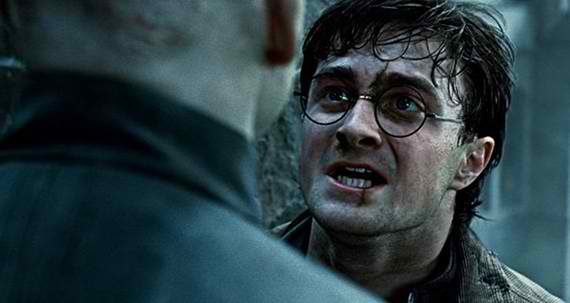
Daniel Radcliffe as Harry Potter.
Harry Potter and the Deathly Hallows Part Two
Directed By: David Yates
Starring: Daniel Radcliffe, Emma Watson, Rupert Grint, Ralph Fiennes, Alan Rickman and Helena Bonham Carter

Ten years and eight feature length films later, the adventures of J.K. Rowling's boy wizard comes to a close. A generation of kids who grew up reading about black magic, goblins and hidden Horcruxes will now be closing a chapter on their childhood. Although I have not read the books myself, many of my friends credit the series with teaching them about loyalty, friendship and first loves -- essential life lessons that go above and beyond what is normally expected in your average fantasy series. 

However, as I mentioned in my November 2010 review of Harry Potter and the Deathly Hallows Part One: Peter Jackson managed to make all three of his The Lord of the Rings films a cohesive story. They followed one thread and worked well, both together and as individual, stand-alone films. I find that this has never been the case with the Harry Potter franchise. Granted, there are a lot of films that the screenwriters have to struggle to string together, yet for someone like me who has never read the books, it can be alienating. Nearly each Harry Potter film has had a new director and, as a result, has a different tone and atmosphere than its predecessor, which I also think is the root cause of some of its issues. I think it makes them feel like jagged vignettes that don't always quite fit together as a whole.

In this final instalment the film begins right where the last one left off -- Lord Voldemort (Ralph Fiennes) has retrieved the Elder Wand from the corpse of Dumbledore (Michael Gambon). Meanwhile, Harry (Daniel Radcliffe), Hermione (Emma Watson) and Ron (Rupert Grint) team up to try to find the mysterious Horcruxes -- each one containing a small, yet vital, fragment of Voldemort's soul. In destroying each of the Horcruxes, Voldemort's power weakens and sets the story up for the much-anticipated duel between Harry and his snake-like nemesis. 

Director David Yates returns with his same cast and crew and, as a result, these final two films in the franchise come together nicely in terms of atmosphere, tone and visuals. The cinematography is beautiful -- all dark greys, browns and earthy greens, lending the finale a sort of aesthetic acknowledgment that it has come to a dark, emotional end. 

Yet, Deathly Hallows Part Two lacks a structural tightness to its story, although this has more to do with Rowling than it is the fault of the screenwriters. From what I gather of the book series, it's ultimately all leading up to this final duel between good and evil. However, it does seem to have taken an awfully long time to get to the point of it all. Did Rowling really need seven novels of misadventures at Hogwarts to effectively illustrate her life lessons on friendship, loyalty and good vs. evil? Probably not. As a result, the entire film series was a combination of false starts and anti-climaxes, resulting in sometimes plodding films (specifically the sixth film, Harry Potter and the Half-Blood Prince, of which I remember next to nothing, despite having seen it more than once). 

Ralph Fiennes as Lord Voldemort.
The strongest link in this film franchise has, and always will be, the acting -- all of which improves with each film. Emma Watson (as Hermione) and Rupert Grint (as Ron), in particular, have both matured into great young actors who brought a lot to their roles as young, blossoming wizards. Without them, Harry would have ultimately failed in many of his tasks. Their unflagging loyalty to their gifted friend remains one of the franchise's most powerful lessons in what it means to be a true friend. It makes it inevitable that both Hermione and Ron will both come to appreciate that dedication in one another and fast-track their relationship past the platonic stage -- and thankfully Watson and Grint have a charming, opposites-attract chemistry. 

However, if this final instalment belongs to anyone, it belongs to Ralph Fiennes and Alan Rickman. Both do a tremendous job with what they are given to work with (which isn't a lot, especially in the case of Rickman). 

As Lord Voldemort, Fiennes is fabulous -- teaching the audience the art of subtlety; giving a masterful performance of evil, even while buried beneath layers and layers of caked on make-up with only his eyes to convey his dark thoughts. It's a pity it took so long for his character to come anywhere near front and centre in the franchise. Fiennes is absolutely fascinating to watch and he turned Voldemort into a remarkably creepy villain. 

Alan Rickman as Severus Snape.
As the tragically misunderstood Severus Snape, Rickman is finally given his chance to shine. Why Rowling took so long to reveal the unrequited love Snape harboured and his desire to protect Harry is anyone's guess. Rowling very nearly deprived her audience of feeling any sense of understanding for the Hogwarts teacher, choosing instead to reveal everything all at once at the very end. As a result, the audience is forced to quickly catch up on an entire life's worth of pining and loss in Snape. Oh, what might have been -- for both the character of Snape and Rickman as an actor -- had Rowling delved deeper into her creation much earlier in the series, allowing her audience to relate and grieve with Snape, instead of making it all feel like an afterthought. Instead, the audience is left wondering about what more there could have been to the tragic (and disappointingly underused) character of Snape. 

Once all is said and done, Harry Potter and the Deathly Hallows Part Two will likely leave all those loyal Potterheads happy, thrilled and nostalgic for their childhood. If those devotees left the theatre satisfied than that's ultimately all that matters. Although it was a flawed series it still achieved what any good blockbuster should -- a loyal fanbase that welcomed its coming-of-age life lessons and its portrayal of good vs. evil. 

FINAL GRADE: B

Question: What was your favourite Harry Potter film?

Sunday, November 28, 2010

Movie Review: Harry Potter and the Deathly Hallows: Part One

Harry Potter and the Deathly Hallows: Part One
Directed By: David Yates
Starring: Daniel Radcliffe, Emma Watson, Rupert Grint, Ralph Fiennes and Helena Bonham Carter

First things first: I've never read J.K. Rowling's Harry Potter series. Therefore, I go into each film without any expectations and I can leave the theatre never feeling disappointed. However, because I'm unfamiliar with the books, I found this latest film a little hard to follow, compared to the others.

Peter Jackson managed to make all three of his The Lord of the Rings films a cohesive story. They followed one thread and worked well, both together and as individual, stand-alone films. I find that this has never been the case with the Harry Potter franchise. Granted, there are a lot of films that the screenwriters have to struggle to string together, yet for someone like me who has never read the books, it can be alienating. Each Harry Potter film has had a new director and, as a result, has a different tone and atmosphere than its predecessor, which I also think is the root cause of some of its issues. I think it makes them feel like jagged vignettes that don't quite fit together as a whole.

All that being said, Deathly Hallows is the best film in the franchise since Alfonso Cuaron directed the third instalment, The Prisoner of Azkaban. For the first time since this series first started back in 2000, I felt like things were finally starting to get interesting. It just unfortunately took six films to reach this point. After a whole lot of anti-climaxes and false starts, things are being set up for a final duel between Harry and Voldemort. The plot of Deathly Hallows is essentially all the exposition stuff that needs to get out of the way before the final film this July. We have Harry preparing to face Voldemort. We have Hermione and Ron getting closer to revealing their feelings for one another. We have Voldemort getting his hands on the (apparently very important) wand that was in Dumbledore's possession (help me out here, Potter fans. I forget what the combination of the wand, cloak of invisibility and ...that other thing ...meant). Anyway, Voldemort now has that wand and, from what I gather, that's a very, very bad thing.

Visually, the film is fantastic. The kids are no longer at Hogwarts (thank god for small miracles ...it was about time the series broke away from its formulaic plotting). It was nice seeing the three leads away from school and their friends and teachers. As a result, their travels take them to some dark and visually stunning areas of England, where Dickensian villains in plaid pants and ponytails lurk in the shadows. It was a refreshing change.

The reason this film works so well, is the acting. By far, it's the strongest film in terms of acting for this franchise. We finally see (and hear!) more of Voldemort (played by the incomparable Ralph Fiennes). I mean, here's this fantastic villain and he barely registers any screen time. Only Rowling would relegate a great bad guy like this to the background for the sake of a bunch of children and their uninteresting Hogwarts teachers. Fiennes is perfect in an early scene where he's meeting with other evil minions (including Helena Bonham Carter's Belatrix and Jason Isaac's Lucius Malfoy). He's all slitherly, creepy perfection. Even Isaac's small role as Lucius is excellent. If nothing else, this series has never been short of brilliant veteran British actors. The same can be said for Alan Rickman, reduced to a small role in this film, but still, as always, reliably wonderful. Another wonderful casting choice was David O'Hara (he of crazy Stephen in Braveheart) as the man Harry inhabits to enter the Ministry of Magic. This might not make any sense, but once you see the scene, you will know what I mean. O'Hara perfectly captured the posture and mannerisms of Harry/Daniel Radcliffe to the point where I wish Harry would stay in his body for the duration of the film. It was a wonderful, entertaining role.

Most surprising, however, are two of the three leads. I've usually been pretty hard on Emma Watson in past films (she being the Queen of Runaway Eyebrow Acting). Watching Deathly Hallows, however, I wondered if she'd taken acting lessons. She seems to have matured as an actress, going for subtlety over exaggerated reactions. She's reigned in those eyebrows and blossomed into a solid young actress. Rupert Grint has finally been allowed to move on from his previous role of comedic sidekick. He's actually given dramatic scenes and he's more than up to the task. Out of the entire series, Ron is my favourite character (and it's not just because I'm a sucker for redheads). I always thought Grint seemed like he had a good performance in him, but was never given the chance to shine. He was more than up to the task in Deathly Hallows. My problem is with Daniel Radcliffe as Harry. I find his performance uneven and far too forced. He doesn't have the natural charm and charisma of Grint or the fiery subtlety of Watson. He's nowhere near as atrocious as the actress who plays Ginny Weasley (Bonnie Wright), but he's definitely the weakest link of the three leads.

Overall, it's an entertaining film and, as I said earlier, the strongest instalment since The Prisoner of Azkaban. In an uneven series (with formulaic plotting, unexplained plot scenarios and the most anti-climactic death scenes of main characters I've ever seen on film), Deathly Hallows promises the series will go out with a bang. Although it's essentially only half a film, the final cliffhanger scene even had me intrigued. Perfect? No. A solid set-up vehicle for the final film? Yes.

FINAL GRADE: B

Saturday, January 16, 2010

Movie Review: The Hurt Locker


DIRECTED BY: Kathryn Bigelow
STARRING: Jeremy Renner, Anthony Mackie, Brian Geraghty, Ralph Fiennes, David Morse and Guy Pearce

Iraq, 2004. Sgt. William James (Jeremy Renner) is the reckless new leader of the Bravo Company elite Army bomb squad after the death of Sgt. Matt Thompson (Guy Pearce) in the line of duty. James joins JT Sanborn (Anthony Mackie) and Owen Eldridge (Brian Geraghty) with just over a month left of the Bravo Company's rotation. The film tracks those remaining few weeks as Sanborn and Eldridge struggle to cope with James' unconventional and dangerous leadership qualities.

Unlike most recent war films, The Hurt Locker focuses on a select group of men (mainly James, Sanborn and Eldridge) which actually allows the viewer to appreciate the characters and their development. Unlike Black Hawk Down, for example, these men don't just become another face in a big cast of characters, without a memorable personality. In focusing on a specific, elite group of combatants, Bigelow is allowing an attachment to form between the characters and the audience. James, Sanborn and Eldridge also lack the typical macho war mentality often found in these types of films. These three men are just average guys who happen to have incredibly dangerous careers, which makes them all the more likeable and sympathetic. They fear for their lives but understand that what they are doing is important.

Kathryn Bigelow has just as good a chance at winning Best Director at this years Oscars than anyone else. She can make as solid, intense and exciting a war film as any of the big league boys. The film is visually compelling, whether the focus is on something as small as a tangled web of bomb wires or as grand as a massive, devastating explosion. Bigelow provides a nice balance of quieter character scenes and grandiose gun battles. Amidst all the violence and chaos, her startling images of death and destruction, and the characters in the middle of it all, really resonate.

Jeremy Renner, as adrenaline-junkie Sgt. James, gives an excellent performance in one of his first starring roles. Despite the fact that he has a wife and baby son back home, James' main focus in life is his job of dismantling bombs. However, through Bigelow's direction and Renner's excellent performance, James also comes across as someone who would make a great father (in a memorable scene where he bonds with a young Iraqi boy named "Beckham", who loves soccer and sells burned DVDs) and a genuinely capable and respected leader (illustrated in the scene where a dehydrated James gives the last of his juice to Sanborn in the midst of a sniper battle). Those smaller moments that develop character, paired with the intense action scenes, makes James a great and, more importantly, likeable hero.

The supporting cast is also solid, specifically Anthony Mackie and Brian Geraghty as Sanborn and Eldridge. However, there are some great cameos as well, including Guy Pearce as the doomed Sgt. Thompson, David Morse as Colonel Reed and Ralph Fiennes as an unnamed British "Contractor Team Leader."

The Hurt Locker is definitely one of the years standout films; an intense and emotionally charged war film. It's heart-stopping action scenes and little character details and quirks will likely draw in any viewer who appreciates a well-rounded film. While it's not quite Best Picture of the year material, it is arguably great enough to at least merit Oscar nominations for Best Picture, Director and Actor, all of which is likely to happen.

B+