Showing posts with label emma watson. Show all posts

Thursday, November 24, 2011

Movie Review: My Week with Marilyn

Williams and Redmayne as Marilyn and Colin
My Week with Marilyn (2011)
Based on the Memoir By: Colin Clark
Directed By: Simon Curtis
Starring: Michelle Williams, Eddie Redmayne, Kenneth Branagh, Julia Ormond and Judi Dench

There are certain stars from a bygone era of Hollywood that are difficult to interpret on the silver screen. Imagine actually finding someone who could successfully portray Marlon Brando, Elizabeth Taylor or Paul Newman? Marilyn Monroe was once put into this category -- few dared to try and portray her in a film until now. Some celebrities are just too big and any attempt to give a genuine glimpse at the star will likely come off as little more than imitation. My Week with Marilyn succeeds with some aspects of Monroe's personality, but disappointingly not in other areas.

Based on the 1995 publication of the personal diary of British documentary filmmaker, Colin Clark, My Week with Marilyn focuses on how a 23-year-old Colin (Eddie Redmayne) became the third assistant director to Sir Laurence Olivier (Kenneth Branagh) during the tumultuous production of the 1957 film, The Prince and the Showgirl. A dream job for a film buff like Colin, he recognizes his upcoming opportunity to meet Marilyn Monroe (Michelle Williams) in person will be a dream come true. What he didn't anticipate was the friendship that would blossom between them over a brief period.

The script by Adrian Hodges leaves enough room for Williams to shine, but any chance she had at truly running away with the picture was diminished by the fact that the film frustratingly centres on Colin -- a man who claims to have shared moments of genuine love with the megastar. It's a shame too because Williams will likely prove some naysayers wrong (myself included) who thought she was woefully miscast as the blond bombshell. Although there are moments when Williams stumbles in her performance (she's never entirely convincing as Marilyn, which is disappointing), she does have a couple of lovely, subdued moments -- less silly, flirty Marilyn and more vulnerable Marilyn with tears of disappointment in her eyes.

These glimpses that we do get of Marilyn (albeit through the eyes of the lovesick Colin) is of a beautiful and sad woman who seems in over her head -- things we already knew about Monroe. This inability to bring anything new to the table nearly topples the film in the first half when most of the attention remains focused on the dull Colin.

Williams as Monroe
The underutilized secondary characters who share scenes on the set of The Prince and the Showgirl is a disappointing misuse of its cast. Halfway through the film it's easy to forget Judi Dench was in the picture as Dame Sybil Thorndike and audiences are expected to care that Colin has slighted some nice costume girl named Lucy (Emma Watson) who really, really liked him until Marilyn came along. Julia Ormond, a lovely actress, is, alas, no Vivien Leigh.

That being said, there's an interesting film buried underneath it all -- and this is where My Week with Marilyn improves. There's an early scene that shows what this movie could have been when a script read-through briefly touches on the changing norms in Hollywood during the 1950s in terms of acting technique. Olivier, a legend of the stage, is dumbfounded by the fact that Monroe needs her acting coach Paula Strasberg to work her through the art of a "Method" performance. He struggles to understand why Marilyn can't simply "play pretend" like other actors of his generation. In the same scene, Marilyn stares admiringly at Olivier as he reads through his portion of the script, suggesting she is uncomfortable in her own skin when it comes to acting alongside the longtime pros she respects, like Sir Laurence. Perhaps the film would have benefited more had it actually been about the making of The Prince and the Showgirl and the clashes between Marilyn and Olivier. Both were incredibly insecure actors at the time -- he, because of the changing art of performance on film and her, because she struggled to be taken seriously as an actress on an almost daily basis. Showcasing the incompatibility of these two actors would have allowed Williams and Branagh to really let their talents loose -- both of them had their finest moments in the film occur when they were together.

But, the focus is on the time Colin spent with Marilyn. Oddly enough, what allegedly happened between Colin and Marilyn fails to live up to Colin's over-dramatic narration at the beginning and end of the film. While Colin waxes poetic about how he "understood" Marilyn and how they shared this glorious bond, you realize there was actually very little that was real between them -- only a handful of flirtatious laughs and a couple of spooning sessions after some sight-seeing tours around London.

A woman often defined by her sexuality or the men in her lives, it does her legacy a great disservice to have her relegated somewhat to the background. All those burning questions you may have had about what Marilyn was like when she was away from the cameras still remain largely unanswered in the film.

The film amounts to little more than a lopsided venture that struggles to put both Colin and Marilyn front and centre. The plodding pace (especially in the middle of the film) and heavy-handed direction diminish whatever excitement the film was able to build in certain scenes. More frustrating than enjoyable, the real standouts are Williams and, especially, Branagh -- another instance of a couple of performances being better than the overall finished product. If only the film had been about Marilyn Monroe and Sir Laurence Olivier and a behind-the-scenes glimpse of the making of The Prince and the Showgirl. Marilyn deserved a better picture.

FINAL GRADE: C+

Monday, August 1, 2011

Movie Review: Harry Potter and the Deathly Hallows Part Two

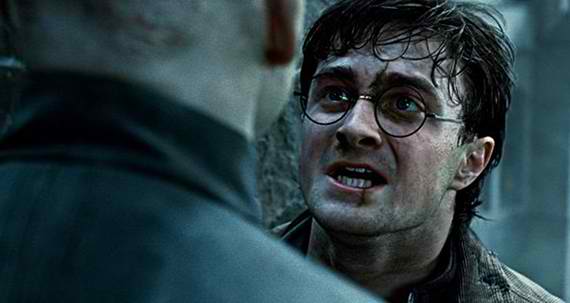
Daniel Radcliffe as Harry Potter.
Harry Potter and the Deathly Hallows Part Two
Directed By: David Yates
Starring: Daniel Radcliffe, Emma Watson, Rupert Grint, Ralph Fiennes, Alan Rickman and Helena Bonham Carter

Ten years and eight feature length films later, the adventures of J.K. Rowling's boy wizard comes to a close. A generation of kids who grew up reading about black magic, goblins and hidden Horcruxes will now be closing a chapter on their childhood. Although I have not read the books myself, many of my friends credit the series with teaching them about loyalty, friendship and first loves -- essential life lessons that go above and beyond what is normally expected in your average fantasy series. 

However, as I mentioned in my November 2010 review of Harry Potter and the Deathly Hallows Part One: Peter Jackson managed to make all three of his The Lord of the Rings films a cohesive story. They followed one thread and worked well, both together and as individual, stand-alone films. I find that this has never been the case with the Harry Potter franchise. Granted, there are a lot of films that the screenwriters have to struggle to string together, yet for someone like me who has never read the books, it can be alienating. Nearly each Harry Potter film has had a new director and, as a result, has a different tone and atmosphere than its predecessor, which I also think is the root cause of some of its issues. I think it makes them feel like jagged vignettes that don't always quite fit together as a whole.

In this final instalment the film begins right where the last one left off -- Lord Voldemort (Ralph Fiennes) has retrieved the Elder Wand from the corpse of Dumbledore (Michael Gambon). Meanwhile, Harry (Daniel Radcliffe), Hermione (Emma Watson) and Ron (Rupert Grint) team up to try to find the mysterious Horcruxes -- each one containing a small, yet vital, fragment of Voldemort's soul. In destroying each of the Horcruxes, Voldemort's power weakens and sets the story up for the much-anticipated duel between Harry and his snake-like nemesis. 

Director David Yates returns with his same cast and crew and, as a result, these final two films in the franchise come together nicely in terms of atmosphere, tone and visuals. The cinematography is beautiful -- all dark greys, browns and earthy greens, lending the finale a sort of aesthetic acknowledgment that it has come to a dark, emotional end. 

Yet, Deathly Hallows Part Two lacks a structural tightness to its story, although this has more to do with Rowling than it is the fault of the screenwriters. From what I gather of the book series, it's ultimately all leading up to this final duel between good and evil. However, it does seem to have taken an awfully long time to get to the point of it all. Did Rowling really need seven novels of misadventures at Hogwarts to effectively illustrate her life lessons on friendship, loyalty and good vs. evil? Probably not. As a result, the entire film series was a combination of false starts and anti-climaxes, resulting in sometimes plodding films (specifically the sixth film, Harry Potter and the Half-Blood Prince, of which I remember next to nothing, despite having seen it more than once). 

Ralph Fiennes as Lord Voldemort.
The strongest link in this film franchise has, and always will be, the acting -- all of which improves with each film. Emma Watson (as Hermione) and Rupert Grint (as Ron), in particular, have both matured into great young actors who brought a lot to their roles as young, blossoming wizards. Without them, Harry would have ultimately failed in many of his tasks. Their unflagging loyalty to their gifted friend remains one of the franchise's most powerful lessons in what it means to be a true friend. It makes it inevitable that both Hermione and Ron will both come to appreciate that dedication in one another and fast-track their relationship past the platonic stage -- and thankfully Watson and Grint have a charming, opposites-attract chemistry. 

However, if this final instalment belongs to anyone, it belongs to Ralph Fiennes and Alan Rickman. Both do a tremendous job with what they are given to work with (which isn't a lot, especially in the case of Rickman). 

As Lord Voldemort, Fiennes is fabulous -- teaching the audience the art of subtlety; giving a masterful performance of evil, even while buried beneath layers and layers of caked on make-up with only his eyes to convey his dark thoughts. It's a pity it took so long for his character to come anywhere near front and centre in the franchise. Fiennes is absolutely fascinating to watch and he turned Voldemort into a remarkably creepy villain. 

Alan Rickman as Severus Snape.
As the tragically misunderstood Severus Snape, Rickman is finally given his chance to shine. Why Rowling took so long to reveal the unrequited love Snape harboured and his desire to protect Harry is anyone's guess. Rowling very nearly deprived her audience of feeling any sense of understanding for the Hogwarts teacher, choosing instead to reveal everything all at once at the very end. As a result, the audience is forced to quickly catch up on an entire life's worth of pining and loss in Snape. Oh, what might have been -- for both the character of Snape and Rickman as an actor -- had Rowling delved deeper into her creation much earlier in the series, allowing her audience to relate and grieve with Snape, instead of making it all feel like an afterthought. Instead, the audience is left wondering about what more there could have been to the tragic (and disappointingly underused) character of Snape. 

Once all is said and done, Harry Potter and the Deathly Hallows Part Two will likely leave all those loyal Potterheads happy, thrilled and nostalgic for their childhood. If those devotees left the theatre satisfied than that's ultimately all that matters. Although it was a flawed series it still achieved what any good blockbuster should -- a loyal fanbase that welcomed its coming-of-age life lessons and its portrayal of good vs. evil. 

FINAL GRADE: B

Question: What was your favourite Harry Potter film?

Sunday, November 28, 2010

Movie Review: Harry Potter and the Deathly Hallows: Part One

Harry Potter and the Deathly Hallows: Part One
Directed By: David Yates
Starring: Daniel Radcliffe, Emma Watson, Rupert Grint, Ralph Fiennes and Helena Bonham Carter

First things first: I've never read J.K. Rowling's Harry Potter series. Therefore, I go into each film without any expectations and I can leave the theatre never feeling disappointed. However, because I'm unfamiliar with the books, I found this latest film a little hard to follow, compared to the others.

Peter Jackson managed to make all three of his The Lord of the Rings films a cohesive story. They followed one thread and worked well, both together and as individual, stand-alone films. I find that this has never been the case with the Harry Potter franchise. Granted, there are a lot of films that the screenwriters have to struggle to string together, yet for someone like me who has never read the books, it can be alienating. Each Harry Potter film has had a new director and, as a result, has a different tone and atmosphere than its predecessor, which I also think is the root cause of some of its issues. I think it makes them feel like jagged vignettes that don't quite fit together as a whole.

All that being said, Deathly Hallows is the best film in the franchise since Alfonso Cuaron directed the third instalment, The Prisoner of Azkaban. For the first time since this series first started back in 2000, I felt like things were finally starting to get interesting. It just unfortunately took six films to reach this point. After a whole lot of anti-climaxes and false starts, things are being set up for a final duel between Harry and Voldemort. The plot of Deathly Hallows is essentially all the exposition stuff that needs to get out of the way before the final film this July. We have Harry preparing to face Voldemort. We have Hermione and Ron getting closer to revealing their feelings for one another. We have Voldemort getting his hands on the (apparently very important) wand that was in Dumbledore's possession (help me out here, Potter fans. I forget what the combination of the wand, cloak of invisibility and ...that other thing ...meant). Anyway, Voldemort now has that wand and, from what I gather, that's a very, very bad thing.

Visually, the film is fantastic. The kids are no longer at Hogwarts (thank god for small miracles ...it was about time the series broke away from its formulaic plotting). It was nice seeing the three leads away from school and their friends and teachers. As a result, their travels take them to some dark and visually stunning areas of England, where Dickensian villains in plaid pants and ponytails lurk in the shadows. It was a refreshing change.

The reason this film works so well, is the acting. By far, it's the strongest film in terms of acting for this franchise. We finally see (and hear!) more of Voldemort (played by the incomparable Ralph Fiennes). I mean, here's this fantastic villain and he barely registers any screen time. Only Rowling would relegate a great bad guy like this to the background for the sake of a bunch of children and their uninteresting Hogwarts teachers. Fiennes is perfect in an early scene where he's meeting with other evil minions (including Helena Bonham Carter's Belatrix and Jason Isaac's Lucius Malfoy). He's all slitherly, creepy perfection. Even Isaac's small role as Lucius is excellent. If nothing else, this series has never been short of brilliant veteran British actors. The same can be said for Alan Rickman, reduced to a small role in this film, but still, as always, reliably wonderful. Another wonderful casting choice was David O'Hara (he of crazy Stephen in Braveheart) as the man Harry inhabits to enter the Ministry of Magic. This might not make any sense, but once you see the scene, you will know what I mean. O'Hara perfectly captured the posture and mannerisms of Harry/Daniel Radcliffe to the point where I wish Harry would stay in his body for the duration of the film. It was a wonderful, entertaining role.

Most surprising, however, are two of the three leads. I've usually been pretty hard on Emma Watson in past films (she being the Queen of Runaway Eyebrow Acting). Watching Deathly Hallows, however, I wondered if she'd taken acting lessons. She seems to have matured as an actress, going for subtlety over exaggerated reactions. She's reigned in those eyebrows and blossomed into a solid young actress. Rupert Grint has finally been allowed to move on from his previous role of comedic sidekick. He's actually given dramatic scenes and he's more than up to the task. Out of the entire series, Ron is my favourite character (and it's not just because I'm a sucker for redheads). I always thought Grint seemed like he had a good performance in him, but was never given the chance to shine. He was more than up to the task in Deathly Hallows. My problem is with Daniel Radcliffe as Harry. I find his performance uneven and far too forced. He doesn't have the natural charm and charisma of Grint or the fiery subtlety of Watson. He's nowhere near as atrocious as the actress who plays Ginny Weasley (Bonnie Wright), but he's definitely the weakest link of the three leads.

Overall, it's an entertaining film and, as I said earlier, the strongest instalment since The Prisoner of Azkaban. In an uneven series (with formulaic plotting, unexplained plot scenarios and the most anti-climactic death scenes of main characters I've ever seen on film), Deathly Hallows promises the series will go out with a bang. Although it's essentially only half a film, the final cliffhanger scene even had me intrigued. Perfect? No. A solid set-up vehicle for the final film? Yes.

FINAL GRADE: B