I realize I'm a little late with this news, but a few weeks ago it was announced that Kevin Costner would be joining the cast of Quentin Tarantino's upcoming Django Unchained. I think he's the final missing piece of the puzzle and it will be set to start filming soon.
Tentatively scheduled for a Christmas 2012 release (although I really hope we don't actually have to wait that long!), Tarantino's latest is a throwback to the spaghetti westerns of the 1960s. There are only a few details released about the plot so far -- and, if the rumours of the premise are true, it sounds fantastic!
Costner will play Ace Woody, a man who trains slaves to fight to the death solely for the entertainment of a sadistic plantation owner named Calvin Candie (Leonardo DiCaprio). Django (Jamie Foxx), one of the slaves, manages to escape and teams up with a German bounty hunter (Christoph Waltz) to exact revenge and rescue his long-lost love (Kerry Washington). The film also co-stars Samuel L. Jackson and Keith Carradine.
I'm beyond excited -- I'm such a huge fan of Tarantino and he so rarely disappoints. In fact, the only Tarantino film I was a little bit disappointed with was Death Proof (2007) and even that wasn't all that bad! If I were an actress or screenwriter working in Hollywood, I'd give up the opportunity to work with pretty much anyone else in order to work on a Tarantino film.
Anyway, I love the premise and I'm really loving the cast. I like that a couple Tarantino regulars are returning (although I'd really love to see him work with Harvey Keitel and Tim Roth again in the future!). I especially love that he wrote another part for Waltz who needs another great role immediately in order to save his reputation (his agent should be fired ...he hasn't made a good film since his Oscar win). DiCaprio and Costner are really interesting choices: I think both have the potential to fit really, really well in a Tarantino flick and they'd probably ace his dialogue. It would be something different for DiCaprio and Costner, who both tend to play a variation of the same role in a lot of their films.
All in all, should be another great film for Tarantino!
What do you think of the cast announcements for Django Unchained?
Saturday, August 6, 2011
Monday, August 1, 2011
Movie Review: Harry Potter and the Deathly Hallows Part Two
![]() |
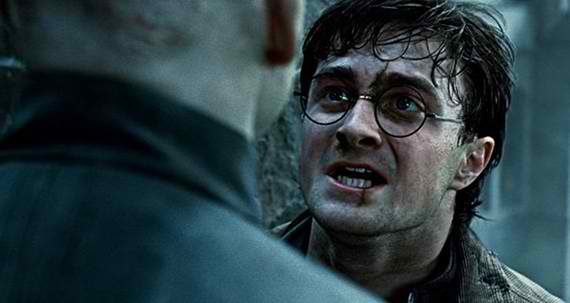
| Daniel Radcliffe as Harry Potter. |
Harry Potter and the Deathly Hallows Part Two
Directed By: David Yates
Starring: Daniel Radcliffe, Emma Watson, Rupert Grint, Ralph Fiennes, Alan Rickman and Helena Bonham Carter
Ten years and eight feature length films later, the adventures of J.K. Rowling's boy wizard comes to a close. A generation of kids who grew up reading about black magic, goblins and hidden Horcruxes will now be closing a chapter on their childhood. Although I have not read the books myself, many of my friends credit the series with teaching them about loyalty, friendship and first loves -- essential life lessons that go above and beyond what is normally expected in your average fantasy series.
However, as I mentioned in my November 2010 review of Harry Potter and the Deathly Hallows Part One: Peter Jackson managed to make all three of his The Lord of the Rings films a cohesive story. They followed one thread and worked well, both together and as individual, stand-alone films. I find that this has never been the case with the Harry Potter franchise. Granted, there are a lot of films that the screenwriters have to struggle to string together, yet for someone like me who has never read the books, it can be alienating. Nearly each Harry Potter film has had a new director and, as a result, has a different tone and atmosphere than its predecessor, which I also think is the root cause of some of its issues. I think it makes them feel like jagged vignettes that don't always quite fit together as a whole.
In this final instalment the film begins right where the last one left off -- Lord Voldemort (Ralph Fiennes) has retrieved the Elder Wand from the corpse of Dumbledore (Michael Gambon). Meanwhile, Harry (Daniel Radcliffe), Hermione (Emma Watson) and Ron (Rupert Grint) team up to try to find the mysterious Horcruxes -- each one containing a small, yet vital, fragment of Voldemort's soul. In destroying each of the Horcruxes, Voldemort's power weakens and sets the story up for the much-anticipated duel between Harry and his snake-like nemesis.
Director David Yates returns with his same cast and crew and, as a result, these final two films in the franchise come together nicely in terms of atmosphere, tone and visuals. The cinematography is beautiful -- all dark greys, browns and earthy greens, lending the finale a sort of aesthetic acknowledgment that it has come to a dark, emotional end.
Yet, Deathly Hallows Part Two lacks a structural tightness to its story, although this has more to do with Rowling than it is the fault of the screenwriters. From what I gather of the book series, it's ultimately all leading up to this final duel between good and evil. However, it does seem to have taken an awfully long time to get to the point of it all. Did Rowling really need seven novels of misadventures at Hogwarts to effectively illustrate her life lessons on friendship, loyalty and good vs. evil? Probably not. As a result, the entire film series was a combination of false starts and anti-climaxes, resulting in sometimes plodding films (specifically the sixth film, Harry Potter and the Half-Blood Prince, of which I remember next to nothing, despite having seen it more than once).
![]() |
| Ralph Fiennes as Lord Voldemort. |
The strongest link in this film franchise has, and always will be, the acting -- all of which improves with each film. Emma Watson (as Hermione) and Rupert Grint (as Ron), in particular, have both matured into great young actors who brought a lot to their roles as young, blossoming wizards. Without them, Harry would have ultimately failed in many of his tasks. Their unflagging loyalty to their gifted friend remains one of the franchise's most powerful lessons in what it means to be a true friend. It makes it inevitable that both Hermione and Ron will both come to appreciate that dedication in one another and fast-track their relationship past the platonic stage -- and thankfully Watson and Grint have a charming, opposites-attract chemistry.
However, if this final instalment belongs to anyone, it belongs to Ralph Fiennes and Alan Rickman. Both do a tremendous job with what they are given to work with (which isn't a lot, especially in the case of Rickman).
As Lord Voldemort, Fiennes is fabulous -- teaching the audience the art of subtlety; giving a masterful performance of evil, even while buried beneath layers and layers of caked on make-up with only his eyes to convey his dark thoughts. It's a pity it took so long for his character to come anywhere near front and centre in the franchise. Fiennes is absolutely fascinating to watch and he turned Voldemort into a remarkably creepy villain.
![]() |
| Alan Rickman as Severus Snape. |
As the tragically misunderstood Severus Snape, Rickman is finally given his chance to shine. Why Rowling took so long to reveal the unrequited love Snape harboured and his desire to protect Harry is anyone's guess. Rowling very nearly deprived her audience of feeling any sense of understanding for the Hogwarts teacher, choosing instead to reveal everything all at once at the very end. As a result, the audience is forced to quickly catch up on an entire life's worth of pining and loss in Snape. Oh, what might have been -- for both the character of Snape and Rickman as an actor -- had Rowling delved deeper into her creation much earlier in the series, allowing her audience to relate and grieve with Snape, instead of making it all feel like an afterthought. Instead, the audience is left wondering about what more there could have been to the tragic (and disappointingly underused) character of Snape.
Once all is said and done, Harry Potter and the Deathly Hallows Part Two will likely leave all those loyal Potterheads happy, thrilled and nostalgic for their childhood. If those devotees left the theatre satisfied than that's ultimately all that matters. Although it was a flawed series it still achieved what any good blockbuster should -- a loyal fanbase that welcomed its coming-of-age life lessons and its portrayal of good vs. evil.
FINAL GRADE: B
Question: What was your favourite Harry Potter film?
Thursday, July 28, 2011
Movie Rant: Saddest Movie of All Time?
![]() |
| The Champ, starring Ricky Schroder and Jon Voight. |
...Alright.
They've supposedly been working on this research project since 1988 (!!) in order to find the saddest film clip ever (I wish I had that job! Seriously). After testing more than 250 movies on a bunch of subjects, The Champ came out the champ of tearjerker moments.
Random, right? You'd think the most tear-worthy scenes would be from films like Titanic, Schindler's List or anything involving the tagline "based on a true story." Nope. Supposedly even the most cynical of viewers lost their composure watching the climax of the Franco Zeffirelli flick.
The Plot: Billy Flynn (Jon Voight), a former boxer-turned-horse trainer, raises his little son T.J. (Ricky Schroder, that kid from Silver Spoons) all by himself after his wife, Annie (Faye Dunaway), abandoned the family years earlier. Billy struggles to save what little money he can, but ultimately decides to return to the ring one last time to earn more money so his son can have a better life. After winning the final fight and being named The Champ, Billy suddenly dies and (*cue tears*) his little son tries to wake him up.
Now, I've never seen this film but after this research study was released I looked up the climax scene (linked below). It's a little hard to get completely wrapped up in it having not seen the whole movie, but I can see why it would be very touching for a lot of people. All credit must be given to Ricky Schroder who is super-cute and can cry with the best of them in this scene. It looks like he gives a great performance ...something rare for child actors. My only beef with this study is that it calls The Champ the "saddest movie of all time" ...but I highly doubt the other nearly two hours of the films are sad. It shouldn't win that distinction based on one scene alone. A more appropriate title would have simply been "saddest movie scene of all time."
I couldn't choose one "saddest movie scene of all time", just like I couldn't pick "saddest overall movie of all time" ...there are too many to count. I wouldn't even know where to start.
Question: Do you have a pick for either "the saddest movie of all time" or "the saddest movie scene of all time"?
Labels:
franco zeffirelli,
jon voight,
movie rant,
ricky schroder,
the champ
Friday, July 22, 2011
Movie Rant: (Fairly Recent) Movies I Think Are Underrated
![]() |
| The Talented Mr. Ripley |
The movies on this list were pretty much all universally acclaimed by critics. But I consider these films underrated because, in talking with other people, I find many either haven't seen them or they've never even heard of them at all.
There are a ton of underrated films out there, from each and every decade. This list will be more "recent" films -- the oldest being from 1984 and the most recent from 2008. Going back through the history of world cinema to find more underrated gems from other decades would be a task and a half -- so, in no particular order, here's a list of fairly recent movies I consider underrated/sadly ignored by the masses nowadays.
(1) The Talented Mr. Ripley (1999)
In this mostly faithful adaptation of Patricia Highsmith's novel, the late Anthony Minghella directed a moody, atmospheric murder mystery among the sights and sounds of Italy. It feels like an old-fashioned thriller and Matt Damon's restrained, yet perfectly awkward and eerie, performance allows the audience to get lost in the bizarre enigma that is Tom Ripley. I still consider this Damon's best performance.
![]() |
| Amadeus |
The film won Best Picture, Best Director and Best Actor, yet it remains largely forgotten by almost everyone outside of its loyal fan base. Those expecting a straight-forward biography of the brilliant composer, Wolfgang Amadeus Mozart, will be disappointed -- however, this visually beautiful film focuses on the myths, the addictions and the jealousy behind the famous Austrian genius' short life. With rich performances (especially by F. Murray Abraham as the jealous Salieri) and an authentically historical atmosphere, Amadeus is an absolutely fascinating look at an artist's dark descent.
(3) Zodiac (2007)
Everyone loves David Fincher, right? Well, no one seemed all that interested in his masterful recreation of the investigation into the famous 1970s Zodiac murders. The film was a dud at the box office and most people complained about its running time and the slow pace. Granted, it's recommended that you brush up on your knowledge of the case beforehand, but I believe Zodiac will go down as Fincher's most underrated masterpiece. It was ignored and is already largely forgotten, but it's an eerie look at a horrific murder case with wonderful performances (especially by Mark Ruffalo) and a great attention to period detail.
(4) Amelie (2001)
Nominated for Best Foreign Language Film at the Academy Awards, it wound up losing in a shocking upset. Incredibly popular upon it's initial release ten years ago, it has since receded into the background. This whimsical gem from France was a breakthrough for star Audrey Tautou but, more importantly, it's that rare film that improves with each viewing. It's more than just a fairy tale love story and it's filled with wonderfully genuine commentary on how people choose to live their lives. It will leave you wishing you could see the world through the eyes of someone like Amelie Poulain.
![]() |
| American Psycho |
You either love it or you hate it. The first time I saw the film I know I missed out on a lot of its dark comedy and commentary on yuppie society of the 1980s. Having re-watched it a couple of times over the years, I realized what a great (albeit understated) adaptation it is of a very complex (and graphic!) Bret Easton Ellis novel. Christian Bale nails his performance as Patrick Bateman, the wealthy New York investment banking executive who slowly loses himself in his perverse and violent fantasies.
(6) Boogie Nights (1997)
This cautionary tale of how a young man went from small town student to a big-time porn star named Dirk Diggler is arguably director P.T. Anderson's best film to date. It's a film that is rarely mentioned anymore, but it's an intimate and often hilarious look at the porn industry of the 1970s and 1980s through the eyes of the famously well-endowed Diggler. Full of wonderful performances in a large ensemble cast that includes Mark Wahlberg, Julianne Moore, Burt Reynolds, John C. Reilly, Philip Seymour Hoffman and William H. Macy, Boogie Nights also boasts a killer soundtrack. Anderson has Quentin Tarantino's knack for picking great songs to accompany his films.
(7) In Bruges (2008)
This film debuted in one lonely theatre in Toronto a few years back and, when mentioned, it's usually met with blank stares. Despite the fact that it was critically acclaimed and earned Colin Farrell a Best Actor Golden Globe, it's an under-the-radar film from the U.K. that deserved more attention than it received. Watching the delightfully un-PC hitmen, played by Farrell and Brendon Gleeson, run around the medieval city of Bruges is hilarious, heartwarming and tragic all at once. In Bruges is classified as a dark comedy, but it's so much more than that.
![]() |
| Secretary |
Speaking of small indie films that are often met with blank stares -- Secretary is that fantastic little film that you haven't even heard of, let alone seen. Maggie Gyllenhaal is so perfectly cast as a mentally ill young woman heading back into the workplace that I often continue to associate Gyllenhaal with her character, Lee Holloway. James Spader plays the demanding lawyer that she works for -- and the two ultimately embark on a sexual, sadomasochistic affair. It's a wonderfully bizarre love story.
(9) The New World (2005)
The fact that this is widely considered to be Terrence Malick's weakest film is no insult to the work itself -- it's still a lyrical, poetic ode to man's ever-changing relationship with nature, told through the eyes of 17th century Englishman John Smith (Colin Farrell) and Pocahontas (Q'orianka Kilcher). With it's leisurely pace, long segments of stunning visuals and whispered dialogue, The New World won't be to everyone's personal taste, but it's a masterpiece that often gets lost in the shuffle of other more well-received Malick films.
![]() |
| Downfall (Der Untergang) |
This German film was nominated for a Best Foreign Language Film award at the Oscars -- only to suffer a surprising loss, much like Amelie in 2001. Bruno Ganz gives a stunning and authentic-feeling performance as Adolf Hitler during the rapid decline of his power. With his subtly trembling hands (Hitler was rumoured to have had Parkinson's Disease), watery eyes and stooped shoulders, Ganz embodies the diminishing fire of one of the world's most violent dictators. The entirety of the film takes place in Hitler's bunker in Berlin during the final days of his tumultuous life. Downfall dared to show a softer side to the dictator -- one who thanked people for their loyalty, married his longtime girlfriend, Eva Braun, and tearfully mourned the betrayal of Albert Speer, one of his most trusted men. You'll feel as though you are watching an actual documentary on Hitler's final moments.
Question: What films do you think are underrated or have been largely forgotten?
Saturday, July 16, 2011
Movie Review: Horrible Bosses
![]() |
| (Left to Right): Bateman, Day and Sudeikis |
Directed By: Seth Gordon
Starring: Jason Bateman, Charlie Day, Jason Sudeikis, Kevin Spacey, Jennifer Aniston, Colin Farrell and Jamie Foxx
The same summer that gave us the uninspired comedy sequel The Hangover 2 has also given filmgoers two fresh, hilarious hits -- Bridesmaids and, now, Horrible Bosses.
We've all had our fair share of unlikeable bosses -- but did we dislike them enough to actually want to conspire to kill them? (If the answer is yes, maybe keep that bit to yourself). Jason Bateman, Charlie Day and Jason Sudeikis play three average joes whose only real excitement in their lives is the stress level they reach at work -- all three have nightmare bosses that make the workplace a living hell.
Nick (Bateman), Kurt (Sudeikis) and Dale (Day) conspire to do away with each of their bosses during a drunken visit to the pub one night. Why do their bosses inspire such hatred in the seemingly harmless pals? Nick's boss, David Harken (Spacey), enjoys tormenting and publicly humiliating him, going so far as to withhold a job promotion from Nick, simply because he can. Kurt, on the other hand, is devastated when Bobby Pellitt (an unrecognizable Farrell), the son of Kurt's beloved (and recently deceased) boss, takes over for his old man and proceeds to make everyone miserable in the process. And, finally, there's Dale, who elicits the least amount of sympathy from his two pals because his boss is the beautiful Dr. Julia Harris (Aniston) -- a dentist who has taken a particular liking to Dale and sexually harasses him on a daily basis. The three friends hire Dean "Motherfucker" Jones (Foxx) as a "murder guru" of sorts, in an attempt to come up with a plan that will satisfy all three of them and free them from those evil overlords.
Audiences can take comfort in knowing that these three buffoons could never actually successfully pull off a triple homicide, allowing you to just sit back and enjoy the ride. It's that rare dark comedy that has a few surprising tricks up its sleeve to keep you guessing about the outcome until the very end.
Bateman and Sudeikis both play characters similar to those they've played numerous times before, but their comedic timing is impeccable, especially the droll and sarcastic Bateman -- a master of understated comedy. As for this Day fellow, I've never seen him in anything but his small stature and impish charm actually reveal a large talent for hilarious scene-stealing. He usually overshadows his other two co-stars with his manic energy and perfect comedic timing.
![]() |
| Farrell as Bobby Pellitt |
Aniston is probably the most shocking, playing against type. She's never been raunchier in her entire career and, for the first time, has eliminated any passing thoughts of her Rachel Green character from Friends. She's such a funny comedienne, and it's great to finally see her cut loose.
The standout, though, is Farrell. With his receding hairline (complete with wispy comb-over) and added paunch, he a coarse, vulgar and rude cocaine addict who gets off on ruling the roost. Not only does he get in some great one-liners, but just watching him roll around the office in his chair will make audiences laugh.
In the middle of yet another summer movie season full of blockbuster sequels and comic book adaptations, Horrible Bosses stands out as one of Hollywood's better offerings -- a genuinely funny film with an all-star cast that each bring something different to the table. Here's hoping they don't ruin this film by giving it countless sequels.
FINAL GRADE: B+
Friday, July 8, 2011
Movie Rant: Popular Movies I Dislike ...Which Will Likely Make Me Unpopular
![]() |
| The Breakfast Club |
It got me thinking about other popular movies that everyone seems to love but makes me feel like an outcast for actively disliking. Not hate, mind you, just dislike (as in, I don't get the fuss). So, I thought it'd be fun to make a list of Popular Movies I Dislike ...Which Will Likely Make Me Unpopular.
1) The Breakfast Club (1985)
The Brat Pack get sentenced to a Saturday morning detention -- and all five of them bond in the process. And how do they bond? By spending nearly two hours moaning about their awful parents as if that's the only thing to blame for their failures in life. It's teen angst that isn't really fleshed out or interesting and, as a result, the characters just come off as irritating.
2) Avatar (2009)
An overrated blockbuster that was, essentially, just a re-hash of Pocahontas and Dances with Wolves. The CGI wasn't particularly earth-shattering and the performances and dialogue were pretty cringe-worthy. Made me long for the days when Titanic (1997) was still the highest grossing film of all time.
3) Crash (2004)
Just about as mediocre as movies come. The fact that this won Best Picture (over Brokeback Mountain!!) ruined the Academy Awards for me, forever. Granted, the Oscars have made mistakes in the past but this one is unforgivable and doesn't make any sense. Why it was even nominated in the first place is a mystery in and of itself. A huge cast of so-so actors go through the motions of showing why racism is bad without offering anything new to the discussion. Been there, done that.
4) Pretty Woman (1990)
I saw this for the first time ever earlier this year. I'm already not a fan of Julia Roberts, so I tend to avoid her films. Roberts plays a prostitute hired by a businessman to be his escort for the weekend. While the two fall in love (!!) she proceeds to spend his money, revel in all the jewels he gives her and tells off a saleswoman for thinking she had no money (even though it isn't actually her money). All women apparently only like shiny things and ultimately want to get married to boring businessmen who stay in nice hotels. I know some critics have defended the film, calling it fantasy, but I'm still not buying what its selling.
![]() |
| Jerry Maguire |
It's too cute for its own good. I'm not a fan of Cameron Crowe, in general, but this one is my least favourite of his films. It's cute quirk factor is overwhelming and Cuba Gooding Jr. is too much to handle.
6) The Matrix (1999)
I never got all the fuss with this franchise. In fact, I only saw the first one all the way through and remember very little of it, other than that it bored me to tears and had way too many slow-mo gun battles.
7) Garden State (2004)
I know so many people who love, love, love this film. It was fine. Like Jerry Maguire, the characters are too unnaturally quirky to the point of distraction. I've only seen this movie once and it made me want to explain to star and writer Zach Braff why ripping off the vastly superior The Graduate will never work in your favour.
8) Sex and the City (2008)
I should have passed this one over. What was I thinking? What was once a charming and funny show has become a shallow, empty, fashion-obsessed bore where women only talk about men, sex, men, sex, weddings and shoes. *snore* It was borderline offensive at some points. No thanks, ladies. It's time to retire those Jimmy Choos.
9) Superbad (2007)
A whole bunch of swearing and a couple of guys wandering around looking for places to get drunk and laid. That's all I remember. No thanks.
![]() |
| Saving Private Ryan |
I feel like this one is likely going to get me into the most "trouble" but I need to admit my dislike of this film. I liked it when I was younger but when I watched it again as an adult I was bored and not the least bit interested in any of the characters. The fact that it also has Ed Burns and Tom Sizemore in the cast doesn't help matters either. Sure, those opening 20 minutes are incredible, but nothing else in the film even comes close to that emotional first scene. For a genuinely fantastic look at the Second World War, check out the Steven Spielberg-produced Band of Brothers instead. Powerful story, great script and a perfect, A+ cast.
Question: What films would make it on your own list?
Friday, July 1, 2011
Movie Review: The Tree of Life
The Tree of Life (2011)
Starring: Brad Pitt, Jessica Chastain, Sean Penn and Hunter McCracken
Written & Directed By: Terrence Malick
Film critic Peter Bradshaw (of The Guardian in the U.K.) called director Terrence Malick's latest film, "cinema that's thinking big." Audiences and critics, alike, will be hard-pressed to come up with other films that are as unique and full of meaning as Malick's latest. "Thinking big" is just scratching the surface, really -- the film is thinking on a much larger plain.
The Tree of Life is a bit of an enigma -- an often puzzling, yet incredibly powerful, film that deals with love, loss, life, death, nature, spirituality and the universe in a two hour and 15 minute running time. But we would expect nothing less from Malick, the reclusive Texas director who spends years piecing together his films.
Tree of Life is without a linear narrative -- its plot not only moves into different periods in the life of its main protagonist, but also throughout the history of the world and, on a grander scale, the universe -- with long interludes of vivid cosmic and prehistoric visions.
When a friend recently asked me to describe the film, I said it was like a poem with moving images captured on celluloid. With very minimal dialogue (most of which is whispered), Malick has managed to inspire his audience to question the meaning of life and, ultimately, what our purpose is in the grand scheme of things. Because, at some point don't we all wonder: why are we here?
Jack O'Brien (Sean Penn) is at a crossroads in his life. What little we know about him is glimpsed through brief images -- a seemingly broken relationship and a corporate job that is heading nowhere. His overwhelming dissatisfaction with his life sends him down memory lane to his boyhood growing up in a small Texas town. In times of personal crisis we are often reminded of the past, which Malick illustrates by sending us back in time to Jack's youth (played by Hunter McCracken). With very little use of dialogue, other than soft and questioning whispers, the audience watches young Jack interact with his family in the 1950s -- his overbearing father (Brad Pitt) who is an often frightening blend of nurture and violence, his beautiful mother (Jessica Chastain) who is the heart and soul of the family and his two younger brothers, R.L. (Laramie Eppler) and Steve (Tye Sheridan).
One of the most notable highlights of the film is the performances. Considering there is very little background given on the characters and very little dialogue in which they can use to interact, the cast does a remarkable job of conveying the myriad of emotions each of them goes through in the film.
Starring: Brad Pitt, Jessica Chastain, Sean Penn and Hunter McCracken
Written & Directed By: Terrence Malick
Film critic Peter Bradshaw (of The Guardian in the U.K.) called director Terrence Malick's latest film, "cinema that's thinking big." Audiences and critics, alike, will be hard-pressed to come up with other films that are as unique and full of meaning as Malick's latest. "Thinking big" is just scratching the surface, really -- the film is thinking on a much larger plain.
The Tree of Life is a bit of an enigma -- an often puzzling, yet incredibly powerful, film that deals with love, loss, life, death, nature, spirituality and the universe in a two hour and 15 minute running time. But we would expect nothing less from Malick, the reclusive Texas director who spends years piecing together his films.
Tree of Life is without a linear narrative -- its plot not only moves into different periods in the life of its main protagonist, but also throughout the history of the world and, on a grander scale, the universe -- with long interludes of vivid cosmic and prehistoric visions.
When a friend recently asked me to describe the film, I said it was like a poem with moving images captured on celluloid. With very minimal dialogue (most of which is whispered), Malick has managed to inspire his audience to question the meaning of life and, ultimately, what our purpose is in the grand scheme of things. Because, at some point don't we all wonder: why are we here?
Jack O'Brien (Sean Penn) is at a crossroads in his life. What little we know about him is glimpsed through brief images -- a seemingly broken relationship and a corporate job that is heading nowhere. His overwhelming dissatisfaction with his life sends him down memory lane to his boyhood growing up in a small Texas town. In times of personal crisis we are often reminded of the past, which Malick illustrates by sending us back in time to Jack's youth (played by Hunter McCracken). With very little use of dialogue, other than soft and questioning whispers, the audience watches young Jack interact with his family in the 1950s -- his overbearing father (Brad Pitt) who is an often frightening blend of nurture and violence, his beautiful mother (Jessica Chastain) who is the heart and soul of the family and his two younger brothers, R.L. (Laramie Eppler) and Steve (Tye Sheridan).
![]() |
| Mrs. O'Brien (Jessica Chastain) |
Pitt is both terrifying and gentle as Mr. O'Brien and, as a result, this may be his greatest and most mature performance to date. A stiff, conservatively traditional man, O'Brien encourages his sons to learn to fight, while tenderly embracing them in some of their quieter shared moments. This disparity in his personal nature only makes him that much more human -- a man battling his own personal demons, whatever they may be, and taking them out on his loving family.
Chastain is the real revelation of the film. Her quiet performance is full of beautifully realized moments and interactions with her co-stars. She understands Mrs. O'Brien's connection to nature and motherhood and she's mesmerizing to watch, even if all she's doing is washing the dishes or watching her sons play outside.
Penn rounds out the adult cast as older Jack and, despite the fact that he has very few scenes, his weary eyes and hunched posture suggests a man who, like his father, is battling a darker and melancholy side of himself. The three young actors who play the O'Brien boys are all wonderful -- their performances even more remarkable for the fact that Tree of Life is the screen debut for all three of them. McCracken is the standout, with the larger role of Jack. He has a maturity rarely seen in child actors and his scenes with Eppler, who plays his brother R.L., are some of the highlights of the entire film.
![]() |
| Mr. O'Brien (Brad Pitt) |
The Tree of Life is comprised of some of the most beautifully intimate human interactions ever captured on camera. How often do audiences get to see a toddler gaze down in wonder at his newborn baby brother, only to be punched lightly in the nose by his little fist? Or the scene where Mr. O'Brien cups his newborn sons little foot between his palms, marvelling at its tiny size? There are lovely moments between parents and children -- such as when Mrs. O'Brien playfully wakes up her three sons by putting ice cubes down their pyjama shirts. Or when Mr. O'Brien shows his softer side as his son, R.L., accompanies his piano playing with that of his guitar -- a wonderful little musical moment of father-son bonding.
One of the most striking scenes of brotherly love is the moment when a chagrined Jack apologizes to R.L. for a particularly mean trick by softly kissing his younger brothers arm -- only to have the kiss wiped off by a still-upset R.L. Jack's perseverance ultimately pays off when, after a couple more arm kisses for his younger sibling, R.L. finally doesn't wipe Jack's affection off his arm. All is forgiven.
It's moments like those that can make film fans and critics, alike, wish there were more directors out there like Malick, who challenge the mind while providing glimpses of smaller moments that happen in everyday life.
The Tree of Life is a challenging film and won't be to everyone's own personal tastes. It will likely require more than one viewing to fully appreciate. It's spiritual and artsy, challenging mainstream ideas of what a Hollywood film could be. While there are moments and sequences within the film that may be alienating, you still leave the film appreciating Malick's complex masterpiece.
FINAL GRADE: A-
Subscribe to:
Posts (Atom)