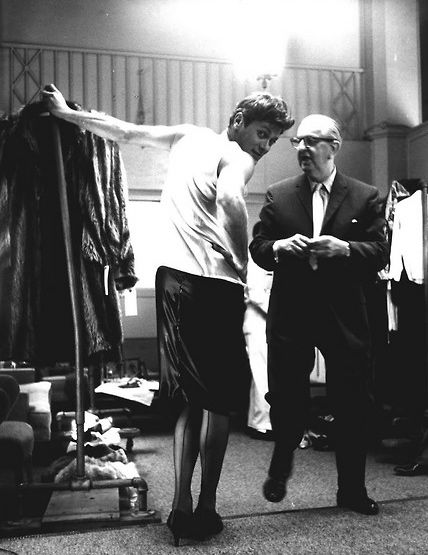
Elizabeth Taylor's death today at the age of 79 has brought about the end of an era. Like both Paul Newman and Tony Curtis' recent deaths, there are certain stars that represent a piece of classic Hollywood that can't be replaced. It reminds us that the "golden days" of Hollywood are rapidly disappearing with the deaths of its legends. Their old films stories and anecdotes are going with them.
Taylor was the true definition of a Hollywood star -- talented, beautiful and controversial in her everyday life. Having worked alongside the likes of Rock Hudson, James Dean, Marlon Brando and Richard Burton, Taylor managed to hold her own and commanded the screen in a way few actresses could.
Taylor passed away at Cedars-Sinai Hospital in Los Angeles, where she'd been hospitalized for the last six weeks. She ultimately succumbed to congestive heart failure after decades of poor health.
The five time Oscar nominee, and two time winner (for her roles in Butterfield 8 in 1961 and Who's Afraid of Virginia Woolf? in 1967), used her fame to bring attention to a variety of causes. In 1993, she was awarded the Academy's Jean Hersholt Humanitarian Award. When her close friend and former co-star, Rock Hudson, passed away in 1984 of complications from AIDS, Taylor founded the National AIDS Research Foundation. Her eight marriages, while scandalous and often talked about, were only a small part of what made her Elizabeth Taylor -- the generous, violet-eyed actress and humanitarian. Her good deeds and loyalty to her lifelong friends (most notably Michael Jackson) far overshadowed anything written in the gossip columns. She was always her own woman, regardless of the opinion of those around her.
The first time I ever saw Taylor in a film was when I was a little girl. My mom showed my sister and I the 1949 version of Little Women. She was beautiful, snobby and hilarious. To this day, the most perfect interpretation of the character of Amy March is, and always will be, the one played by Elizabeth Taylor.
As I got older I saw The Taming of the Shrew, Reflections in a Golden Eye and Giant, yet it was her role in Cat on a Hot Tin Roof that always stayed with me. Paired with Paul Newman, Taylor was a powerhouse in the role Maggie Pollitt -- the frustrated wife of Newman's hard-drinking Brick. Taylor was born to recite the dialogue of Tennessee Williams. The quiet, albeit vicious, strength and determination she instilled in her characterization of Maggie was what stayed with me most after the closing credits -- that, and those violet eyes.
Hollywood is now, once again, short one more star -- and there won't ever be another like Liz Taylor.
Showing posts with label old hollywood. Show all posts
Wednesday, March 23, 2011
Friday, March 11, 2011
Classic Film Review: Singin' In The Rain
Singin' In The Rain (1952)
Directed By: Gene Kelly & Stanley Donen
Starring: Gene Kelly, Debbie Reynolds and Donald O'Connor
"Hello. This is a demonstration of a talking picture. Notice, it is a picture of me and I'm talking. Note how my lips and the sound issuing from them are synchronized together in perfect unison."
~Man in Talking Picture Demonstration
For the longest time, whenever I heard the song "Singin' in the Rain" I thought of Malcolm McDowell as Alex DeLarge in A Clockwork Orange. Having seen that film for the first time years ago, I always found the song menacing as a direct result of Stanley Kubrick and Co. Try as I might, I just couldn't picture a happy, smiling, dancing Gene Kelly. I figured the song was "ruined" for me for good.
I eventually saw Singin' in the Rain in a university film course. For some reason, it didn't leave much of an impact. I recently purchased the DVD on a whim and decided to give it a second shot, more than four years after that first initial viewing. I figured I had to be missing something because I've always loved musicals and this is one of the classics -- one of the ones other musicals aspire to be. I'm glad I gave it that second shot because Singin' in the Rain is one of those rare films that makes you smile from start to finish. With a plot in a constant state of motion, it's one of the fastest-paced films I've ever seen.
It's 1927 and Hollywood's golden movie duo, Don Lockwood (Gene Kelly) and Lina Lamont (Jean Hagen), are threatened with a potentially career-ending situation -- the world's first "talkie", The Jazz Singer, is released to rave reviews and audience accolades. Don fears that his limited acting ability will be revealed if he's required to actually recite dialogue while Lina, his obnoxious co-star, has a high-pitched voice that would grate on anyone's nerves. When Don shares his concerns with his longtime friend, Cosmo Brown (Donald O'Connor) and Kathy Selden (Debbie Reynolds), the woman he loves, they both convince Don to make his next feature (a costume drama set during the French Revolution) a full-out musical to show off Don's talent in singing and dancing. The only problem -- Lina and her voice.
All musicals require a suspension of disbelief, arguably even moreso then some action films. People, sometimes complete strangers, are liable to break out into a perfectly synchronized song and dance, only to resume their every day activities the moment the song is over. If you can sit through the Sharks and Jets duking it out through song and dance in West Side Story, chances are you can just allow yourself to enjoy the way Singin' in the Rain moves the plot forward with music -- and what a fun plot it is!
I've always had a soft spot for Hollywood films that mock or satirize Hollywood (think Sunset Blvd. or All About Eve). It was clever to take an actual event from film history (the 1927 release of the first "talkie", The Jazz Singer) and use it to propel forward a musical about an actor trying to make it in a rapidly changing film industry. As Debbie Reynolds' Kathy tells Don at one point, "The personalities on screen just don't impress me. I mean, they don't talk, they don't act. They just make a lot of dumb show." With the advent of "talkies" the possibilities for film were endless and, back in the those old studio days, when actors were trained to be triple threats (acting, singing, dancing), someone of Don's calibre was bound to prevail. With its witty dialogue, vibrant set pieces and sly winks to real-life Hollywood situations (Lina Lamont as a a thinly veiled Jean Harlow, who had her own real-life struggle from silent films to "talkies" when her unique voice was finally heard), Singin' in the Rain is that Hollywood classic that deserves its praise. All things considered, it has aged remarkably well.
Gene Kelly is incredible to watch -- why I haven't seen more of his work by now is mystery. Here was a Hollywood star who was the complete package: he could act, dance and sing. And not just "with the best of them" ...more often than not he was the best of them. His natural (and completely genuine) charm and charisma carry the film above other musicals with dashing male leads. Kelly had that special extra something that just made him so damn likeable.
The same can be said for Debbie Reynolds, who I haven't seen in many films before. As the young and fresh-faced Kathy, Reynolds is impossibly cute, chipper and can definitely carry a tune. As for Donald O'Connor as Cosmo Brown -- what an incredibly talented dancer. His physical abilities are abnormal -- who knew the human body could run up a wall like that?
The lethal combination of Kelly-Reynolds-O'Connor is a triple threat and Singin' in the Rain benefits largely from their talent and screen presence. And, while not all of the songs are entirely memorable, these three actors manage to make you forget that the song wasn't an instant classic.
Singin' in the Rain was a marvel of cinema when it was first released -- with a heavy emphasis on the use of Technicolour cinematography and vivid production design. It's fitting that a film about the massive changes Hollywood underwent in the good ole' days also benefitted from the use of the latest technologies that were re-vamping Hollywood once again in the 1950s. But, in the end, what really helps Singin' in the Rain soar (along with its technology and actors, of course) is its quick and breezy ability to tell a fun story about movies -- and remind us why we love them so much in the first place.
FINAL GRADE: A
Directed By: Gene Kelly & Stanley Donen
Starring: Gene Kelly, Debbie Reynolds and Donald O'Connor
"Hello. This is a demonstration of a talking picture. Notice, it is a picture of me and I'm talking. Note how my lips and the sound issuing from them are synchronized together in perfect unison."
~Man in Talking Picture Demonstration
For the longest time, whenever I heard the song "Singin' in the Rain" I thought of Malcolm McDowell as Alex DeLarge in A Clockwork Orange. Having seen that film for the first time years ago, I always found the song menacing as a direct result of Stanley Kubrick and Co. Try as I might, I just couldn't picture a happy, smiling, dancing Gene Kelly. I figured the song was "ruined" for me for good.
I eventually saw Singin' in the Rain in a university film course. For some reason, it didn't leave much of an impact. I recently purchased the DVD on a whim and decided to give it a second shot, more than four years after that first initial viewing. I figured I had to be missing something because I've always loved musicals and this is one of the classics -- one of the ones other musicals aspire to be. I'm glad I gave it that second shot because Singin' in the Rain is one of those rare films that makes you smile from start to finish. With a plot in a constant state of motion, it's one of the fastest-paced films I've ever seen.
It's 1927 and Hollywood's golden movie duo, Don Lockwood (Gene Kelly) and Lina Lamont (Jean Hagen), are threatened with a potentially career-ending situation -- the world's first "talkie", The Jazz Singer, is released to rave reviews and audience accolades. Don fears that his limited acting ability will be revealed if he's required to actually recite dialogue while Lina, his obnoxious co-star, has a high-pitched voice that would grate on anyone's nerves. When Don shares his concerns with his longtime friend, Cosmo Brown (Donald O'Connor) and Kathy Selden (Debbie Reynolds), the woman he loves, they both convince Don to make his next feature (a costume drama set during the French Revolution) a full-out musical to show off Don's talent in singing and dancing. The only problem -- Lina and her voice.
All musicals require a suspension of disbelief, arguably even moreso then some action films. People, sometimes complete strangers, are liable to break out into a perfectly synchronized song and dance, only to resume their every day activities the moment the song is over. If you can sit through the Sharks and Jets duking it out through song and dance in West Side Story, chances are you can just allow yourself to enjoy the way Singin' in the Rain moves the plot forward with music -- and what a fun plot it is!
I've always had a soft spot for Hollywood films that mock or satirize Hollywood (think Sunset Blvd. or All About Eve). It was clever to take an actual event from film history (the 1927 release of the first "talkie", The Jazz Singer) and use it to propel forward a musical about an actor trying to make it in a rapidly changing film industry. As Debbie Reynolds' Kathy tells Don at one point, "The personalities on screen just don't impress me. I mean, they don't talk, they don't act. They just make a lot of dumb show." With the advent of "talkies" the possibilities for film were endless and, back in the those old studio days, when actors were trained to be triple threats (acting, singing, dancing), someone of Don's calibre was bound to prevail. With its witty dialogue, vibrant set pieces and sly winks to real-life Hollywood situations (Lina Lamont as a a thinly veiled Jean Harlow, who had her own real-life struggle from silent films to "talkies" when her unique voice was finally heard), Singin' in the Rain is that Hollywood classic that deserves its praise. All things considered, it has aged remarkably well.
Gene Kelly is incredible to watch -- why I haven't seen more of his work by now is mystery. Here was a Hollywood star who was the complete package: he could act, dance and sing. And not just "with the best of them" ...more often than not he was the best of them. His natural (and completely genuine) charm and charisma carry the film above other musicals with dashing male leads. Kelly had that special extra something that just made him so damn likeable.
The same can be said for Debbie Reynolds, who I haven't seen in many films before. As the young and fresh-faced Kathy, Reynolds is impossibly cute, chipper and can definitely carry a tune. As for Donald O'Connor as Cosmo Brown -- what an incredibly talented dancer. His physical abilities are abnormal -- who knew the human body could run up a wall like that?
The lethal combination of Kelly-Reynolds-O'Connor is a triple threat and Singin' in the Rain benefits largely from their talent and screen presence. And, while not all of the songs are entirely memorable, these three actors manage to make you forget that the song wasn't an instant classic.
Singin' in the Rain was a marvel of cinema when it was first released -- with a heavy emphasis on the use of Technicolour cinematography and vivid production design. It's fitting that a film about the massive changes Hollywood underwent in the good ole' days also benefitted from the use of the latest technologies that were re-vamping Hollywood once again in the 1950s. But, in the end, what really helps Singin' in the Rain soar (along with its technology and actors, of course) is its quick and breezy ability to tell a fun story about movies -- and remind us why we love them so much in the first place.
FINAL GRADE: A
Tuesday, February 1, 2011
Hollywood Tidbits: Some Like It Hot (Part II)
The continuation from my previous entry on Tony Curtis' The Making of Some Like It Hot (2009).
One of my friends asked that I post some more bite-size quotes from the book (which I've almost completed).
* How Tony Curtis managed long hours on the set without taking washroom breaks: “I put my thinking cap on and built a funnel-and-hose thing. It went around my thigh, down the inner side of one leg, and was hidden inside the silk stocking that I was wearing. I didn’t have to stand up or sit down. It wasn’t all that comfortable, but it worked. I should have taken out a patent on it …One day Jack (Lemmon) caught me in the men’s room. I was adjusting the thing. 'What the fuck are you doing?' he asked. 'Never mind,' I answered. 'I’m inventing something.' I didn’t tell him because he might judge me. He was kind of conservative in an odd way." (p. 82)
* Billy Wilder and his perfectionism: “I remember the scene in Poliakoff’s office, the agency where Jack and I are scrounging for work. Jack got excited, and after finishing a speech with the line ‘Now you’re talking,’ he repeated the line. Billy froze. ‘That’s not how the speech reads,’ he said. Jack pleaded. It felt right to him to say the line twice. Billy walked over to Izzy (co-screenwriter I.A.L. Diamond), who was sitting a short distance away. They started talking in low tones. This went on for close to half an hour. He finally came back to us. ‘Okay, you can repeat it,’ he said solemnly." (p. 111)
One of my friends asked that I post some more bite-size quotes from the book (which I've almost completed).
* How Tony Curtis managed long hours on the set without taking washroom breaks: “I put my thinking cap on and built a funnel-and-hose thing. It went around my thigh, down the inner side of one leg, and was hidden inside the silk stocking that I was wearing. I didn’t have to stand up or sit down. It wasn’t all that comfortable, but it worked. I should have taken out a patent on it …One day Jack (Lemmon) caught me in the men’s room. I was adjusting the thing. 'What the fuck are you doing?' he asked. 'Never mind,' I answered. 'I’m inventing something.' I didn’t tell him because he might judge me. He was kind of conservative in an odd way." (p. 82)
* Marilyn Monroe once took 81 takes before nailing a scene which required her to speak only one simple line - 'Where's that bourbon?' - She directed her frustration at Billy Wilder: "Jack and I were like two bad little kids in school. We wanted to laugh out loud so badly, but we had to turn away and do it into our hands. It was fucking outrageous. Next Billy tried putting cue cards inside the drawers. Even that didn't help. But he had to get the shot. There was no way to cut around it. I wish I'd bet a thousand dollars on eighty takes. It took eighty-one. 'I swallowed my pride,' recalled Billy. 'If she showed up, she delivered, and if it took eighty takes, I lived with eighty takes, because the eighty-first was very good.' Cut. Print. Faint." (p. 167).
* Curtis always seemed to be in awe of Jack Lemmon: "I was delighted to have Jack as a costar. He could be theatrical without worrying if he was making a fool of himself. He was comfortable in his own skin. That giggle he did as Daphne wasn't just clever. It was brilliant. Jack didn't mention his personal life at work. We both came from a certain tradition. When you were on the job, you never discussed politics, religion, family or sex. It just wasn't done in those days. But when I saw him at Hollywood parties, he had a glass of whiskey in his hand and he was more forthcoming ...A lot of men who are gentle need to drink because they're embarrassed about not being cavemen. That's my theory, anyway." (p. 159)
++ I find this passage really interesting because, if you've read the book, it's yet another example of Curtis being literally in awe of Lemmon's ability as both a comedic actor and as a human being. Curtis rarely wrote about Lemmon in The Making of Some Like It Hot (he tended to focus more on Monroe and Wilder), but when he did mention Lemmon, it was always respectful and tasteful. Curtis denied being jealous of Lemmon's talent but I wonder how true that really was because of how he writes about Lemmon -- both praising him and also pushing him into the background in favour of Monroe and Wilder. One thing I think Curtis does convey really well is the simple fact that Jack Lemmon was a class act. And Hollywood doesn't make them like that anymore.
Thursday, January 27, 2011
Hollywood Tidbits: Some Like It Hot
My obsession with Some Like It Hot continues, one year later.
I got the late, great Tony Curtis' last book, The Making of Some Like It Hot: My Memories of Marilyn Monroe and the Classic American Movie for Christmas. I started reading it this morning and I haven't been able to put it down.
Curtis had a really simple, engaging style of writing. It's more conversational -- like he's narrating this high point in his film career directly onto the page.
There are those (film critics, celebrities and the general public) who label Curtis as an outright liar and paint him as an opportunistic man prone to exaggeration. Did he or did he not impregnate Marilyn Monroe? Did they really have a torrid, top secret romance? Curtis says yes, while others point out that Monroe isn't around to tell her side of the story. Nor is the film's director Billy Wilder or his co-star Jack Lemmon. Curtis wrote his book in 2009, many, many years after the deaths of Monroe, Lemmon and Wilder (and a year before his own).
Regardless, I take everything Curtis wrote with a grain of salt. I know to make sure I don't fall into any traps as I read The Making of Some Like It Hot. But damned if the man doesn't spin a great behind-the-scenes yarn. I'm a sucker for those largely unknown Hollywood dramas that often played out in between takes, I'm only 60 pages into the book, but here are some interesting (and likely true) tidbits in this gospel according to Curtis:
* He was once roommates with Marlon Brando for four months: "I respected him. But I wasn't interested in the Method. He was great because he was Marlon, not because of the Method. I thought it was phoney. Why complicate the job of acting? Memorize your lines. Learn the part. Find out what the director wants. Then show up on time and act. This idea of trying to remember when your sister stole your peanut butter sandwich so you can give an angry performance is bullshit. If you can't turn it on by yourself, you don't belong in front of the camera." (p.39)
++ An interesting commentary on the much respected Method acting technique (introduced by Brando), to say the least.
* Marilyn Monroe's intelligence: "Marilyn was not unintelligent. She was bright, perceptive and insightful -- but only about other people. When it came to herself, or to issues relating to herself, she didn't have a clue. She needed constant reassurance." (p.39)
* His first encounter with Marilyn: "We walked to my car and I opened the door for her. I got behind the wheel, drove out the gate, and turned left, heading for Hollywood. I angled the review mirror a little so I could see her face. To my surprise she winked at me. We laughed." (p.31)
* The first time he and Jack Lemmon walked in front of the cast and crew dressed as women: "I blushed under the makeup and let the actor in me take over. I launched into a little routine. I was coy. I was reluctant ...When Jack came out he did it in a big way. He was in character as Daphne. He flew out, twirling and pirouetting. He danced ...I just stared. How the fuck could he do that? I was envious, but it was the first and last time. I loved the guy." (p. 59)
I got the late, great Tony Curtis' last book, The Making of Some Like It Hot: My Memories of Marilyn Monroe and the Classic American Movie for Christmas. I started reading it this morning and I haven't been able to put it down.
Curtis had a really simple, engaging style of writing. It's more conversational -- like he's narrating this high point in his film career directly onto the page.
There are those (film critics, celebrities and the general public) who label Curtis as an outright liar and paint him as an opportunistic man prone to exaggeration. Did he or did he not impregnate Marilyn Monroe? Did they really have a torrid, top secret romance? Curtis says yes, while others point out that Monroe isn't around to tell her side of the story. Nor is the film's director Billy Wilder or his co-star Jack Lemmon. Curtis wrote his book in 2009, many, many years after the deaths of Monroe, Lemmon and Wilder (and a year before his own).
Regardless, I take everything Curtis wrote with a grain of salt. I know to make sure I don't fall into any traps as I read The Making of Some Like It Hot. But damned if the man doesn't spin a great behind-the-scenes yarn. I'm a sucker for those largely unknown Hollywood dramas that often played out in between takes, I'm only 60 pages into the book, but here are some interesting (and likely true) tidbits in this gospel according to Curtis:
* He was once roommates with Marlon Brando for four months: "I respected him. But I wasn't interested in the Method. He was great because he was Marlon, not because of the Method. I thought it was phoney. Why complicate the job of acting? Memorize your lines. Learn the part. Find out what the director wants. Then show up on time and act. This idea of trying to remember when your sister stole your peanut butter sandwich so you can give an angry performance is bullshit. If you can't turn it on by yourself, you don't belong in front of the camera." (p.39)
++ An interesting commentary on the much respected Method acting technique (introduced by Brando), to say the least.
* Marilyn Monroe's intelligence: "Marilyn was not unintelligent. She was bright, perceptive and insightful -- but only about other people. When it came to herself, or to issues relating to herself, she didn't have a clue. She needed constant reassurance." (p.39)
* His first encounter with Marilyn: "We walked to my car and I opened the door for her. I got behind the wheel, drove out the gate, and turned left, heading for Hollywood. I angled the review mirror a little so I could see her face. To my surprise she winked at me. We laughed." (p.31)
* The first time he and Jack Lemmon walked in front of the cast and crew dressed as women: "I blushed under the makeup and let the actor in me take over. I launched into a little routine. I was coy. I was reluctant ...When Jack came out he did it in a big way. He was in character as Daphne. He flew out, twirling and pirouetting. He danced ...I just stared. How the fuck could he do that? I was envious, but it was the first and last time. I loved the guy." (p. 59)
Saturday, April 10, 2010
Book Review: Somebody, The Reckless Life and Remarkable Career of Marlon Brando


SOMEBODY: THE RECKLESS LIFE AND REMARKABLE CAREER OF MARLON BRANDO (2008)
By: Stefan Kanfer
"To the end of his life, Marlon Brando insisted that he had done nothing special. In his view acting was a trade like plumbing or baking. The only difference was that he played characters instead of unclogging drains or kneading loaves of bread. This was not false modesty; he believed what he said. But what he believed was untrue."
~Stefan Kanfer (opening passage from "Somebody")
Film historian Molly Haskell once wrote, "there is only one Brando." In his 2008 biography on the late actor, Kanfer goes above and beyond in proving Haskell's observation. In only 323 pages, Kanfer manages to do what few other Brando biographers have done; portray the man as he really was, without including empty rumours or petty gossip and speculation. Kanfer portrays Brando as a flawed, complex human being with an incredible talent.
Kanfer provides context to the life of Brando, from his early childhood in Omaha to his death in 2004, by setting the stage with issues that were going on in the world at the time. When Brando was born in April of 1924, two youths kidnapped and murdered a 14-year-old boy in a Chicago suburb. It was the time of Prohibition. Since the Great War, the area where young Marlon grew up saw a rise in its black population, causing resentment and racial strife. Not only do you learn about Marlon Brando, but Kanfer makes sure his readers are aware of the America in which the actor was growing up.
It becomes a historical text in so many ways. Kanfer discusses America, classic Hollywood and the sex, drugs and rock n'roll culture which Brando witnessed. It helps the reader to better understand why Brando did what he did and why certain causes were closer to his heart than others.
The book is full of interesting anecdotes that Kanfer dug up through his extensive research, including the fact that young Marlon was always drawn to those who were seen as social outcasts. As a child he befriended the only black boy in one of his classes and took a female classmate, who had issues with her vision because her eyes were crossed, to the school dance. Later in life, this could still be seen in his friendship to Michael Jackson, even when the King of Pop was on trial for child molestation charges, and in his dedication to the plight of Native Americans.
Despite these good deeds and his loyalty to those friends who stood by him, Brando had a quick temper and always had volatile relationships with the women in his life. Interesting fact: actress Rita Moreno once attempted suicide after Brando broke up with her. Their relationship, both personal and professional, always remained rocky from then on. Brando was father to ten children, although there are at least two others who claim they are his as well. He never connected on an emotional level with any of his three wives and would often go months, even years, without seeing some of his own children.
However, Brando often considered himself an activist, first and foremost. He battled against racial segregation, he fought to help establish a Jewish state and took up the cause of Native Americans. After the 1968 murder of Martin Luther King Jr., Brando made it his mission to help further the works of the late King Jr. in the public eye.
Kanfer details Brando's time in Tahiti, his love/hate relationship with his acting profession and the Hollywood friendships and enemies (such as his nemesis, Frank Sinatra) he made along the way. Kanfer believes Brando was happiest in Tahiti, although the actor often left for Hollywood for long stretches of time. It seemed that even though Brando hated what Hollywood represented, he was always drawn to film.
Brando often claimed he made films because of the large paycheques (which would help him when it came time to pay what he owed in his divorce settlements and child custody disputes). However, his comments on acting make for some of the best moments in Kanfer's account. Despite his flippant attitude towards his profession, Brando was a master of his craft and, without ever admitting it, seemed to be aware of that fact. One of his most famous interviews took place in his house in 1994. The infamous hour-long Larry King interview truly captures the persona of Marlon Brando, and Kanfer's novel manages to do that as well.
Brando never abused drugs. He drank very little. His vices? Sex and food. Even though he remained married to his third wife, Tarita, until his death, Brando had three children by his housekeeper and ate so much that his weight ballooned in a short span of time.
Kanfer's engaging prose and film knowledge go a long way towards making this one of the best and most unbiased celebrity biographies out there. Regardless of whether or not you are a fan of Marlon Brando, his life and unique personality make for a compelling read.
GRADE: A
BRANDO QUICK FACTS
-Born on April 3, 1924 in Omaha, Nebraska
-Nickname: Bud
-Parents: Marlon Brando Sr. and Dorothy "Dodie" Pennebaker Brando
-Siblings: Two older sisters, Frances and Jocelyn
-His mother became a depressed alcoholic, his father was a traveling salesman who slept with other women
-Pupil of legendary acting teacher, Stella Adler
-Revolutionized film acting, used the Method Approach in his performances
-Tennessee Williams re-wrote the character of Stanley Kowalski (A Streetcar Named Desire) to suit Brando's Broadway portrayal of the character
-First screen role: as a paraplegic in 1950's The Men
-Most famous roles: A Streetcar Named Desire, Viva Zapata!, On the Waterfront (for which he won his first Oscar in 1954), The Godfather (for which he won his second Oscar in 1972) and Last Tango in Paris
-In 1990, son Christian Brando shot and murdered Dag Drollet in Marlon's own house; Marlon attended Christian's trial and even testified in court
-Penned his autobiography, Songs My Mother Taught Me in 1994
-Lived next door to close friends Jack Nicholson and Michael Jackson
-Brando's son, Miko, was Michael Jackson's bodyguard
-In 1995, daughter Cheyenne committed suicide at the age of 25
-Married three times: #1 Anna Kashfi (one son, Christian), #2 Movita Castaneda (two children: son, Miko and daughter, Rebecca), #3 Tarita Teriipaia (two children: son, Simon Teihotu and daughter, Cheyenne)
-Children with his longtime mistress and housekeeper, Maria Christina Ruiz: Ninna, Myles and Timothy
-Other children: Stefano Brando (mother unknown) and one child he adopted on his own, Petra Barrett Brando
-Two others claim they are Marlon's children: Maimiti Brando and Raiatua Brando
-Final film: The Score (2001) with Robert DeNiro and Edward Norton
-Gave acting lessons at his house in L.A. during the last two years of his life: Leonardo DiCaprio, Sean Penn and Edward Norton are among those who attended group acting sessions with Brando
-Died on July 1, 2004 in Los Angeles at the age of 80 of complications from pneumonia, diabetes and pulmonary fibrosis
-Considered the greatest screen actor of all time
Subscribe to:
Posts (Atom)