Harvey (1950)
Directed By: Henry Koster
Based on the Play By: Mary Chase
Starring: Jimmy Stewart, Josephine Hull, Charles Drake and Peggy Dow
"We sit at the bar, have a drink or two, play the jukebox. And soon the faces of all the other people they turn toward mine and they smile. And they say, 'We don't know your name, Mister, but you're a very nice fellow.' Harvey and I warm ourselves in all these golden moments." ~Elwood P. Dowd (Jimmy Stewart)~
Harvey is one of those TCM staples. I've only caught bits and pieces of it on t.v. over the years, but I'd never seen the film in its entirety. Jimmy Stewart is enough to draw me to a film, but I was also intrigued by its unique concept.
Elwood P. Dowd (Jimmy Stewart) is a soft-spoken, mild-mannered and independently wealthy man. He lives in a mansion with his older sister, Veta Louise (Josephine Hull, who won Best Supporting Actress for her role), and would appear to have everything going for him. However, his sister, Veta, and her daughter, Myrtle Mae (Victoria Horne), are afraid to receive visitors to their home out of humiliation. Elwood has one very close friend who follows him everywhere: a 6 foot 3 rabbit whom Elwood calls Harvey. Elwood openly converses with Harvey, sometimes even guiding his imaginary friend through a door. The two share long drinks together at the local bar. As Elwood calmly explains to those who are willing to listen, Harvey is a pooka; a shape-shifting fairy-like creature from Celtic mythology who can take on the form of any animal and can bend time and predict the future. When Veta schemes to have her brother locked away in an asylum, a misunderstanding with the doctor, Sanderson (Charles Drake), results in Veta's institutionalization instead of Elwood.
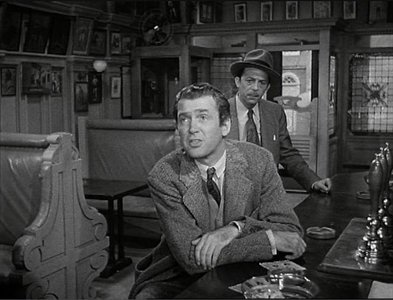
Stewart portrays Elwood as the kindest man you're likely to ever meet. Off the top of my head, I can't think of a nicer character ever being captured on film. He's not generous in an unrealistic way; Stewart made sure to instil him with every ounce of humanity and genuine personality he could conjure. Elwood warms even the coldest hearts with his soft voice and lack of judgment. Elwood charms people because he listens to them and appreciates their life stories. Only an actor of Stewart's calibre could have done justice to such a complex character. In the hands of a lesser artist, Elwood could have come off as a naive and misunderstood. Stewart lost the Best Actor Oscar that year (to Jose Ferrer in Cyrano de Bergerac), but it's one of the greatest performances I've seen. It's not an easy task to share half of your scenes with someone who isn't there; yet Stewart made it look so easy, even maintaining eye contact with the empty space in front of him. You can almost feel the actual presence of that rabbit.
It's hard to be in Stewart's shadow, especially in Harvey, but the supporting cast were all strong in their respective roles, especially Josephine Hull as Veta, Charles Drake as Dr. Sanderson and Peggy Dow as the beautiful, young nurse known only as Ms. Kelly. All convey the conflicting emotions of their characters as they struggle to solve the riddle of Elwood and Harvey. As a viewer, it's through these secondary characters that we realize that not everything should be taken at face value. We all want to believe in Harvey, including Veta, who even admits to having seen the rabbit on a couple of occasions. Is this due to Elwood's persuasive nature or is there some truth to his tale?
I had a discussion with someone who didn't like the implication in the film that Harvey is real. I think the film leaves it open to debate, depending on the viewer. Even though a person's perception of reality may be different from yours, it doesn't make it any less a reality. Elwood believes, wholeheartedly, that Harvey is there in front of him. And, for Elwood, that's the truth. As a viewer, you can leave the film thinking Harvey was either real or just a figment of an overactive imagination. But, in the end, does it really matter?
The screenplay, adapted from Mary Chase's 1944 play, is whip-smart and manages to be hilarious, heartbreaking and heartwarming all at the same time. When Elwood is asked why he and Harvey spend so much time listening to other people's trouble, he replies, "They tell about the big, terrible things that they've done and the big, wonderful things they'll do. Their hopes and their regrets, their loves and their hates. All very large, because nobody ever brings anything small into a bar. And then I introduce them to Harvey and he's bigger and grander than anything they offer me and when they leave, they leave impressed. The same people seldom come back, but that's envy, my dear. There's a little bit of envy in the best of us and that's too bad, isn't it?"It's rare to come by fascinating dialogue like that, filled with so much meaning. And to hear Stewart recite these lines make them all the more poignant.
What I admired most about the screenplay was its ability to make the viewer understand that even Elwood himself doesn't understand Harvey's purpose in his life. Despite this, Elwood welcomes Harvey's presence into his life, no questions asked. We are often afraid of what we don't understand, but Elwood makes the best of it and never professes to have all the answers. To him, Harvey just is.
Elwood is gentle and harmless, but he's not considered "normal." The film leaves you wondering what "normal" really means anyway. Elwood's warm nature would have been severely altered had he been injected with the drugs he was threatened with at the institution. And, really, who would want to change a man like Elwood? There's a little bit of madness in us all.
FINAL GRADE: A
Saturday, February 5, 2011
Tuesday, February 1, 2011
Hollywood Tidbits: Some Like It Hot (Part II)
The continuation from my previous entry on Tony Curtis' The Making of Some Like It Hot (2009).
One of my friends asked that I post some more bite-size quotes from the book (which I've almost completed).
* How Tony Curtis managed long hours on the set without taking washroom breaks: “I put my thinking cap on and built a funnel-and-hose thing. It went around my thigh, down the inner side of one leg, and was hidden inside the silk stocking that I was wearing. I didn’t have to stand up or sit down. It wasn’t all that comfortable, but it worked. I should have taken out a patent on it …One day Jack (Lemmon) caught me in the men’s room. I was adjusting the thing. 'What the fuck are you doing?' he asked. 'Never mind,' I answered. 'I’m inventing something.' I didn’t tell him because he might judge me. He was kind of conservative in an odd way." (p. 82)
* Billy Wilder and his perfectionism: “I remember the scene in Poliakoff’s office, the agency where Jack and I are scrounging for work. Jack got excited, and after finishing a speech with the line ‘Now you’re talking,’ he repeated the line. Billy froze. ‘That’s not how the speech reads,’ he said. Jack pleaded. It felt right to him to say the line twice. Billy walked over to Izzy (co-screenwriter I.A.L. Diamond), who was sitting a short distance away. They started talking in low tones. This went on for close to half an hour. He finally came back to us. ‘Okay, you can repeat it,’ he said solemnly." (p. 111)
One of my friends asked that I post some more bite-size quotes from the book (which I've almost completed).
* How Tony Curtis managed long hours on the set without taking washroom breaks: “I put my thinking cap on and built a funnel-and-hose thing. It went around my thigh, down the inner side of one leg, and was hidden inside the silk stocking that I was wearing. I didn’t have to stand up or sit down. It wasn’t all that comfortable, but it worked. I should have taken out a patent on it …One day Jack (Lemmon) caught me in the men’s room. I was adjusting the thing. 'What the fuck are you doing?' he asked. 'Never mind,' I answered. 'I’m inventing something.' I didn’t tell him because he might judge me. He was kind of conservative in an odd way." (p. 82)
* Marilyn Monroe once took 81 takes before nailing a scene which required her to speak only one simple line - 'Where's that bourbon?' - She directed her frustration at Billy Wilder: "Jack and I were like two bad little kids in school. We wanted to laugh out loud so badly, but we had to turn away and do it into our hands. It was fucking outrageous. Next Billy tried putting cue cards inside the drawers. Even that didn't help. But he had to get the shot. There was no way to cut around it. I wish I'd bet a thousand dollars on eighty takes. It took eighty-one. 'I swallowed my pride,' recalled Billy. 'If she showed up, she delivered, and if it took eighty takes, I lived with eighty takes, because the eighty-first was very good.' Cut. Print. Faint." (p. 167).
* Curtis always seemed to be in awe of Jack Lemmon: "I was delighted to have Jack as a costar. He could be theatrical without worrying if he was making a fool of himself. He was comfortable in his own skin. That giggle he did as Daphne wasn't just clever. It was brilliant. Jack didn't mention his personal life at work. We both came from a certain tradition. When you were on the job, you never discussed politics, religion, family or sex. It just wasn't done in those days. But when I saw him at Hollywood parties, he had a glass of whiskey in his hand and he was more forthcoming ...A lot of men who are gentle need to drink because they're embarrassed about not being cavemen. That's my theory, anyway." (p. 159)
++ I find this passage really interesting because, if you've read the book, it's yet another example of Curtis being literally in awe of Lemmon's ability as both a comedic actor and as a human being. Curtis rarely wrote about Lemmon in The Making of Some Like It Hot (he tended to focus more on Monroe and Wilder), but when he did mention Lemmon, it was always respectful and tasteful. Curtis denied being jealous of Lemmon's talent but I wonder how true that really was because of how he writes about Lemmon -- both praising him and also pushing him into the background in favour of Monroe and Wilder. One thing I think Curtis does convey really well is the simple fact that Jack Lemmon was a class act. And Hollywood doesn't make them like that anymore.
Thursday, January 27, 2011
Hollywood Tidbits: Some Like It Hot
My obsession with Some Like It Hot continues, one year later.
I got the late, great Tony Curtis' last book, The Making of Some Like It Hot: My Memories of Marilyn Monroe and the Classic American Movie for Christmas. I started reading it this morning and I haven't been able to put it down.
Curtis had a really simple, engaging style of writing. It's more conversational -- like he's narrating this high point in his film career directly onto the page.
There are those (film critics, celebrities and the general public) who label Curtis as an outright liar and paint him as an opportunistic man prone to exaggeration. Did he or did he not impregnate Marilyn Monroe? Did they really have a torrid, top secret romance? Curtis says yes, while others point out that Monroe isn't around to tell her side of the story. Nor is the film's director Billy Wilder or his co-star Jack Lemmon. Curtis wrote his book in 2009, many, many years after the deaths of Monroe, Lemmon and Wilder (and a year before his own).
Regardless, I take everything Curtis wrote with a grain of salt. I know to make sure I don't fall into any traps as I read The Making of Some Like It Hot. But damned if the man doesn't spin a great behind-the-scenes yarn. I'm a sucker for those largely unknown Hollywood dramas that often played out in between takes, I'm only 60 pages into the book, but here are some interesting (and likely true) tidbits in this gospel according to Curtis:
* He was once roommates with Marlon Brando for four months: "I respected him. But I wasn't interested in the Method. He was great because he was Marlon, not because of the Method. I thought it was phoney. Why complicate the job of acting? Memorize your lines. Learn the part. Find out what the director wants. Then show up on time and act. This idea of trying to remember when your sister stole your peanut butter sandwich so you can give an angry performance is bullshit. If you can't turn it on by yourself, you don't belong in front of the camera." (p.39)
++ An interesting commentary on the much respected Method acting technique (introduced by Brando), to say the least.
* Marilyn Monroe's intelligence: "Marilyn was not unintelligent. She was bright, perceptive and insightful -- but only about other people. When it came to herself, or to issues relating to herself, she didn't have a clue. She needed constant reassurance." (p.39)
* His first encounter with Marilyn: "We walked to my car and I opened the door for her. I got behind the wheel, drove out the gate, and turned left, heading for Hollywood. I angled the review mirror a little so I could see her face. To my surprise she winked at me. We laughed." (p.31)
* The first time he and Jack Lemmon walked in front of the cast and crew dressed as women: "I blushed under the makeup and let the actor in me take over. I launched into a little routine. I was coy. I was reluctant ...When Jack came out he did it in a big way. He was in character as Daphne. He flew out, twirling and pirouetting. He danced ...I just stared. How the fuck could he do that? I was envious, but it was the first and last time. I loved the guy." (p. 59)
I got the late, great Tony Curtis' last book, The Making of Some Like It Hot: My Memories of Marilyn Monroe and the Classic American Movie for Christmas. I started reading it this morning and I haven't been able to put it down.
Curtis had a really simple, engaging style of writing. It's more conversational -- like he's narrating this high point in his film career directly onto the page.
There are those (film critics, celebrities and the general public) who label Curtis as an outright liar and paint him as an opportunistic man prone to exaggeration. Did he or did he not impregnate Marilyn Monroe? Did they really have a torrid, top secret romance? Curtis says yes, while others point out that Monroe isn't around to tell her side of the story. Nor is the film's director Billy Wilder or his co-star Jack Lemmon. Curtis wrote his book in 2009, many, many years after the deaths of Monroe, Lemmon and Wilder (and a year before his own).
Regardless, I take everything Curtis wrote with a grain of salt. I know to make sure I don't fall into any traps as I read The Making of Some Like It Hot. But damned if the man doesn't spin a great behind-the-scenes yarn. I'm a sucker for those largely unknown Hollywood dramas that often played out in between takes, I'm only 60 pages into the book, but here are some interesting (and likely true) tidbits in this gospel according to Curtis:
* He was once roommates with Marlon Brando for four months: "I respected him. But I wasn't interested in the Method. He was great because he was Marlon, not because of the Method. I thought it was phoney. Why complicate the job of acting? Memorize your lines. Learn the part. Find out what the director wants. Then show up on time and act. This idea of trying to remember when your sister stole your peanut butter sandwich so you can give an angry performance is bullshit. If you can't turn it on by yourself, you don't belong in front of the camera." (p.39)
++ An interesting commentary on the much respected Method acting technique (introduced by Brando), to say the least.
* Marilyn Monroe's intelligence: "Marilyn was not unintelligent. She was bright, perceptive and insightful -- but only about other people. When it came to herself, or to issues relating to herself, she didn't have a clue. She needed constant reassurance." (p.39)
* His first encounter with Marilyn: "We walked to my car and I opened the door for her. I got behind the wheel, drove out the gate, and turned left, heading for Hollywood. I angled the review mirror a little so I could see her face. To my surprise she winked at me. We laughed." (p.31)
* The first time he and Jack Lemmon walked in front of the cast and crew dressed as women: "I blushed under the makeup and let the actor in me take over. I launched into a little routine. I was coy. I was reluctant ...When Jack came out he did it in a big way. He was in character as Daphne. He flew out, twirling and pirouetting. He danced ...I just stared. How the fuck could he do that? I was envious, but it was the first and last time. I loved the guy." (p. 59)
Sunday, January 23, 2011
Movie Review: Somewhere
Somewhere (2010)
Starring: Stephen Dorff and Elle Fanning
Written and Directed By: Sophia Coppola
This was one of my most-anticipated films of 2010. I love Sophia Coppola. I think Lost in Translation (2003) is one of the best films of the 2000s. It may be hard for her to top what she managed to achieve with that film. I also thought The Virgin Suicides (1999) was an excellent directorial debut and I even enjoyed Marie Antoinette (2006) even though there are many who despised it.
Somewhere is Coppola's most self-indulgent film. It has long, monotonous scenes of nothing. As a result, the viewer is left with an acute understanding of the point she is trying to make while getting a little restless at the same time. Take for example the opening scene. Hollywood actor Johnny Marco (Stephen Dorff) drives his expensive (and loud) car around and around in endless circles on a sunny, dusty patch of land in L.A. County. The car circles the entire track at least four times before coming to a stop. Coppola has made her point -- Johnny Marco is aimless, restless and is quickly going nowhere in life. However, it is at the expense of her audience who may become detached and alienated right from the long opening scene.
That being said, Coppola has this knack for exploring an atmosphere. That talent is on full display in Somewhere. Like her previous films, Somewhere is less a cohesive narrative and more of a series of vignettes that allow the viewer a glimpse into the lives of Johnny and his 11-year-old daughter, Cleo (Elle Fanning). The atmosphere on full display is the small bubble Johnny lives in -- which consists of an endless stream of parties and publicity junkets, his near-empty room at the infamous Chateau Marmont and his aimless drives around Hollywood. When Cleo comes to stay with him for a few weeks because her mother needs "time off," Johnny and Cleo embark on a series of little "get-to-know-you" father-daughter bonding moments. Whether spending time together in their massive hotel suite in Italy or simply playing ping-pong near the Chateau Marmont swimming pool, Cleo suddenly provides meaning and purpose to Johnny's life. Sometimes a person's happiness, whether you are rich or poor, can be as simple as having a loving companion at your side.
Somewhere has a very European minimalism feel to its construction. It felt French, if that makes any sense. That minimalist approach isolates Johnny and Cleo in this vapid Hollywood environment. Despite that setting, there is nothing vapid or Hollywood about their bonding experiences. The film excels most when the two lead actors are on the screen together.
Coppola had Dorff and Fanning hang out alone together for weeks leading up to the start of filming. That tactic paid off as the two of them have an undeniable and completely believable chemistry. Johnny treats Cleo less like a daughter and more like an equal partner, suggesting that while Johnny may not have natural paternal instincts when it comes to discipline (he takes Cleo gambling in Las Vegas), he loves his daughter. In a film of long, aimless scenes, it's the performances of Dorff and Fanning that keep the viewer invested in movie. Dorff may not be the most interesting actor, but he does a solid job in Somewhere -- based on his own stalled Hollywood career, Dorff is perfectly cast in the role. However, Fanning is the real star here -- she's an adorable, talented and pretty young woman who is a dozen times more charming than her precocious, overrated older sister, Dakota. I have an appreciation for child actors who actually act like the children they are in their roles, instead of going the wise-beyond-their-years route. Fanning gives a subtle, nuanced performance that is so good that I hope she gets a Best Supporting Actress nod at the Oscars. Her scenes with Dorff and Chris Pontius (the Jackass star plays Johnny's stoner buddy, Sammy) are the highlights of the film.
In the end, Somewhere feels a little hit and miss. While there were some genuinely moving scenes there were also times when I simply just wanted to know a bit more about Johnny and Cleo. I wanted at least one stand-alone scene where they come to terms with one another, as Charlotte and Bob did a few times in Lost in Translation. What was their relationship like before this extended bonding period? How does Johnny really feel about his fame? We know that he's depressed and lonely and isolated in his hotel room, but we don't know when or why those feelings started. That being said, Coppola tends to leave things unsaid -- it's up to the viewer to read into the characters' actions and decide for themselves. Sophia Coppola has never disappointed, though. She remains a unique voice in the world of Hollywood, choosing to quietly focus on people instead of cars, money or extended action sequences.
FINAL GRADE: B
Starring: Stephen Dorff and Elle Fanning
Written and Directed By: Sophia Coppola
This was one of my most-anticipated films of 2010. I love Sophia Coppola. I think Lost in Translation (2003) is one of the best films of the 2000s. It may be hard for her to top what she managed to achieve with that film. I also thought The Virgin Suicides (1999) was an excellent directorial debut and I even enjoyed Marie Antoinette (2006) even though there are many who despised it.
Somewhere is Coppola's most self-indulgent film. It has long, monotonous scenes of nothing. As a result, the viewer is left with an acute understanding of the point she is trying to make while getting a little restless at the same time. Take for example the opening scene. Hollywood actor Johnny Marco (Stephen Dorff) drives his expensive (and loud) car around and around in endless circles on a sunny, dusty patch of land in L.A. County. The car circles the entire track at least four times before coming to a stop. Coppola has made her point -- Johnny Marco is aimless, restless and is quickly going nowhere in life. However, it is at the expense of her audience who may become detached and alienated right from the long opening scene.
That being said, Coppola has this knack for exploring an atmosphere. That talent is on full display in Somewhere. Like her previous films, Somewhere is less a cohesive narrative and more of a series of vignettes that allow the viewer a glimpse into the lives of Johnny and his 11-year-old daughter, Cleo (Elle Fanning). The atmosphere on full display is the small bubble Johnny lives in -- which consists of an endless stream of parties and publicity junkets, his near-empty room at the infamous Chateau Marmont and his aimless drives around Hollywood. When Cleo comes to stay with him for a few weeks because her mother needs "time off," Johnny and Cleo embark on a series of little "get-to-know-you" father-daughter bonding moments. Whether spending time together in their massive hotel suite in Italy or simply playing ping-pong near the Chateau Marmont swimming pool, Cleo suddenly provides meaning and purpose to Johnny's life. Sometimes a person's happiness, whether you are rich or poor, can be as simple as having a loving companion at your side.
Somewhere has a very European minimalism feel to its construction. It felt French, if that makes any sense. That minimalist approach isolates Johnny and Cleo in this vapid Hollywood environment. Despite that setting, there is nothing vapid or Hollywood about their bonding experiences. The film excels most when the two lead actors are on the screen together.
Coppola had Dorff and Fanning hang out alone together for weeks leading up to the start of filming. That tactic paid off as the two of them have an undeniable and completely believable chemistry. Johnny treats Cleo less like a daughter and more like an equal partner, suggesting that while Johnny may not have natural paternal instincts when it comes to discipline (he takes Cleo gambling in Las Vegas), he loves his daughter. In a film of long, aimless scenes, it's the performances of Dorff and Fanning that keep the viewer invested in movie. Dorff may not be the most interesting actor, but he does a solid job in Somewhere -- based on his own stalled Hollywood career, Dorff is perfectly cast in the role. However, Fanning is the real star here -- she's an adorable, talented and pretty young woman who is a dozen times more charming than her precocious, overrated older sister, Dakota. I have an appreciation for child actors who actually act like the children they are in their roles, instead of going the wise-beyond-their-years route. Fanning gives a subtle, nuanced performance that is so good that I hope she gets a Best Supporting Actress nod at the Oscars. Her scenes with Dorff and Chris Pontius (the Jackass star plays Johnny's stoner buddy, Sammy) are the highlights of the film.
In the end, Somewhere feels a little hit and miss. While there were some genuinely moving scenes there were also times when I simply just wanted to know a bit more about Johnny and Cleo. I wanted at least one stand-alone scene where they come to terms with one another, as Charlotte and Bob did a few times in Lost in Translation. What was their relationship like before this extended bonding period? How does Johnny really feel about his fame? We know that he's depressed and lonely and isolated in his hotel room, but we don't know when or why those feelings started. That being said, Coppola tends to leave things unsaid -- it's up to the viewer to read into the characters' actions and decide for themselves. Sophia Coppola has never disappointed, though. She remains a unique voice in the world of Hollywood, choosing to quietly focus on people instead of cars, money or extended action sequences.
FINAL GRADE: B
Saturday, January 22, 2011
30 Day Movie Meme: Day 18
Day 18: CHARACTER(S) YOU RELATE TO
I've really slacked on this 30 Day Movie Meme, but I haven't completely forgotten it! It will get done one of these days. When I saw what the topic was for Day 18 I knew, instantly, which two characters I'd write about.
Josephine "Jo" March is based on the character from Louisa May Alcott's classic novel, Little Women. My favourite film adaptation is the 1949 version starring June Allyson as Jo (it also featured Elizabeth Taylor as bratty Amy and Janet Leigh as the maternal Meg). More than Winona Ryder (in 1994) and more than even Katherine Hepburn (in 1933), Allyson captured the essence of Jo March -- that vibrant, tomboyish, larger-than-life young woman whose only disadvantage seemed to be that she was born in the wrong time period (the film is set in the mid- to late- 19th-century). I can completely relate to Jo's more obvious character traits and personal passions. I can relate to her loud voice, coarse language and her embarrassing foot-in-mouth moments.
I can also relate to her tendency to sob like a baby while reading a sad piece of literature, her passion for writing and becoming a published author, her outlandish imagination, her drama (she secretly desires to be an actress) and her desire to travel and see the world, even if it means leaving behind her beloved home and family. I can even sympathize with her awkward position with Laurie, a man who cares dearly for her but for whom she only views as a close friend. Even her back and forth indecision as to the appealing (or unappealing) prospects of getting married one day is something I can identify with myself. I love watching this film (I usually try to watch it at least once a year) because it makes me laugh to watch hyper-active, emotionally over-the-top Jo try to figure out what she wants out of life, usually using her charming and romantic rhetoric. In the end, she winds up a published author, has her own independence and falls in love with a handsome older German professor she met while living on her own ...that would be nice.
Charlotte is Sophia Coppola's main female lead in her 2003 film, Lost in Translation. Played by Scarlett Johansson in her breakout role, Charlotte is in Tokyo while her photographer husband is off on a shoot. Having accompanied him to Japan, Charlotte finds herself rethinking the decisions that got her to this point in her young life. Along the way she develops a close bond with an aging actor, played by Bill Murray. The two of them, together, reconnect with the world outside their own personal problems.
I love Sophia Coppola, mainly for making this film and creating the characters of Charlotte and Bob Harris. Her keen intuition and her complete understanding of how real characters should be written is sharply felt in this film.
For everything energetic Jo March is, I can relate to some of Charlotte's much quieter attributes. I can relate to her restlessness at growing older. I can understand that disparity between being young but, for some reason, feeling a lot older than I should feel. I understand that curse of overanalyzing everything and rethinking past decisions. I too can be moody and have the tendency to make snap judgements of people of whom I know nothing about. I've travelled on my own before and, in general, I prefer it because you learn a lot about yourself when you are completely alone in a foreign country. You have to force yourself to interact with people you otherwise would never have said a word to had you been with a companion you knew. You get to appreciate the finer things when you don't have anyone else around to distract you. That being said, it can be lonely and a little frightening at times but, ultimately, always worth it for the people you meet and the experiences you take back home with you. Even though Charlotte is technically in Japan with her husband, he's not really around, so she's left to her own resources.
But, more than anything else, she just wants to connect with someone on a deeper level and have a good time while doing it. But, then again, don't we all?
I've really slacked on this 30 Day Movie Meme, but I haven't completely forgotten it! It will get done one of these days. When I saw what the topic was for Day 18 I knew, instantly, which two characters I'd write about.
Josephine "Jo" March is based on the character from Louisa May Alcott's classic novel, Little Women. My favourite film adaptation is the 1949 version starring June Allyson as Jo (it also featured Elizabeth Taylor as bratty Amy and Janet Leigh as the maternal Meg). More than Winona Ryder (in 1994) and more than even Katherine Hepburn (in 1933), Allyson captured the essence of Jo March -- that vibrant, tomboyish, larger-than-life young woman whose only disadvantage seemed to be that she was born in the wrong time period (the film is set in the mid- to late- 19th-century). I can completely relate to Jo's more obvious character traits and personal passions. I can relate to her loud voice, coarse language and her embarrassing foot-in-mouth moments.
I can also relate to her tendency to sob like a baby while reading a sad piece of literature, her passion for writing and becoming a published author, her outlandish imagination, her drama (she secretly desires to be an actress) and her desire to travel and see the world, even if it means leaving behind her beloved home and family. I can even sympathize with her awkward position with Laurie, a man who cares dearly for her but for whom she only views as a close friend. Even her back and forth indecision as to the appealing (or unappealing) prospects of getting married one day is something I can identify with myself. I love watching this film (I usually try to watch it at least once a year) because it makes me laugh to watch hyper-active, emotionally over-the-top Jo try to figure out what she wants out of life, usually using her charming and romantic rhetoric. In the end, she winds up a published author, has her own independence and falls in love with a handsome older German professor she met while living on her own ...that would be nice.
Charlotte is Sophia Coppola's main female lead in her 2003 film, Lost in Translation. Played by Scarlett Johansson in her breakout role, Charlotte is in Tokyo while her photographer husband is off on a shoot. Having accompanied him to Japan, Charlotte finds herself rethinking the decisions that got her to this point in her young life. Along the way she develops a close bond with an aging actor, played by Bill Murray. The two of them, together, reconnect with the world outside their own personal problems.
I love Sophia Coppola, mainly for making this film and creating the characters of Charlotte and Bob Harris. Her keen intuition and her complete understanding of how real characters should be written is sharply felt in this film.
For everything energetic Jo March is, I can relate to some of Charlotte's much quieter attributes. I can relate to her restlessness at growing older. I can understand that disparity between being young but, for some reason, feeling a lot older than I should feel. I understand that curse of overanalyzing everything and rethinking past decisions. I too can be moody and have the tendency to make snap judgements of people of whom I know nothing about. I've travelled on my own before and, in general, I prefer it because you learn a lot about yourself when you are completely alone in a foreign country. You have to force yourself to interact with people you otherwise would never have said a word to had you been with a companion you knew. You get to appreciate the finer things when you don't have anyone else around to distract you. That being said, it can be lonely and a little frightening at times but, ultimately, always worth it for the people you meet and the experiences you take back home with you. Even though Charlotte is technically in Japan with her husband, he's not really around, so she's left to her own resources.
But, more than anything else, she just wants to connect with someone on a deeper level and have a good time while doing it. But, then again, don't we all?
Saturday, January 15, 2011
Classic Film Review: An Affair To Remember
An Affair To Remember (1957)
Starring: Cary Grant and Deborah Kerr
Directed By: Leo McCarey
"Winter must be cold for those with no warm memories ...we've already missed the spring."
~Terry McKay (Deborah Kerr)~
I'm not usually one to fall for films that come under the genre of romance. Of course, I have my exceptions; it's just that I find the large majority of the ones I've seen to be too sappy and saccharin for my taste. I like a dose of sour with my sweet. If I'm going to watch a film about romance, I prefer mine with a dose of reality.
An Affair To Remember is one of those exceptions, thanks in large part to its two lead actors. If any romance could carry me away on the wave of a gooey love affair, this would be the one. The film is, essentially, the original tearjerker romance that set the tone for the films of that genre that we see today.
Nicky Ferrante (Cary Grant) is a rich and handsome playboy who has everything handed to him on a silver platter. He is constantly surrounded by women who want to be with him and men who want to be him. Although engaged to an heiress, Ferrante travels to Europe alone for a trip. On his return ocean cruise that is bound for New York, Nicky meets nightclub singer Terry McKay (Deborah Kerr). Over the course of a few days, the two fall in love despite the fact that both are in long-term relationships back home. They struggle to keep their clandestine affair a secret but soon the whole ship finds out and the two fear the news may be discovered by their significant others' back home in New York. Before parting ways, the two agree that, if they both still have strong feelings for one another in six months time, they will meet at the top of the Empire State Building. However, a tragedy prevents them from reuniting and the two are left wondering if they will ever see each other again.
The chemistry between Grant and Kerr is undeniable -- the two flirt and fight with equally charming zeal. Whether playing coy with one another or openly professing their love, they make the viewer believe that these two wealthy people truly could fall in love as quickly as they did. Their initial denial of their feelings for one another only makes their attraction stronger. Grant and Kerr were both seasoned British actors; however, their inability to mask their natural accents while playing Americans was, at times, a little distracting. But, outside of that one (minor) issue, the film revolves around Nicky and Terry and the lovely performances of Grant and Kerr.
I found the film to be a series of highs and lows in terms of plotting. Despite its charming stars, An Affair To Remember is a little structurally uneven at points. For every lovely scene of character development (such as the wonderful extended scene where Nicky takes Terry to meet his sick grandmother) there is a distractingly unnecessary scene (the entire song and dance routine performed by the children that Terry teaches). The first half of the film is flirty and fun -- it's so enjoyable to watch Nicky and Terry get to know one another and struggle to keep their growing affection a secret from the gossip-seeking people aboard the ship. The film lags a bit in the second half when the two of them are separated. The script isn't strong enough to sustain the film if the two lead actors are apart. However, if nothing else, it does put the viewer on edge because we can't wait for the two of them to meet up again after so much time has passed.
The tragedy that prevents Nicky and Terry from meeting again six months after separating is exactly what you'd expect from those cliched romance films that insist on piling on the pain and strain of its two lovers. Back in 1957 I can see how this tragedy could have gripped an audience; however, watching it in 2011 is a little different. We've seen this plot device run into the ground -- a weak (although usually successful) attempt to manipulate audience emotion. Therefore, I had to try and watch it as though it were 1957, but the 2011 movie watcher in me rolled my eyes a little at the drama of it all. I found other moments in the film (such as that aforementioned scene with the grandmother) much more emotionally effective than the contrived tragedy that keeps Nicky and Terry apart.
However, something happens in the end to change the eye-rolling back into a genuine love for the film: Grant and Kerr make their final scene with one another work so well that you forget about the soggy, emotional drama that pulled them apart in the first place and just rejoice in the fact that you get to see them share the screen again. That type of magic doesn't happen in every film. The combination of talented actors and their natural chemistry with one another is what helps raise An Affair To Remember above and beyond your average, mediocre romantic film. As a result, it deserves its place as a Hollywood classic and not only for the influence it had on the romance genre, in general.
This is one of those "golden oldies" I really enjoyed, although I wouldn't list it amongst my overall absolute favourites.
FINAL GRADE: B+
Starring: Cary Grant and Deborah Kerr
Directed By: Leo McCarey
"Winter must be cold for those with no warm memories ...we've already missed the spring."
~Terry McKay (Deborah Kerr)~
I'm not usually one to fall for films that come under the genre of romance. Of course, I have my exceptions; it's just that I find the large majority of the ones I've seen to be too sappy and saccharin for my taste. I like a dose of sour with my sweet. If I'm going to watch a film about romance, I prefer mine with a dose of reality.
An Affair To Remember is one of those exceptions, thanks in large part to its two lead actors. If any romance could carry me away on the wave of a gooey love affair, this would be the one. The film is, essentially, the original tearjerker romance that set the tone for the films of that genre that we see today.
Nicky Ferrante (Cary Grant) is a rich and handsome playboy who has everything handed to him on a silver platter. He is constantly surrounded by women who want to be with him and men who want to be him. Although engaged to an heiress, Ferrante travels to Europe alone for a trip. On his return ocean cruise that is bound for New York, Nicky meets nightclub singer Terry McKay (Deborah Kerr). Over the course of a few days, the two fall in love despite the fact that both are in long-term relationships back home. They struggle to keep their clandestine affair a secret but soon the whole ship finds out and the two fear the news may be discovered by their significant others' back home in New York. Before parting ways, the two agree that, if they both still have strong feelings for one another in six months time, they will meet at the top of the Empire State Building. However, a tragedy prevents them from reuniting and the two are left wondering if they will ever see each other again.
The chemistry between Grant and Kerr is undeniable -- the two flirt and fight with equally charming zeal. Whether playing coy with one another or openly professing their love, they make the viewer believe that these two wealthy people truly could fall in love as quickly as they did. Their initial denial of their feelings for one another only makes their attraction stronger. Grant and Kerr were both seasoned British actors; however, their inability to mask their natural accents while playing Americans was, at times, a little distracting. But, outside of that one (minor) issue, the film revolves around Nicky and Terry and the lovely performances of Grant and Kerr.
I found the film to be a series of highs and lows in terms of plotting. Despite its charming stars, An Affair To Remember is a little structurally uneven at points. For every lovely scene of character development (such as the wonderful extended scene where Nicky takes Terry to meet his sick grandmother) there is a distractingly unnecessary scene (the entire song and dance routine performed by the children that Terry teaches). The first half of the film is flirty and fun -- it's so enjoyable to watch Nicky and Terry get to know one another and struggle to keep their growing affection a secret from the gossip-seeking people aboard the ship. The film lags a bit in the second half when the two of them are separated. The script isn't strong enough to sustain the film if the two lead actors are apart. However, if nothing else, it does put the viewer on edge because we can't wait for the two of them to meet up again after so much time has passed.
The tragedy that prevents Nicky and Terry from meeting again six months after separating is exactly what you'd expect from those cliched romance films that insist on piling on the pain and strain of its two lovers. Back in 1957 I can see how this tragedy could have gripped an audience; however, watching it in 2011 is a little different. We've seen this plot device run into the ground -- a weak (although usually successful) attempt to manipulate audience emotion. Therefore, I had to try and watch it as though it were 1957, but the 2011 movie watcher in me rolled my eyes a little at the drama of it all. I found other moments in the film (such as that aforementioned scene with the grandmother) much more emotionally effective than the contrived tragedy that keeps Nicky and Terry apart.
However, something happens in the end to change the eye-rolling back into a genuine love for the film: Grant and Kerr make their final scene with one another work so well that you forget about the soggy, emotional drama that pulled them apart in the first place and just rejoice in the fact that you get to see them share the screen again. That type of magic doesn't happen in every film. The combination of talented actors and their natural chemistry with one another is what helps raise An Affair To Remember above and beyond your average, mediocre romantic film. As a result, it deserves its place as a Hollywood classic and not only for the influence it had on the romance genre, in general.
This is one of those "golden oldies" I really enjoyed, although I wouldn't list it amongst my overall absolute favourites.
FINAL GRADE: B+
Sunday, January 9, 2011
Movie Review: The Fighter
The Fighter (2010)
Starring: Mark Wahlberg, Christian Bale, Amy Adams and Melissa Leo
Directed By: David O. Russell
The title suggests there is only one fighter, but David O. Russell's film is centred on two brawlers -- one an up-and-coming star, the other a crack-addicted one-hit wonder. Most will understandably assume it's Mark Wahlberg's Mickey Ward who is the fighter of the title; however, it could just as easily refer to Christian Bale's Dickie Eklund, who must battle his demons to regain the respect he lost when he became a drug addict and faded from the boxing scene.
Based on a true story, the film is set in 1993 when Mickey is on the verge of becoming a boxing superstar in his own right. Holding him back is his manager mother, Alice (Melissa Leo), and his half-brother, Dickie, who enter Mickey into mismatched bouts that bring more physical pain than career gain. Dickie famously beat Sugar Ray Leonard in a 1978 fight that, even in 1993, remained controversial. Did Dickie actually outbox his famous opponent or did Sugar Ray simply trip and lose his footing? Still remembered as "the Pride of Lowell," the now-drug addled Dickie relives his brief former glory through his younger brother's rising star. It isn't until Mickey meets feisty bartender, Charlene (Amy Adams), that he begins to question whether or not his family might be toxic and preventing him from reaching his full potential.
This is Wahlberg's third go-around with director Russell (following 1999's Three Kings and 2004's I Heart Huckabees). Wahlberg, a dependable actor, does his best work with Russell. However, both actor and director are aware of the talented cast around them and, instead of Wahlberg going all out in the drama department, they let the supporting cast shine through. The story may be about Mickey, but he faces stiff competition from the fascinating slew of characters that walk in and out of his life.
Christian Bale leads the pack of supporting characters with his shocking physical and emotional transformation into Dickie Eklund. Bale lost an incredible amount of weight (although, it should be noted, not as much as he lost in 2004's The Machinist). He also thinned his hair (complete with bald spots) and dirtied his teeth to fully embody a man who still fancies himself the town's celebrity figure. His crack addiction is the worst-kept secret in the neighbourhood, but there's no denying the talent he once had, which is still evident as he trains his brother, Mickey. Dickie is both comic relief and a tragic character. Bale is almost scary-good with his black-rimmed and haunted eyes. You forget he's Christian Bale. His complete transformation into his role is admirable when compared to other actors who simply phone in their performances. Say what you will about Bale and his hot-headed temper, but the man is a genuine artist and he just might finally get that elusive Oscar this year.
In a handful of boxing movies, the women play background characters: The Girlfriend. The Wife. The Mother. While relegated to the background, they show up only to provide brief emotional support or get punched around themselves. Films about boxing tend to only be about men. In The Fighter, the women are just as strong, fascinating and hardened as their male counterparts.
Amy Adams once again proves that, if she stays away from lame rom-coms, she can be an exceptional actress. Her role as Charlene is strong and fierce; she's not a woman to be messed with and she wants nothing but the best for Mickey, even if that means convincing him to detach himself from his family. Her violent physical tilts and war of words with Micky's mother and seven sisters make for some of the best scenes in the film. She might be heading towards yet another Oscar nomination this year. In a recent interview with David Letterman, both Dustin Hoffman and Robert DeNiro cited her as their favourite young actress working today. With friends like that in her corner, Adams should remain focused on starring in well-made cinematic gems.
Last, but not least, Melissa Leo is trashy and fabulous as Mickey's mother, Alice. With her horrifically permed and bleached hair, constant chain-smoking and stiletto heels, she's a force to be reckoned with and she doesn't let anyone forget that her two sons are her main source of pride and joy. Bale, Adams and Leo are all nominated for Screen Actors Guild Awards and Oscar kudos are likely to follow.
The camera work is exceptional: you are literally placed in the middle of both Mickey's battles inside and outside the ring. Whether it's a boxing match against a formidable foe or a verbal battle with his head-strong mother, the camera chronicles the events as though recording a documentary. You feel every punch and every verbal blow.
FINAL GRADE: B+
Starring: Mark Wahlberg, Christian Bale, Amy Adams and Melissa Leo
Directed By: David O. Russell
The title suggests there is only one fighter, but David O. Russell's film is centred on two brawlers -- one an up-and-coming star, the other a crack-addicted one-hit wonder. Most will understandably assume it's Mark Wahlberg's Mickey Ward who is the fighter of the title; however, it could just as easily refer to Christian Bale's Dickie Eklund, who must battle his demons to regain the respect he lost when he became a drug addict and faded from the boxing scene.
Based on a true story, the film is set in 1993 when Mickey is on the verge of becoming a boxing superstar in his own right. Holding him back is his manager mother, Alice (Melissa Leo), and his half-brother, Dickie, who enter Mickey into mismatched bouts that bring more physical pain than career gain. Dickie famously beat Sugar Ray Leonard in a 1978 fight that, even in 1993, remained controversial. Did Dickie actually outbox his famous opponent or did Sugar Ray simply trip and lose his footing? Still remembered as "the Pride of Lowell," the now-drug addled Dickie relives his brief former glory through his younger brother's rising star. It isn't until Mickey meets feisty bartender, Charlene (Amy Adams), that he begins to question whether or not his family might be toxic and preventing him from reaching his full potential.
This is Wahlberg's third go-around with director Russell (following 1999's Three Kings and 2004's I Heart Huckabees). Wahlberg, a dependable actor, does his best work with Russell. However, both actor and director are aware of the talented cast around them and, instead of Wahlberg going all out in the drama department, they let the supporting cast shine through. The story may be about Mickey, but he faces stiff competition from the fascinating slew of characters that walk in and out of his life.
Christian Bale leads the pack of supporting characters with his shocking physical and emotional transformation into Dickie Eklund. Bale lost an incredible amount of weight (although, it should be noted, not as much as he lost in 2004's The Machinist). He also thinned his hair (complete with bald spots) and dirtied his teeth to fully embody a man who still fancies himself the town's celebrity figure. His crack addiction is the worst-kept secret in the neighbourhood, but there's no denying the talent he once had, which is still evident as he trains his brother, Mickey. Dickie is both comic relief and a tragic character. Bale is almost scary-good with his black-rimmed and haunted eyes. You forget he's Christian Bale. His complete transformation into his role is admirable when compared to other actors who simply phone in their performances. Say what you will about Bale and his hot-headed temper, but the man is a genuine artist and he just might finally get that elusive Oscar this year.
In a handful of boxing movies, the women play background characters: The Girlfriend. The Wife. The Mother. While relegated to the background, they show up only to provide brief emotional support or get punched around themselves. Films about boxing tend to only be about men. In The Fighter, the women are just as strong, fascinating and hardened as their male counterparts.Amy Adams once again proves that, if she stays away from lame rom-coms, she can be an exceptional actress. Her role as Charlene is strong and fierce; she's not a woman to be messed with and she wants nothing but the best for Mickey, even if that means convincing him to detach himself from his family. Her violent physical tilts and war of words with Micky's mother and seven sisters make for some of the best scenes in the film. She might be heading towards yet another Oscar nomination this year. In a recent interview with David Letterman, both Dustin Hoffman and Robert DeNiro cited her as their favourite young actress working today. With friends like that in her corner, Adams should remain focused on starring in well-made cinematic gems.
Last, but not least, Melissa Leo is trashy and fabulous as Mickey's mother, Alice. With her horrifically permed and bleached hair, constant chain-smoking and stiletto heels, she's a force to be reckoned with and she doesn't let anyone forget that her two sons are her main source of pride and joy. Bale, Adams and Leo are all nominated for Screen Actors Guild Awards and Oscar kudos are likely to follow.
The camera work is exceptional: you are literally placed in the middle of both Mickey's battles inside and outside the ring. Whether it's a boxing match against a formidable foe or a verbal battle with his head-strong mother, the camera chronicles the events as though recording a documentary. You feel every punch and every verbal blow.
FINAL GRADE: B+
Subscribe to:
Posts (Atom)