Jack Lemmon and Tony Curtis as Daphne and Josephine
Day 23: FAVOURITE COMEDY FILM
I've written about this 1959 classic a bunch of times already. My obsession with this film has continued, unabated, for more than a year now -- ever since I watched it twice in one week and wondered why it had taken me so long to watch it in the first place.
Sure, it may not constantly have laugh-out-loud moments and it may not be to everyone's personal tastes, but Some Like It Hot has one of the cleverest scripts to ever come out of Hollywood, thanks in large part to director Billy Wilder and co-screenplay writer I.A.L. Diamond. It's so ahead of its time it's unbelievable.
The film is an absolute farce, with a broad sense of humour that revolves around a simple plot involving two musicians who witness a Mob murder and go into hiding by dressing as women and joining an all-girl touring musical band. It has a manic, high-octane energy -- everything feels as though it's moving in fast forward. Devoid of any dull moments, Some Like It Hot is as intelligent as it is hilarious. The jokes are whip-smart, the social commentary is sharp and the starring cast of Jack Lemmon, Tony Curtis and Marilyn Monroe are all impossibly perfect in their respective roles. The most startling thing about the film is that, to this very day, it remains as fresh and relevant as it was in 1959.
Marilyn Monroe as Sugar.
How many films of the 1950s and early-1960s openly challenged traditional gender roles and sexuality the way Some Like It Hot did so effectively? The first time I watched it I was blown away by the fact that it even managed to bypass the rigid Hollywood Motion Picture Production Code censorship guidelines. With it's jokes about gender identity, sex and Jack Lemmon's character openly embracing and revelling in his new life as Daphne (even going so far as to accept a marriage proposal from the millionaire Osgood Fielding III), it's amazing that the film even went on to become a monster hit in 1959. Hollywood executives were left reeling, but the film remains a classic -- one of those genuinely superb films that actually deserves the laurels and praise of being labelled a 'comedy classic.'
I'm a sap when it comes to movies that pack an emotional punch. I can cry with the best of them and dozens of films have made cry (and continue to make me cry) over the years.
There's brave William Wallace (Mel Gibson) yelling for Scotland's "Freedom!" in Braveheart. There's Ray Kinsella (Kevin Costner) asking his father's ghost if he wants to play a final game of catch in Field of Dreams.There's the scene in Forrest Gump where Forrest (Tom Hanks) speaks to his beloved Jenny at her final resting place. Most recently there was the heartbreaking, yet understated, scene where George (Colin Firth) receives the news that his partner was killed in a car accident in A Single Man.
My runner-up was the final film montage scene of big-screen kisses inCinema Paradiso. That beautiful scene, combined with Ennio Morricone's stunning "Love Theme", kills me every single time. I saw it for the first time during Italian class in the eighth grade and I bawled in the classroom. But, in the end, it was a different Italian film that has the most emotional scene.
While all of those scenes still make me cry each and every time I watch the movies, there's one that really stands out -- Vittorio de Seca's 1948 classic, Bicycle Thieves(Ladri di biciclette). This Italian neo-realist classic tells the simple story of Antonio Ricci (Lamberto Maggiorani) and his son, Bruno (Enzo Staiola) as they try to track down the men who stole Antonio's bicycle in postwar Rome. Antonio's job is to plaster the city with posters but, when thieves ride off with his bicycle, his only mode of transportation, his entire livelihood is at stake.
Neither Maggiorani nor young Staiola were actors when they were hired in their lead roles -- it was all in keeping with the neo-realist atmosphere of the film. De Seca insisted on using real people to accurately portray the characters in his film. Although both Maggiorani and Staiola went on to make more films for Italian cinema, the fact that this was their first role is a remarkable feat. Both of them were absolute naturals in front of the camera, which made the film so effective.
The most emotional scene, by far, is the final frame. Antonio, a solitary man who loves his family and feels like a failure if he can't put food on the table, is forced to commit a final desperate act -- steal someone else's bicycle so that he can go back to work. Bruno is shocked at what his father has done, but he doesn't have time to say anything before his father is engulfed by an angry mob who witnessed his act. Young Bruno flies into the crowd, trying to rescue his father. Eventually, they are let go by the bicycle owner -- but not before Antonio is verbally shamed in front of Bruno ("A fine example you set for your son.").
Antonio silently starts crying -- he was unable to recover his bicycle and will likely remain without a job until he can afford a replacement. He was, in the end, forced to stoop to the level of the men who stole from him. But, it's Antonio's realization that he lost the adoring admiration of his young son that was the real reason he was brought to tears. It's hard to watch such a good man so ashamed of his desperate actions. The pair don't exchange any words, but the visibly shaken Bruno quietly slips his hand into his father's and the two walk off together.
It's an emotionally raw scene, made all the more effective by the fact that it was portrayed by two non-actors. With very little dialogue, it accurately portrays the ruthlessness of others, the quiet desperation so many suffer through and the unconditional love we have for those who are most important to us. And, after spending nearly two hours with Antonio and little Enzo, the final scene is heartbreaking.
I don't have many favourite Oscar speeches -- I find that they tend to go on for too long and sometimes seem a little forced. Or, maybe it has more to do with the fact that, come Oscar night, we already know who is going to win. That didn't used to be the case but now the mystery of who will win has been stolen from the Oscars by the slew of pre-Oscar awards shows (most notably the Golden Globes and Screen Actors Guild awards). The Oscars have never been more dull, predictable and overrated than they have been these last couple of years. But, back in the day, there were some great moments.
In 1972, after years of exile, Chaplin was welcomed back into the United States to receive his Honourary Oscar at the 44th Academy Awards. I wasn't born in when this happened but, as a big Chaplin fan, I saw this clip years ago when doing research on his life for a film essay. The clip of Chaplin stepping onto the stage of the Dorothy Chandler Pavilion, where the Oscars were once held, was memorable for a variety of reasons.
1) It was Chaplin's first public appearance in the United States in 20 years.
2) His appearance received the longest standing ovation in Oscar history, lasting for 12 full minutes.
3) Most importantly, Chaplin is genuinely humbled. The joy is evident on his face. Here's a man who likely had no idea how he'd be received by the audience when he stepped on the stage and his reaction is one of the most sincere I've ever seen at the Oscars.
Without ego, Chaplin steps up to the mike and say's one of the shortest thank-you speeches in Oscar history -- but it also happens to be one of its greatest ...because it's so genuine. Short and sweet, just like Chaplin.
"This is such an emotional moment for me. And words seem so futile, so feeble. I can only say, thank you for the honour of inviting me here. Oh, you're wonderful, sweet people. Thank you."
The embedding is disabled on YouTube, but you can WATCH IT HERE.
"From now on we are enemies, You and I. Because You chose for Your instrument a boastful, lustful, smutty, infantile boy and give me for reward only the ability to recognize the incarnation. Because You are unjust, unfair, unkind. I will block You, I swear it. It will hinder and harm Your creature on earth as far as I am able."
~Antonio Salieri (F. Murray Abraham) in Amadeus
I love poster art and I have at least a couple dozen I could have made into a list. Too much work, though, to be honest. So ...
My number one favourite is the international version of the Amadeus(1984) poster. I'm so used to seeing the shrouded Don Giovanni version, where he's spreading his arms over the darkened city of Vienna. I love it a lot but it's so often associated with the film or Peter Shaffer's play, so it lost some of its impact for me.
The international version, on the other hand, is darkly beautiful in a different way than the official poster. Why this never became a more popular image to associate with the Oscar winning film, I'll never know.
You've got the reflection of Wolfgang Amadeus Mozart (played by Tom Hulce) in the piano, with the piano keys in the foreground. Only half of Mozart's face is visible and in the background, a masquerade takes place. The poster suggests a film with a moody, yet lavish, atmosphere -- perfectly capturing exactly what the film is all about.
Day 19 : FAVOURITE FILM FROM YOUR FAVOURITE ACTOR AND ACTRESS
Marlon Brando in The Godfather (1972)
This wasn't a hard decision, seeing as The Godfather is both my favourite film and the movie that first introduced me to Marlon Brando. I was a late bloomer, having only seen the film for the first time in 2004, the year of Brando's death. I credit the film, and Brando's performance, with jump-starting my classic film viewing binge for the last six (almost seven) years. It was the first time I realized how remarkable a film can be and how powerful a person's performance. On those occasions when both the film and lead actor are equally worthy of each other, it can solidify a viewer's love for film, as it did mine.
Members of the Mafia don't have my sympathy. They ensure, through their violence and dominance, that corruption will endure. The Mafia wipe out those, big or small, who stand in their way or offend their family's honour. With Francis Ford Coppola's groundbreaking direction and Brando's iconic and influential performance, The Godfather and the character of Don Vito Corleone remain compelling examples of what a thoughtful script and an effective performance can do for a film about an illegal underground operation that maims and kills.
I don't have a lot of love for Michael Corleone because he becomes everything his father was not (but I love Al Pacino in the role!). Vito is a different story. Coppola and Brando managed to convey the life regrets of an aging Don; a once indomitable man who now fears the old adage "the sins of the father are to be laid upon the children." He slowly becomes a broken man as he loses one child ("Look what they did to my boy."), only to have the other follow in his blood-soaked footsteps.
Bette Davis in Whatever Happened to Baby Jane? (1962)
My mom showed this film to my sister and I when we were children. I was probably 10 or 11, at the most. The fact that my mom managed to make two young girls watch a black and white film from the 1960s was a remarkable feat in and of itself, made all the more incredible by the fact that we loved the film so much we'd watch in often enough to recite dialogue. While this isn't necessarily the best Davis film (that would probably go to All About Eveor even Now, Voyager), it's my absolute favourite. Not only was it my introduction to Davis, much like The Godfather introduced me to Brando, but her performance is probably one of my favourites, ever.
Whatever Happened to Baby Jane? is an odd little film, part-horror and part-camp. You don't know whether to laugh or cringe and the fact that it can consistently make you do both is a big part of why I love this film so much. Joan Crawford is wonderful as the wheelchair-bound Blanche, older sister to former child star, Jane (Bette Davis). But make no mistake, this is Davis' film and her performance is outrageous and over-the-top. Those might sound like bad qualities in a performance, but who wants subtlety when you have Davis in your film? She's perfect as the off-her-rocker, crazy-jealous former star who wants nothing more than to regain the glory days of the fleeting fame she experienced as a child.
My favourite scene also conveys the internal conflict of this aging beauty: Jane starts singing a song from her youth she once sang at the peak of her fame. Wearing a dress that is identical to the one adorning the doll version of her younger self, Jane's child-like nature comes through, only to come to an abrupt halt when she looks in the mirror and comes face-to-face with mortality and the passage of time.
I've really slacked on this 30 Day Movie Meme, but I haven't completely forgotten it! It will get done one of these days. When I saw what the topic was for Day 18 I knew, instantly, which two characters I'd write about.
Josephine "Jo" March is based on the character from Louisa May Alcott's classic novel, Little Women. My favourite film adaptation is the 1949 version starring June Allyson as Jo (it also featured Elizabeth Taylor as bratty Amy and Janet Leigh as the maternal Meg). More than Winona Ryder (in 1994) and more than even Katherine Hepburn (in 1933), Allyson captured the essence of Jo March -- that vibrant, tomboyish, larger-than-life young woman whose only disadvantage seemed to be that she was born in the wrong time period (the film is set in the mid- to late- 19th-century). I can completely relate to Jo's more obvious character traits and personal passions. I can relate to her loud voice, coarse language and her embarrassing foot-in-mouth moments.
I can also relate to her tendency to sob like a baby while reading a sad piece of literature, her passion for writing and becoming a published author, her outlandish imagination, her drama (she secretly desires to be an actress) and her desire to travel and see the world, even if it means leaving behind her beloved home and family. I can even sympathize with her awkward position with Laurie, a man who cares dearly for her but for whom she only views as a close friend. Even her back and forth indecision as to the appealing (or unappealing) prospects of getting married one day is something I can identify with myself. I love watching this film (I usually try to watch it at least once a year) because it makes me laugh to watch hyper-active, emotionally over-the-top Jo try to figure out what she wants out of life, usually using her charming and romantic rhetoric. In the end, she winds up a published author, has her own independence and falls in love with a handsome older German professor she met while living on her own ...that would be nice.
Charlotte is Sophia Coppola's main female lead in her 2003 film, Lost in Translation. Played by Scarlett Johansson in her breakout role, Charlotte is in Tokyo while her photographer husband is off on a shoot. Having accompanied him to Japan, Charlotte finds herself rethinking the decisions that got her to this point in her young life. Along the way she develops a close bond with an aging actor, played by Bill Murray. The two of them, together, reconnect with the world outside their own personal problems.
I love Sophia Coppola, mainly for making this film and creating the characters of Charlotte and Bob Harris. Her keen intuition and her complete understanding of how real characters should be written is sharply felt in this film.
For everything energetic Jo March is, I can relate to some of Charlotte's much quieter attributes. I can relate to her restlessness at growing older. I can understand that disparity between being young but, for some reason, feeling a lot older than I should feel. I understand that curse of overanalyzing everything and rethinking past decisions. I too can be moody and have the tendency to make snap judgements of people of whom I know nothing about. I've travelled on my own before and, in general, I prefer it because you learn a lot about yourself when you are completely alone in a foreign country. You have to force yourself to interact with people you otherwise would never have said a word to had you been with a companion you knew. You get to appreciate the finer things when you don't have anyone else around to distract you. That being said, it can be lonely and a little frightening at times but, ultimately, always worth it for the people you meet and the experiences you take back home with you. Even though Charlotte is technically in Japan with her husband, he's not really around, so she's left to her own resources.
But, more than anything else, she just wants to connect with someone on a deeper level and have a good time while doing it. But, then again, don't we all?
It's not often that you come across a film where everyone is perfectly cast in their respective roles -- especially a cast as large as The Lord of the Rings. Thanks to director Peter Jackson and his casting directors, fans of J.R.R. Tolkien's novel were treated to an enormously talented international cast.
I always respected the decision to ignore the head honchos of New Line Cinema and go with lesser known actors. Sure, we may have grown up watching Elijah Wood movies when he was a child actor or we may have been familiar with Ian McKellan and Cate Blanchett from big-budget costume dramas; however, when The Lord of the Rings finally debuted on screens, the biggest "star" of the picture (at the time) was Liv Tyler -- and she's wasn't exactly going to be filling seats. Therefore, I admire the decision to use talent over star-power. It's how it always should be.
By the time all three films were released (The Fellowship of the Ring in 2001, The Two Towers in 2002, The Return of the King in 2003) the entire cast had become household names for Tolkien fans and film buffs alike. The decision to cast virtual unknowns worked entirely in the franchise's favour. There were no preconceived notions about the actors going into the film. Most of the faces were completely unfamiliar to its audience and, as a result, there weren't big name stars (like a Tom Cruise or Nic Cage) to ruin the film. It was about the character development and the actual performances. No high-priced egos here.
When most people think of fantasy films, one doesn't normally equate it with great acting. Or, at least, it's not the first thing that comes to mind. This is why, in my opinion, The Lord of the Rings stands head and shoulders well above any other film(s) of the genre and beyond. You've got McKellan, Blanchett and Wood, but you've also got Ian Holm, Hugo Weaving, Viggo Mortensen, Christopher Lee, Brad Dourif, Bernard Hill, Sean Astin, Sean Bean, David Wenham and ...last but definitely not least, Andy Serkis as Gollum/Smeagol (pictured above). Serkis, especially, became a household name for me and everything I've seen him in since The Lord of the Rings has not disappointed. He's one of the best and most underrated actors working today.
The cast managed to elevate the trilogy even further beyond being just another cash-grab franchise.
This one wasn't as tough as I expected, given the love I have for Billy Wilder's 1959 comedy, Some Like It Hot.
A few runners-up: (1) "I am big! It's the pictures that got small."
(Sunset Blvd.) (2) "I have always depended on the kindness of strangers."
(A Streetcar Named Desire) (3) "Louis, I think this is the beginning of a beautiful friendship"
(Casablanca) (4) The "patron saint of mediocrity" speech.
(Amadeus) (5) "You keep your friends close, but your enemies closer."
(The Godfather Part II)
It all comes back, though, to the final scene (the final few seconds, to be exact) of Some Like It Hot. You've got Jack Lemmon, one of the masters of exaggerated facial reactions, dressed as a woman. On a speedboat. With a millionaire named Osgood Fielding III (Joe E. Brown). Osgood is the one who utters the famous line: "Well, nobody's perfect."
Lemmon plays Jerry, a man on the run with his friend, Joe (Tony Curtis), after the two witness a mob murder. Lemmon's Jerry soon becomes Daphne, as the two friends decide to disguise themselves as women as a ruse to throw off the mobsters. While Curtis is off flirting with Marilyn Monroe's Sugar, Lemmon's subplot in the film involves being wooed (and proposed to) by Osgood. The two develop a charming bond (thanks in large part to the great chemistry between Lemmon and Brown), all of which culminates in a simple exchange at the very end of the film when "Daphne" reveals she's really a man.
Jerry: "Osgood, I'm gonna level with you. We can't get married at all." Osgood: "Why not?" Jerry: "Well, in the first place, I'm not a natural blonde." Osgood: "Doesn't matter." Jerry: "I smoke! I smoke all the time!" Osgood: "I don't care." Jerry: "Well, I have a terrible past. For three years now, I've been living with a saxophone player." Osgood: "I forgive you." Jerry: "I can never have children!" Osgood: "We can adopt some." Jerry: "But you don't understand, Osgood!" *Jerry pulls off wig* Jerry: "I'm a man!" Osgood:"Well, nobody's perfect."
Why I Love This Quote: It's arguably one of the best fade-out lines in film history. Both actors are perfect in this scene, especially with Lemmon's growing exasperation as he gently tries to break his engagement to Brown without revealing the fact that he's a man. Brown's nonchalance and unconditional love is unwavering with each new shocking revelation. What is so incredible about the scene (and the Daphne/Osgood relationship, in general) is the suggestion that Jerry (as Daphne) was happy in his new role as a woman. This is evident in the scenes where Daphne is being wooed by her rich millionaire. Jerry, as Daphne, is thoroughly enjoying the attention. A later conversation between Jerry and Joe reveals that Jerry has accepted Osgood's marriage proposal and is smitten with his new beau and his big, shiny diamond ring. When Joe asks him why he'd want to marry a man, Jerry responds: "For security!" A movie that started out about two men evading gangsters turned into something much more interesting: Jerry embracing his new feminine way of life.
Interesting trivia: Co-screenwriter I.A.L. Diamond wrote the line the night before the scene was shot.
I love Bette Davis in Whatever Happened to Baby Jane?, Marlon Brando in The Godfather, Charlie Chaplin as The Trampor Vivien Leigh in Gone with the Wind.
I also love a lot of characters from recent films that aren't necessarily deemed classics: Jim Carrey in Eternal Sunshine of the Spotless Mind, Bill Murray and Scarlett Johansson in Lost in Translation or Christoph Waltz in Inglourious Basterds.
But, in the end, it all comes back to Harrison Ford as Indiana Jones.
There's no way to make this sound cool, so I'm just going to put it out there: I'm an Indy fangirl. Tried and true. What can I say, I'm a sucker for history-loving archaeologists who wear fedoras, carry a whip and can balance his brain with brawn.
Harrison Ford may not be the world's greatest actor. Like Kevin Costner or Bill Paxton, he's one of those regular joe's you love simply for being reliable and likeable.
But, Harrison Ford was born to play Indiana Jones.
At the age of six my parents showed me Raiders of the Lost Ark. The experience pretty much solidified my love of film (yes, at that young an age). It pretty much captured everything a person could want in a film: action, excitement, romance, comedy and a strong script. Unlike your typical, generic action film, Raiders of the Lost Ark (and, later, Indiana Jones and the Last Crusade) went above and beyond what one might expect in a film of the action genre. I wanted to be Indiana Jones and I actually credit the films with inspiring my love for history.
Under the guidance of director Steven Spielberg, Ford made Indy a brave, loyal and charming protagonist: one of those good guys who is impossible to dislike. Ford's chemistry with co-stars Karen Allen, Sean Connery, Denholm Elliot and John Rhys-Davies makes it all the better.
The trilogy and 2008 sequel was a throwback to the western serials of the 1930s: those weekly adventures that would end on a cliffhanger. Raiders and Crusade are both perfect homages to those films (Temple of Doom and The Kingdom of the Crystal Skulls to a much lesser extent).
Indiana Jones is everything you could want in an action figure. They just don't make those heroes like they used too.
It's rare to find a sequel to a film that either equals or surpasses the excellence of its predecessor.
Fans of The Godfather films are usually divided into two camps: (1) Those who cite the original one as the crowning achievement of the series or (2) those who believe that the sequel, simply titled The Godfather: Part II, is greater than the original due largely to the presence of Robert DeNiro and his role as young Vito Corleone.
The Godfather: Part II is my favourite film sequel. It continues the Corleone saga with a well-structured and tightly wound script. It boasts some of the trilogy's greatest scenes and proves that sequels don't always suck. Instead of appearing as a cash grab or an attempt to capitalize on the success of the first film, The Godfather: Part II is a legitimate and engrossing continuation of a dark and fascinating family drama. Gangsters never looked or sounded so badass. Forget The Sopranos: who could be scarier than Don Vito and Michael Corleone? They would crush Tony Soprano with their thumbs and those classy suits.
That being said, The Godfather: Part II is not my favourite film of the trilogy. My heart still belongs to the first film, but I'll save that debate for another day.
All in all, The Godfather: Part II is likely the most flawless film sequel you will ever come across (which makes the uneven The Godfather: Part III all the more tragic because it ruined what would have been the rarest of occurrences in the world of cinema: a perfect trilogy).
I believe the reason The Godfather: Part II makes such a great sequel is because it was made in the days before overkill. Back in the day when, for the most part, films were made for film fans. Back in the day when sequels weren't churned out year by year, with no apparent purpose or any evident effort. The fact that The Godfather: Part II is just as solid and well-made as its predecessor speaks volumes to that fact.
Sure, T2: Judgement Day was a great sequel that improved on the first film. Ditto The Dark Knight the Star Wars sequel, The Empire Strikes Back. Some might even argue that The Lord of the Rings: The Two Towers trumps The Fellowship of the Ring.
But they aren't on the same level as The Godfather: Part II.
Not gonna lie: I have a ton of films I could have just as easily chosen as my favourite guilty pleasure film. Other potential choices: Hook (1991), Bill and Ted's Excellent Adventure (1988), Twister (1996), Beetlejuice (1988) and Robin Hood: Prince of Thieves (1991).
But, in keeping with the "holiday spirit" of Halloween, I'll go with The Lost Boys (1987); that crazy little vampire movie from schlock-master director Joel Schumacher. Starring some of the biggest young stars of the 1980s, the film's popularity has endured, probably thanks in large part to its incredibly quotable dialogue. It also has a little bit of everything to keep audiences interested; horror, romance and comedy. Although there are some who argue the film hasn't aged well (you only need look to Rotten Tomatoes to find the evidence), I couldn't disagree more. If nothing else, it's a time capsule of a decade when big hair reigned supreme, kids listened to cassettes and teen movies weren't always ruled by raging hormones and nudity.
The Lost Boys is its own brand of fun. Say what you want about the film, but there isn't another movie quite like it. It's over-the-top, over-stylized and completely ridiculous. But it never pretends to be something it is not and for that it gets brownie points in my book. It's the Batman Forever of vampire films, taking the mythology around the "creatures of the night" and throwing in laughs along the way. Completely CGI-free, The Lost Boys instead relies on excellent make-up and actual stunt work.
The plot is straight-forward: Michael (Jason Patric), Sam (Corey Haim) and their single-mom, Lucy (Dianne Wiest), move to Santa Carla for a fresh start. Within hours of arriving, Michael makes enemies with David (Kiefer Sutherland), the head of a motorcycle-riding vampire gang. Sam enlists the help of the Frog brothers, Edgar (Corey Feldman) and Alan (Jamison Newlander), to help him save his brother, Michael, from becoming a vampire. Self-proclaimed vampire hunters, the Frog brothers are the teenaged dimwit equivalent of Van Helsing.
Watch it for the cheese-tastic soundtrack, the vibrant clothing, 1980s pop culture references and some great vampire fight scenes. Did I mention the two Corey's were in it?
Runner-Up:
This almost topped The Lost Boys and, in many ways, it's a much more entertaining film. But, you know. The Halloween theme and all.
Speed (1994) was my favourite action film as a child. That bomb-on-bus, highway-jumping action sequences just don't come out of Hollywood anymore. Granted, CGI has never been better that it is today, but Speed rarely (if at all) had to rely on any of that and it still manages to be more exciting (and openly ludicrous) than the large majority of action films being released today. It's almost as though the film were self-aware: instead of turning away from its outrageous plot, it embraces it and puts its actors through violent encounters with elevators, buses and subways just for the hell of it. Why not?
Reasons I love Speed: (1) Keanu Reeves, never better. (2) Dennis Hopper and his nine fingers. (3) The troubled transit systems in Los Angeles. (4) For keeping viewer interest when a large portion of the film takes place on a bus. (5) It's ridiculous and awesome.
With all the wonderful Disney and Pixar films out there to choose from, it would seem hard to pick just one. For me, though, it all comes back to the 2003 Pixar classic, Finding Nemo.
I still remember seeing a late screening in theatres (to avoid all those kids who would have talked over the whole thing) and I was crying three minutes into the film. Single-dad clownfish, Marlin (Albert Brooks), loses his son, Nemo (Alexander Gould), somewhere along Australia's Great Barrier Reef. Along the way, Marlin befriends a blue tang fish suffering from short-term memory loss named Dory (Ellen DeGeneres) and the two embark on an epic underwater search.
It's themes of unconditional love, loyal friendships and family values, Finding Nemo is an intelligent little film. Don't dismiss it as a kids animated flick. It's one of those rare films that rise above that classification. Andrew Stanton continues to write and direct instant Pixar classics.
In terms of visuals, nothing surpasses the brilliant blues and oranges of Finding Nemo. It was like watching an underwater special on the Discovery Channel. Although WALL*E came close, in terms of animation, Pixar has not yet topped Finding Nemo.
The end result is a smart, funny and engaging film for both children and adults. Pixar continues to reinvent both the children and animation genres.
I haven't seen as many silent films as I probably should, but the ones I have seen have been incredible. From The Great Train Robbery (1903) to German Expressionist films such as Das Cabinet des Dr. Caligari (1919) and Fritz Lang's Metropolis (1927), I've always been fascinated by the cinema's original masterpieces.
There is something beautiful, yet eerie and somewhat unsettling, about relying solely on silent, black and white images of long-dead actors running around with exaggerated make-up smeared on their faces. Acting was so different before the days of the "talkies." Actors were left to rely on their ability to express every human emotion through facial reactions. An audience couldn't hear an anguished cry or a laugh; the actor would have to be able to convey that with their face or body language.
I have two favourite silent films that stand out more than the others, but for different reasons. The first is a German Expressionist film (a great article on the definition and descriptions of the stylistic techniques used in German Expressionist films can be found here).
In 1922, German director F.W. Murnau (Faust) released, arguably, his most influential film. Nosferatu remains one of the most enduring horror films ever made. Murnau bought the movie rights to Bram Stoker's Dracula, until Stoker's wife officially took over the rights for the novel after her husbands death. Instead of scrapping the film altogether, Murnau and his screenwriters put their heads together and changed just enough of the details in their film to escape copyright infringement. Dracula was now Count Orlock (Max Schreck) and The Vampire (or vampyre) was now prowling the streets of Bremen, Germany instead of Victorian London.
The film is downright creepy. I saw it for the first time more than five years ago. I caught it on TCM late one night around Halloween. I was struck by how untraditional a vampire Count Orlock was compared to the elegantly caped and seductive Dracula. By contrast, Orlock was reptilian in appearance and socially awkward. It helped that actor Max Schreck was terrifying, both in his exaggeratedly slow movements and his actual physical appearance. I admire how Murnau and the cast and crew took a traditional story, gave it a German spin and made it more terrifying than any other vampire film based off of Stoker's novel.
The film is an absolute piece of art. Just watch the trailer and judge for yourself.
My second choice is City Lights (1931), Charlie Chaplin's greatest and most affecting film. Most people cite Modern Times (1936) as the definitive Chaplin, but in my opinion, nothing beats the wonderful comedy and pathos of City Lights.
Although the "talkies" had been around since 1927 (with the release of The Jazz Singer, for those keeping track), Chaplin continued to make silent films well into the late-1930s. Chaplin had a face made for the silent screen. Not only was he a gifted actor and comedian, but he also directed each of his films, along with composing their scores and writing the scripts. Chaplin was the full package and his talent was never more on display that with City Lights.
The Tramp, Chaplin's onscreen alter ego, tries to woo a poor, blind girl by doing everything he possibly can to raise money for her so she can have an operation that will restore her sight. The Blind Girl (Virginia Cherill) has no idea who her young suitor is or why he is being so kind to her, but she welcomes his attentions thinking he's a handsome millionaire. This film was recommended to me by a friend who promised me that the ending would make me cry "happy tears" and it definitely followed through on that promise. While not as visually stunning as something like Nosferatu, Chaplin still manages to make City Lights one of the greatest films of all time, for its brilliant comedy and touching grand finale.
For those who don't mind being spoiled, here's the final scene of City Lights, when the Blind Girl realizes who that Tramp is and what he has done for her and the restoration of her sight.
This one is pretty impossible to answer. What is considered a classic? Anything prior to 1975? Or nothing later than 1960? My instinct is to put The Godfather (1972) but it would make a better choice for one of the later options. Same goes for Some Like It Hot (1959) and On the Waterfront (1954), both of which I will save for later entries.
There are so many possible answers, but instead of agonizing over it I'll pick the first one that comes to mind and that will be that.
Sunset Blvd. (1950)
Directed By: Billy Wilder
Starring: Gloria Swanson, William Holden and Erich von Stroheim
I wrote a film review for Sunset Blvd. back when I first started this blog. You can read it here if you're interested.
I love when a classic film lives up to all the hype that surrounds it. Sunset Blvd. manages to be an original, crisp and fascinating look at Hollywood life and, despite the passage of time, it's still completely relevant in our current celebrity-obsessed culture. It's one of those rare films that reveal new subtleties and layers in both plot and character development with each repeat viewing.
The first time I watched this film (which I purchased on a whim only last year), I couldn't believe how how flawlessly executed it was (Billy Wilder was a master of story structure and visuals). It's an unusual blend of film noir and black comedy, giving the viewer a backstage glimpse of lives filled with betrayal, deceit and the emptiness of wealth and fame. Gloria Swanson's portrayal of Norma Desmond, the aging silent screen star who longs for a comeback, is campy, terrifying and tragic all at once.
Visually cinematic (floating dead bodies and slow descents from grand marble staircases included) and clever in dialogue ("She was the greatest of them all. You wouldn't know it, you're too young. In one week she received 17,000 fan letters. Men bribed her hairdresser to get a lock of her hair. There was a maharajah who came all the way from India to beg one of her silk stockings. Later, he strangled himself with it!"), Sunset Blvd. will never stop being the significant and powerful silver screen classic it has become. It also has one of my favourite final scenes in a film, ever.
I've always loved film scores. I believe they can add a lot to power of specific scenes. It's tough to only come up with one, so I'll list a few that immediately come to mind.
FILM SCORES -Nick Cave for The Assassination of Jesse James by the Coward Robert Ford (2007) -Howard Shore for The Lord of the Rings Trilogy (2001-2003) -Trevor Jones & Randy Edelman for The Last of the Mohicans (1991) -John Williams for Raiders of the Lost Ark (1981) and Indiana Jones and the Last Crusade (1989) -Hans Zimmer for Gladiator (2000) -James Horner for Titanic (1997) -James Horner for Braveheart (1995) -James Horner for Legends of the Fall (1994) -Michael Kamen for Robin Hood: Prince of Thieves (1991) -Gustavo Santaolalla for Brokeback Mountain (2005)
-Abel Korzeniowski & Shigeru Umebayashi for A Single Man (2009)
Day 8: FAVOURITE OPENING/CLOSING CREDITS
When I watch films at home I tend to fast-forward opening credits. There are some exceptions to the case, though. When a director makes a statement, either visually or in terms or story or character, I will stop and take notice and watch the credits every. single. time.
Some of my favourite opening credits are:
-A Clockwork Orange (1971) for scaring the shit out of me and being perfectly Kubrickian. Malcolm McDowell + a glass of milk = evil
-Whatever Happened to Baby Jane? (1962) for managing to put a car crash and a cracked glass doll into the same sequence
-Psycho (1960) for its score and the fact that it was ahead-of-its time
-Ed Wood (1994) because it couldn't be more Ed Wood if it wanted to be
-Amelie (2001) for its whimsical introduction of its heroine as a young child -Se7en (1995) for its success in setting up the dark, ominous tone of the film -Catch Me If You Can (2002) for animating the adventures of the anti-hero at the centre of the story -Watchmen (2009) for simply being awesome and integrating actual historical footage into the sequence with Bob Dylan on the soundtrack
Sometimes, though, it's simply just a matter of "less is more". One of my favourite opening credits is Fargo (1996). Bright blue sky. Dead of winter. White snow. A car passing the camera's frame. The word Fargo in black against a screen of blue. Perfect choice of music. And, so starts the Coen Brothers masterpiece.
Some of my favourite closing credits are (although there aren't as many):
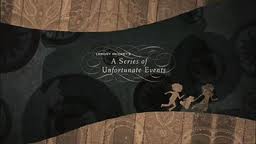
-Lemony Snicket's A Series of Unfortunate Events (2004) for its wonderful, old-school animation that makes you wish the film itself had been filmed that way
-Moulin Rouge! (2001) from being all overly melodramatic -The Adventures of Priscilla, Queen of the Desert (1994) for featuring a drag queen lip-synching to Vanessa Williams and being a perfect conclusion to an outlandish little film
Inglourious Basterds (2009)
Written and Directed By: Quentin Tarantino
There aren't too many movies out there that have had endings that surprised me. I knew the outcome of The Usual Suspects before ever having seen the film. It was the same case with both Se7en and The Shawshank Redemption. While I do remember being surprised by the ending of The Sixth Sense, I don't necessarily consider it a favourite twist. The same goes with Fight Club, which is one of my favourite films of the 1990s, but the ending doesn't stand alone as particularly awesome. It's more cool than shocking.
The most recent surprise twist that came to mind was Quentin Tarantino's Inglourious Basterds. As one of my favourite directors, I always trust Tarantino to bring the goods. When I first heard he was finally bringing this much-delayed script to the silver screen I had never imagined he'd literally change the outcome of the Second World War. Tarantino took revisionist history to a whole new level.
Set aside for a moment the already-surprising double-death face-off between the films heroine, Shoshanna (Melanie Laurent) and Nazi superstar, Frederick Zoller (Daniel Bruhl). I honestly never anticipated that Tarantino would kill off Joseph Goebbels and Adolf Hitler in a hail of bullets and flames in a movie theatre in France. Shoshanna's final act of vengeance against the Nazis coincided with the elaborate Operation Kino, which was under the control of Lt. Aldo Raines (Brad Pitt) and his Basterds. The end result was explosions and raining bullets, killing every person in the theatre (who had gathered to watch Nation's Pride, featuring Frederick's Nazi victory over a troop of Russians), while the image of Shoshanna laughs on the movie screen.
I was already surprised by the fact that Shoshanna died at the hands of her admirer, Frederick. It definitely was a bittersweet moment and I had never anticipated that Shoshanna and Frederick would wind up killing one another, let alone before they could both witness the destruction of the Nazi party. However, it's just like Tarantino to keep his audience on its toes when it comes to the fates of his characters, both good and bad. As it turns out, even historical figures have to watch their backs in a Tarantino feature.
Just when I thought it couldn't get any more outrageous, both plans by Shoshanna and Operation Kino take full effect and kill everyone trapped in the theatre, effectively changing the outcome of the Second World War and ending it well before 1945. In Tarantino's world, we have a young French woman and group of angry Jewish soldiers to thank for the end of the war.
MARLON BRANDO Best Actor: On the Waterfront (1954), The Godfather (1972) Nominated: 8 times (2 wins)
First Became A Fan: After watching The Godfather in 2005. I spent the next few months catching up on as many of his films that I could get my hands on. There are still a few obscure ones I haven't seen; however, I have since caught up on all the essentials and some underrated classics. Favourite Brando Films: The Godfather, A Streetcar Named Desire, On the Waterfront Favourite Brando Performances: Don Vito Corleone in The Godfather, Terry Malloy in On the Waterfront, Stanley Kowalski in A Streetcar Named Desire, Paul in Last Tango in Paris, Mark Antony in Julius Caesar Check Out These Lesser-Known Films I'd Recommend: One-Eyed Jacks (the only film he ever directed), The Fugitive Kind, Viva Zapata!, The Men (although this is currently unavailable on DVD), The Ugly American, The Young Lions.
Marlon Brando's famous ad-libbed scene from Last Tango in Paris. Brando created a childhood for his character, Paul, and Bernardo Bertollucci leaves the camera on his face for the majority of the scene.
BETTE DAVIS Best Actress: Dangerous (1935), Jezebel (1938) Nominated: 10 times (2 wins)
First Became A Fan: At the age of 12 when I saw Whatever Happened to Baby Jane? for the first time. Although I didn't actually start following her career until I was older, I've since caught up on some of her most memorable films. Favourite Davis Films: All About Eve, Now Voyager, Hush Hush Sweet Charlotte, Whatever Happened to Baby Jane?, Dark Victory. Favourite Davis Performances: Jane Hudson in Whatever Happened to Baby Jane?, Margo Channing in All About Eve, Julie Marsden in Jezebel, Charlotte in Now Voyager, Charlotte Hollis in Hush Hush Sweet Charlotte. Check Out These Lesser-Known Films I'd Recommend: Dark Victory, Now Voyager, Hush Hush Sweet Charlotte.
Bette Davis in Jezebel with a really young Henry Fonda. I love their chemistry and Davis is so natural and beautiful in this scene.
Starring: Robin Wright-Penn, Cary Elwes, Mandy Patinkin, Wallace Shawn, Andre the Giant and Chris Sarandon
THE PLOT
Based on the novel by William Goldman, it chronicles the love story between Princess Buttercup (Robing Wright-Penn) and her "farm boy", Wesley (Cary Elwes). Set in a fantasy world that is narrated by Grandpa (Peter Falk), who is trying to distract his sick grandson by reading him The Princess Bride, Buttercup and Wesley must overcome "three poor circus freaks", a vile prince, a six-fingered man and the R.O.U.S. (Rodents of Unusual Size).
WHY I LOVE IT
I didn't even have to stop and think about what film couple would make the cut. I could have chosen something more dramatic or obvious, but none of them compared to this ultimate fantasy couple. This is one of those films from my childhood that gets better with age. I was only 6-years-old when my parents first introduced me to this comic fantasy and I've seen it so many times since that I could probably recite it word for word.
Despite its tone, the love story between Buttercup and Wesley is something I think we all yearn to experience ourselves at some point in our lives, even the most cynical of us.
Their love is flawless, unconditional and, sadly, complete fantasy. However, despite its satirical tones and laugh-out-loud moments, neither Goldman's book nor Reiner's film can disguise the fact that, in both mediums, they've created one of the most ridiculously perfect relationships in literature and film.
The movie is excellent for so many different reasons, yet, despite being nearly overshadowed by larger-than-life secondary characters (like Andre the Giant as Fezzik or the wonderful Mandy Patinkin as one of my favourite film heroes, Inigo Montoya), Robin Wright-Penn and Cary Elwes always manage to turn the audience's attention back to their central love story.
As Mark Knopfler sings in the closing credits, it's a "Storybook Love."
THE JANE AUSTEN EFFECT: A boy and a girl, perfect for one another (naturally), initially dislike one another because they have incorrect information about each other that affects their overall opinions. The audience knows that it's only a matter of time before the two will realize they are perfect for one another and fall in love once the air has been cleared and miscommunications are revealed in a flurry of relieved laughter.
THE PLOT IDEA:
I tend to avoid romantic comedies at all costs. When I say "romantic comedy", I'm not referring to films of the genre that attempt to be unique and actually have something to say about relationships. For example, two superior romantic comedy films are Lost in Translation and, more recently, (500) Days of Summer.
The ones I'm referring to (the ones I will always avoid like a plague) feature the likes of Kate Hudson, Julia Roberts, Katherine Heigl, et al.
I don't usually like to have a prejudice against a certain genre of film, however, I usually feel I'm justified in wanting to see something other than frivolous fluff which solely focuses on women who just want to get married and compete with one another and men who are far too good to be true. Those films tend to feature the aforementioned actresses (and I use that term very loosely).
How is a Jane Austen ending (complete with a wedding or an engagement) any different from a film like Bride Wars, where Kate Hudson and Anne Hathaway will stop at nothing to have a bigger and better wedding than the other, sanity and feminism be damned? As it turns out, there are significant differences.
Austen wrote biting social commentary with a touch of realism, and she dressed it up as romance. She covers the everyday banalities the women of her time experienced. Her novels are pivotal to anyone studying that particular era of British history, where women stayed home waiting to be courted and men came in and out of their lives in between stops to British colonies around the globe.
Austen's heroines are always aware of how ridiculous everything is around them and they tend to shy away from falling into the same traps other women do, regarding men and their station in society. This being late-eighteenth century literature, their reward (for lack of a better word) is a man who actually embraces the quirky, stubborn and spirited person that they are, no questions asked.
These are not light and airy women, these Austen heroines. They revolt against conformity and, despite the conventional endings involving big and extravagant weddings, the reader (or viewer) never forgets that the heroine, whether it be an Elizabeth Bennet or an Emma Woodhouse, retained her identity during a time where it was easier for a woman to hide behind a curtain or her husband's shadow.
WHY I LOVE IT:
Because, deep down, I do love a good romance. I love high drama and misunderstood feelings; a soap opera atmosphere dressed up in sexy historical costumes and English accents. I love that Austen's women are unique, even from one another. They are always complex, educated and headstrong women and, unlike some of the degrading romantic comedies that are thrown at women these days, they don't have to sacrifice their identity.
I love a good love story as much as the next woman, I just prefer to see my women paired up with a man who is their male counterpart and doesn't treat them as a commodity or sex object. Call me crazy, but I love my mushy Austen endings for all their drama and tears. It's satisfying knowing those heroines wound up with great guys without losing themselves in the process.
TOP: Sense and Sensibility (1995, Alan Rickman & Kate Winslet)
MIDDLE: Emma (1996, Gwyneth Paltrow & Jeremy Northam)
BOTTOM: Pride & Prejudice (1995, Colin Firth & Jennifer Ehle)