The Social Network (2010)
Starring: Jesse Eisenberg, Andrew Garfield, Armie Hammer and Justin Timberlake
Directed By: David Fincher
Yes, it has taken me this long to see The Social Network. For the record, I love David Fincher and the fact that he has Aaron Sorkin as his screenwriter makes the film a force to be reckoned with in both the directing and screenplay departments. That's a lethal combo of Hollywood talent. So, why did I only watch The Social Network for the first time last weekend? Because I had a complete lack of interest in watching a movie about the founder of Facebook. I initially thought it was too soon to have a movie about Mark Zuckerberg and the trailer looked dull as tombs.
Set in 2003-04, The Social Network follows the steady rise of Harvard student and computer programming genius, Mark Zuckerberg (Jesse Eisenberg), as he launches a social media revolution within the small confines of his dorm room. As he quickly became America's youngest billionaire, two simultaneous lawsuits against Zuckerberg arise from his former best friend, Eduardo Saverin (Andrew Garfield) and two former business partners and fellow Harvard students, the Winklevoss twins, Cameron and Tyler (both played by Armie Hammer). Both parties claimed Zuckerberg conned them out of money and stole their idea, respectively. Zuckerberg further rankles his former colleagues by befriending and partnering with the cocky co-inventor of Napster, Sean Parker (Justin Timberlake).
Fincher and Sorkin provide ample evidence as to why a movie about Zuckerberg at this specific time is important on many levels. With the world quickly becoming a place where people more often interact with one another using digital technology instead of personal interactions, The Social Network is a timely reminder that even with the advent of Facebook and Twitter obscuring our "confrontations," people still utilize their baser instincts through any means possible. Only now, we have a screen to hide behind. And the screen Zuckerberg hides behind is his genius and his debute of Facebook. When forced to come face-to-face with both of the lawsuits, Zuckerberg clams up and only his arrogant zingers are heard. He expresses boredom with the proceedings, giving off the impression that'd rather be alone in his dark room, improving Facebook. Here's a young man with so few friends that the only way he understands basic human interaction is through a computer screen.
With his "Friend" count on a steady rise on his Facebook profile, Zuckerberg ultimately betrays the one and only true friend he actually had in real life -- Eduardo. Zuckerberg's indifference towards the Winklevoss twins and their claims makes him unlikeable, but his downright cruel treatment of Eduardo is what really sets the audience against him, especially considering it was Eduardo's $18,000 that helped Zuckerberg launch Facebook in the first place. His ultimate act of betrayal against someone like Eduardo, a true gentleman and loyal friend, is made all the more shocking by the fact that it actually happened.
As Zuckerberg, Eisenberg is appropriately arrogant, aggravating and hard to decipher. You never really know what is going on inside his head, although his rumpled attire and ever-present flip-flops suggest someone both pretentious and indifferent to his legal woes. Eisenberg delivers Sorkin's red-hot one liners with both lightning speed and a dark, dry sense of humour. He's smarter than you will ever be and he's not afraid to let you know it. While Eisenberg delivers a solid performance, I still found his portrayal of Zuckerberg to be dangerously close to every other role I've seen him play. I may be in the minority, but I wasn't wowed by Eisenberg in The Social Network. I still think he has a ways to go before he can break out of that smart ass geek man-child role.
It's the supporting cast that really keeps this film afloat. If not for Garfield as Eduardo or Hammer as the Winklevoss twins, the film would have sunk under the weight of extremely unlikeable, spoiled university students. These three characters are the only likeable people in the entire film -- and their decisions to sue Zuckerberg are more than understandable. Garfield, in particular, is excellent. Coming off his wonderful and underrated performance in Never Let Me Go (for which he should have received a Best Supporting Actor nomination), Garfield proves that he's no one-trick pony. As Eduardo, he delivers an understated, nuanced performance and he earns audience sympathy because of both his charm and his ability to effectively convey his bruised feelings after Zuckerberg's betrayal. Here's an actor that Hollywood should keep a close eye on.
Hammer pulls off the duel role of the Winklevoss twins so perfectly, that the majority of the audience (myself included) thought it was actually two people -- real life twin actors. Hammer's ability to create two very different personalities and fool the audience into thinking there are actually two actors on the screen in no easy task. As the supremely unlikeable and irritating Sean Parker, Timberlake proves he can more than hold his own in a big Hollywood film. While not the strongest link in the film, Timberlake has an undeniable screen presence that could turn into something really great one day.
The Social Network is a smart film, thanks to its excellent script and solid performances. The washed-out and grainy visuals that are Fincher's trademark add a dark animosity to the whole proceedings. It's a well-made and timely film. Although not my favourite film of 2010 (I felt it to be a tad overrated and it dragged in some spots), The Social Network is still an important and relevant film. Although its brutal depiction of Zuckerberg likely didn't do the real man any favours, The Social Network is an epic tale of ego and betrayal for today's fast-paced digital age.
FINAL GRADE: B+
Saturday, February 19, 2011
Sunday, February 13, 2011
Movie Review: Winter's Bone
Winter's Bone (2010)
Directed By: Debra Granik
Starring: Jennifer Lawrence and John Hawkes
This Oscar-nominated film has been on the indie circuit for months, touted as a little gem that audiences should make a point of watching. The fact that it was remembered at this years Academy Awards (for Best Picture, Best Actress and Best Supporting Actor) was deemed a testament to its quality. Word-of-mouth and film festival accolades kept up the momentum of Debra Granik's Winter's Bone.
Set in the Ozark Mountains, 17-year-old Ree Dolly (Jennifer Lawrence) must track down her drug-addicted father in order to save the family home. Having posted the family house as collateral for his bail, but nowhere to be found, Ree's father is rumoured to have turned snitch, turning in both his fellow drug dealers and customers to the police. As a result, Ree is met with resistance and violence at every turn as she questions the locals about the whereabouts of her father. Her uncle Teardrop (John Hawkes) steps up to help her in her quest, while also fearing for his own life as well.
The plot is simplistic in tone and structure. It plays it completely straight-forward: what you see is what you get. Granik provides a documentary-style raw quality, using both intimate camera angles and wider shots that allow the audience to see the full extent of poverty and hardship one must endure when living in the Ozarks. In terms of visuals, Winter's Bone has that grainy, blue-hued quality often found in films depicting hardship in poor living conditions and it works well. The frame is filled with discarded trash, broken toys, dirty children and abandoned houses. Nothing is held back. Living there is not easy -- for anyone.
I would imagine that few people in the audience would be able to relate to such a rough-around-the-edges lifestyle, yet nothing about the film allows you to try to understand it or see humanity in it. With the exception of Ree, no one is likeable or even remotely relatable. It feels so very strange and foreign.
Going into Winter's Bone, I expected a film along the lines of True Grit: young girl on a family-related quest and accompanied by an older male. However, very little actually happens in Winter's Bone. Instead of travelling great distances and learning about her strength and independence as a young woman forced to raise her siblings alone, Ree simply goes door-to-door in her neighbouring area. She meets violent thugs and resentful women who all proceed to push her around. When her father's fate is finally revealed to her, Ree doesn't deal with the emotional repercussions. The revelation is dealt with swiftly (albeit somewhat disturbingly), before moving on to the next scene. What have we learned, other than that living in the Ozark Mountains is tough and probably not highly recommended?
This isn't like Lost in Translation, a "film about nothing" that was, on the contrary, quite powerful and lead by two compelling characters. Lost in Translation was actually about quite a lot. Winter's Bone, on the other hand, truly felt like it wasn't about anything. In fact, the only scene that I felt touched a raw nerve was the scene where Ree tries to enlist in the army simply so that she can collect the $40,000 entry reward. She just wants to save her house and feed her younger siblings. She innocently thought she'd be allowed to take her brother and sister with her to an army reserve to train. It's a heartbreaking scene that illustrates how the military can prey on the young and poor to fight their nations' battles. But, this was only one scene and I was left feeling like the rest of film was empty.
Lawrence and Hawkes were both strong in their roles as Ree and Teardrop, respectively, but I would argue that neither are worthy of an Oscar nomination. There were far more powerful and memorable performances this year that were neglected and I couldn't help feeling like their nominations were a bit of a waste. Both are great actors, especially Hawkes, but perhaps they will be in a better film one day that is more worthy of their talents.
Overall, I was left confused as to all the hype surrounding Winter's Bone. I found it average and, ultimately, pointless. The minute the end credits appeared, I thought, 'That was it?' Don't fall for all the accolades, this one is a bit of a dud.
FINAL GRADE: C+
Directed By: Debra Granik
Starring: Jennifer Lawrence and John Hawkes
This Oscar-nominated film has been on the indie circuit for months, touted as a little gem that audiences should make a point of watching. The fact that it was remembered at this years Academy Awards (for Best Picture, Best Actress and Best Supporting Actor) was deemed a testament to its quality. Word-of-mouth and film festival accolades kept up the momentum of Debra Granik's Winter's Bone.
Set in the Ozark Mountains, 17-year-old Ree Dolly (Jennifer Lawrence) must track down her drug-addicted father in order to save the family home. Having posted the family house as collateral for his bail, but nowhere to be found, Ree's father is rumoured to have turned snitch, turning in both his fellow drug dealers and customers to the police. As a result, Ree is met with resistance and violence at every turn as she questions the locals about the whereabouts of her father. Her uncle Teardrop (John Hawkes) steps up to help her in her quest, while also fearing for his own life as well.
The plot is simplistic in tone and structure. It plays it completely straight-forward: what you see is what you get. Granik provides a documentary-style raw quality, using both intimate camera angles and wider shots that allow the audience to see the full extent of poverty and hardship one must endure when living in the Ozarks. In terms of visuals, Winter's Bone has that grainy, blue-hued quality often found in films depicting hardship in poor living conditions and it works well. The frame is filled with discarded trash, broken toys, dirty children and abandoned houses. Nothing is held back. Living there is not easy -- for anyone.
I would imagine that few people in the audience would be able to relate to such a rough-around-the-edges lifestyle, yet nothing about the film allows you to try to understand it or see humanity in it. With the exception of Ree, no one is likeable or even remotely relatable. It feels so very strange and foreign.
Going into Winter's Bone, I expected a film along the lines of True Grit: young girl on a family-related quest and accompanied by an older male. However, very little actually happens in Winter's Bone. Instead of travelling great distances and learning about her strength and independence as a young woman forced to raise her siblings alone, Ree simply goes door-to-door in her neighbouring area. She meets violent thugs and resentful women who all proceed to push her around. When her father's fate is finally revealed to her, Ree doesn't deal with the emotional repercussions. The revelation is dealt with swiftly (albeit somewhat disturbingly), before moving on to the next scene. What have we learned, other than that living in the Ozark Mountains is tough and probably not highly recommended?
This isn't like Lost in Translation, a "film about nothing" that was, on the contrary, quite powerful and lead by two compelling characters. Lost in Translation was actually about quite a lot. Winter's Bone, on the other hand, truly felt like it wasn't about anything. In fact, the only scene that I felt touched a raw nerve was the scene where Ree tries to enlist in the army simply so that she can collect the $40,000 entry reward. She just wants to save her house and feed her younger siblings. She innocently thought she'd be allowed to take her brother and sister with her to an army reserve to train. It's a heartbreaking scene that illustrates how the military can prey on the young and poor to fight their nations' battles. But, this was only one scene and I was left feeling like the rest of film was empty.
Lawrence and Hawkes were both strong in their roles as Ree and Teardrop, respectively, but I would argue that neither are worthy of an Oscar nomination. There were far more powerful and memorable performances this year that were neglected and I couldn't help feeling like their nominations were a bit of a waste. Both are great actors, especially Hawkes, but perhaps they will be in a better film one day that is more worthy of their talents.
Overall, I was left confused as to all the hype surrounding Winter's Bone. I found it average and, ultimately, pointless. The minute the end credits appeared, I thought, 'That was it?' Don't fall for all the accolades, this one is a bit of a dud.
FINAL GRADE: C+
Saturday, February 12, 2011
30 Day Movie Meme: Day 19
This wasn't a hard decision, seeing as The Godfather is both my favourite film and the movie that first introduced me to Marlon Brando. I was a late bloomer, having only seen the film for the first time in 2004, the year of Brando's death. I credit the film, and Brando's performance, with jump-starting my classic film viewing binge for the last six (almost seven) years. It was the first time I realized how remarkable a film can be and how powerful a person's performance. On those occasions when both the film and lead actor are equally worthy of each other, it can solidify a viewer's love for film, as it did mine.
Members of the Mafia don't have my sympathy. They ensure, through their violence and dominance, that corruption will endure. The Mafia wipe out those, big or small, who stand in their way or offend their family's honour. With Francis Ford Coppola's groundbreaking direction and Brando's iconic and influential performance, The Godfather and the character of Don Vito Corleone remain compelling examples of what a thoughtful script and an effective performance can do for a film about an illegal underground operation that maims and kills.
I don't have a lot of love for Michael Corleone because he becomes everything his father was not (but I love Al Pacino in the role!). Vito is a different story. Coppola and Brando managed to convey the life regrets of an aging Don; a once indomitable man who now fears the old adage "the sins of the father are to be laid upon the children." He slowly becomes a broken man as he loses one child ("Look what they did to my boy."), only to have the other follow in his blood-soaked footsteps.
Bette Davis in Whatever Happened to Baby Jane? (1962)
My mom showed this film to my sister and I when we were children. I was probably 10 or 11, at the most. The fact that my mom managed to make two young girls watch a black and white film from the 1960s was a remarkable feat in and of itself, made all the more incredible by the fact that we loved the film so much we'd watch in often enough to recite dialogue. While this isn't necessarily the best Davis film (that would probably go to All About Eve or even Now, Voyager), it's my absolute favourite. Not only was it my introduction to Davis, much like The Godfather introduced me to Brando, but her performance is probably one of my favourites, ever.
Whatever Happened to Baby Jane? is an odd little film, part-horror and part-camp. You don't know whether to laugh or cringe and the fact that it can consistently make you do both is a big part of why I love this film so much. Joan Crawford is wonderful as the wheelchair-bound Blanche, older sister to former child star, Jane (Bette Davis). But make no mistake, this is Davis' film and her performance is outrageous and over-the-top. Those might sound like bad qualities in a performance, but who wants subtlety when you have Davis in your film? She's perfect as the off-her-rocker, crazy-jealous former star who wants nothing more than to regain the glory days of the fleeting fame she experienced as a child.
My favourite scene also conveys the internal conflict of this aging beauty: Jane starts singing a song from her youth she once sang at the peak of her fame. Wearing a dress that is identical to the one adorning the doll version of her younger self, Jane's child-like nature comes through, only to come to an abrupt halt when she looks in the mirror and comes face-to-face with mortality and the passage of time.
Saturday, February 5, 2011
Classic Film Review: Harvey
Harvey (1950)
Directed By: Henry Koster
Based on the Play By: Mary Chase
Starring: Jimmy Stewart, Josephine Hull, Charles Drake and Peggy Dow
"We sit at the bar, have a drink or two, play the jukebox. And soon the faces of all the other people they turn toward mine and they smile. And they say, 'We don't know your name, Mister, but you're a very nice fellow.' Harvey and I warm ourselves in all these golden moments." ~Elwood P. Dowd (Jimmy Stewart)~
Harvey is one of those TCM staples. I've only caught bits and pieces of it on t.v. over the years, but I'd never seen the film in its entirety. Jimmy Stewart is enough to draw me to a film, but I was also intrigued by its unique concept.
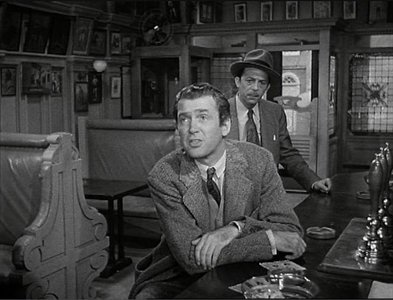
Elwood P. Dowd (Jimmy Stewart) is a soft-spoken, mild-mannered and independently wealthy man. He lives in a mansion with his older sister, Veta Louise (Josephine Hull, who won Best Supporting Actress for her role), and would appear to have everything going for him. However, his sister, Veta, and her daughter, Myrtle Mae (Victoria Horne), are afraid to receive visitors to their home out of humiliation. Elwood has one very close friend who follows him everywhere: a 6 foot 3 rabbit whom Elwood calls Harvey. Elwood openly converses with Harvey, sometimes even guiding his imaginary friend through a door. The two share long drinks together at the local bar. As Elwood calmly explains to those who are willing to listen, Harvey is a pooka; a shape-shifting fairy-like creature from Celtic mythology who can take on the form of any animal and can bend time and predict the future. When Veta schemes to have her brother locked away in an asylum, a misunderstanding with the doctor, Sanderson (Charles Drake), results in Veta's institutionalization instead of Elwood.
Stewart portrays Elwood as the kindest man you're likely to ever meet. Off the top of my head, I can't think of a nicer character ever being captured on film. He's not generous in an unrealistic way; Stewart made sure to instil him with every ounce of humanity and genuine personality he could conjure. Elwood warms even the coldest hearts with his soft voice and lack of judgment. Elwood charms people because he listens to them and appreciates their life stories. Only an actor of Stewart's calibre could have done justice to such a complex character. In the hands of a lesser artist, Elwood could have come off as a naive and misunderstood. Stewart lost the Best Actor Oscar that year (to Jose Ferrer in Cyrano de Bergerac), but it's one of the greatest performances I've seen. It's not an easy task to share half of your scenes with someone who isn't there; yet Stewart made it look so easy, even maintaining eye contact with the empty space in front of him. You can almost feel the actual presence of that rabbit.
It's hard to be in Stewart's shadow, especially in Harvey, but the supporting cast were all strong in their respective roles, especially Josephine Hull as Veta, Charles Drake as Dr. Sanderson and Peggy Dow as the beautiful, young nurse known only as Ms. Kelly. All convey the conflicting emotions of their characters as they struggle to solve the riddle of Elwood and Harvey. As a viewer, it's through these secondary characters that we realize that not everything should be taken at face value. We all want to believe in Harvey, including Veta, who even admits to having seen the rabbit on a couple of occasions. Is this due to Elwood's persuasive nature or is there some truth to his tale?
I had a discussion with someone who didn't like the implication in the film that Harvey is real. I think the film leaves it open to debate, depending on the viewer. Even though a person's perception of reality may be different from yours, it doesn't make it any less a reality. Elwood believes, wholeheartedly, that Harvey is there in front of him. And, for Elwood, that's the truth. As a viewer, you can leave the film thinking Harvey was either real or just a figment of an overactive imagination. But, in the end, does it really matter?
The screenplay, adapted from Mary Chase's 1944 play, is whip-smart and manages to be hilarious, heartbreaking and heartwarming all at the same time. When Elwood is asked why he and Harvey spend so much time listening to other people's trouble, he replies, "They tell about the big, terrible things that they've done and the big, wonderful things they'll do. Their hopes and their regrets, their loves and their hates. All very large, because nobody ever brings anything small into a bar. And then I introduce them to Harvey and he's bigger and grander than anything they offer me and when they leave, they leave impressed. The same people seldom come back, but that's envy, my dear. There's a little bit of envy in the best of us and that's too bad, isn't it?"It's rare to come by fascinating dialogue like that, filled with so much meaning. And to hear Stewart recite these lines make them all the more poignant.
What I admired most about the screenplay was its ability to make the viewer understand that even Elwood himself doesn't understand Harvey's purpose in his life. Despite this, Elwood welcomes Harvey's presence into his life, no questions asked. We are often afraid of what we don't understand, but Elwood makes the best of it and never professes to have all the answers. To him, Harvey just is.
Elwood is gentle and harmless, but he's not considered "normal." The film leaves you wondering what "normal" really means anyway. Elwood's warm nature would have been severely altered had he been injected with the drugs he was threatened with at the institution. And, really, who would want to change a man like Elwood? There's a little bit of madness in us all.
FINAL GRADE: A
Directed By: Henry Koster
Based on the Play By: Mary Chase
Starring: Jimmy Stewart, Josephine Hull, Charles Drake and Peggy Dow
"We sit at the bar, have a drink or two, play the jukebox. And soon the faces of all the other people they turn toward mine and they smile. And they say, 'We don't know your name, Mister, but you're a very nice fellow.' Harvey and I warm ourselves in all these golden moments." ~Elwood P. Dowd (Jimmy Stewart)~
Harvey is one of those TCM staples. I've only caught bits and pieces of it on t.v. over the years, but I'd never seen the film in its entirety. Jimmy Stewart is enough to draw me to a film, but I was also intrigued by its unique concept.
Elwood P. Dowd (Jimmy Stewart) is a soft-spoken, mild-mannered and independently wealthy man. He lives in a mansion with his older sister, Veta Louise (Josephine Hull, who won Best Supporting Actress for her role), and would appear to have everything going for him. However, his sister, Veta, and her daughter, Myrtle Mae (Victoria Horne), are afraid to receive visitors to their home out of humiliation. Elwood has one very close friend who follows him everywhere: a 6 foot 3 rabbit whom Elwood calls Harvey. Elwood openly converses with Harvey, sometimes even guiding his imaginary friend through a door. The two share long drinks together at the local bar. As Elwood calmly explains to those who are willing to listen, Harvey is a pooka; a shape-shifting fairy-like creature from Celtic mythology who can take on the form of any animal and can bend time and predict the future. When Veta schemes to have her brother locked away in an asylum, a misunderstanding with the doctor, Sanderson (Charles Drake), results in Veta's institutionalization instead of Elwood.
Stewart portrays Elwood as the kindest man you're likely to ever meet. Off the top of my head, I can't think of a nicer character ever being captured on film. He's not generous in an unrealistic way; Stewart made sure to instil him with every ounce of humanity and genuine personality he could conjure. Elwood warms even the coldest hearts with his soft voice and lack of judgment. Elwood charms people because he listens to them and appreciates their life stories. Only an actor of Stewart's calibre could have done justice to such a complex character. In the hands of a lesser artist, Elwood could have come off as a naive and misunderstood. Stewart lost the Best Actor Oscar that year (to Jose Ferrer in Cyrano de Bergerac), but it's one of the greatest performances I've seen. It's not an easy task to share half of your scenes with someone who isn't there; yet Stewart made it look so easy, even maintaining eye contact with the empty space in front of him. You can almost feel the actual presence of that rabbit.
It's hard to be in Stewart's shadow, especially in Harvey, but the supporting cast were all strong in their respective roles, especially Josephine Hull as Veta, Charles Drake as Dr. Sanderson and Peggy Dow as the beautiful, young nurse known only as Ms. Kelly. All convey the conflicting emotions of their characters as they struggle to solve the riddle of Elwood and Harvey. As a viewer, it's through these secondary characters that we realize that not everything should be taken at face value. We all want to believe in Harvey, including Veta, who even admits to having seen the rabbit on a couple of occasions. Is this due to Elwood's persuasive nature or is there some truth to his tale?
I had a discussion with someone who didn't like the implication in the film that Harvey is real. I think the film leaves it open to debate, depending on the viewer. Even though a person's perception of reality may be different from yours, it doesn't make it any less a reality. Elwood believes, wholeheartedly, that Harvey is there in front of him. And, for Elwood, that's the truth. As a viewer, you can leave the film thinking Harvey was either real or just a figment of an overactive imagination. But, in the end, does it really matter?
The screenplay, adapted from Mary Chase's 1944 play, is whip-smart and manages to be hilarious, heartbreaking and heartwarming all at the same time. When Elwood is asked why he and Harvey spend so much time listening to other people's trouble, he replies, "They tell about the big, terrible things that they've done and the big, wonderful things they'll do. Their hopes and their regrets, their loves and their hates. All very large, because nobody ever brings anything small into a bar. And then I introduce them to Harvey and he's bigger and grander than anything they offer me and when they leave, they leave impressed. The same people seldom come back, but that's envy, my dear. There's a little bit of envy in the best of us and that's too bad, isn't it?"It's rare to come by fascinating dialogue like that, filled with so much meaning. And to hear Stewart recite these lines make them all the more poignant.
What I admired most about the screenplay was its ability to make the viewer understand that even Elwood himself doesn't understand Harvey's purpose in his life. Despite this, Elwood welcomes Harvey's presence into his life, no questions asked. We are often afraid of what we don't understand, but Elwood makes the best of it and never professes to have all the answers. To him, Harvey just is.
Elwood is gentle and harmless, but he's not considered "normal." The film leaves you wondering what "normal" really means anyway. Elwood's warm nature would have been severely altered had he been injected with the drugs he was threatened with at the institution. And, really, who would want to change a man like Elwood? There's a little bit of madness in us all.
FINAL GRADE: A
Tuesday, February 1, 2011
Hollywood Tidbits: Some Like It Hot (Part II)
The continuation from my previous entry on Tony Curtis' The Making of Some Like It Hot (2009).
One of my friends asked that I post some more bite-size quotes from the book (which I've almost completed).
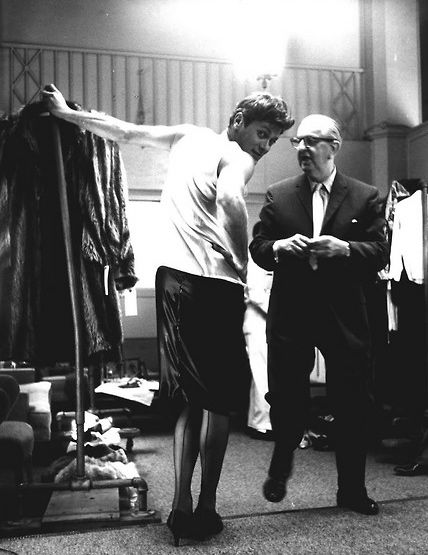
* How Tony Curtis managed long hours on the set without taking washroom breaks: “I put my thinking cap on and built a funnel-and-hose thing. It went around my thigh, down the inner side of one leg, and was hidden inside the silk stocking that I was wearing. I didn’t have to stand up or sit down. It wasn’t all that comfortable, but it worked. I should have taken out a patent on it …One day Jack (Lemmon) caught me in the men’s room. I was adjusting the thing. 'What the fuck are you doing?' he asked. 'Never mind,' I answered. 'I’m inventing something.' I didn’t tell him because he might judge me. He was kind of conservative in an odd way." (p. 82)
* Billy Wilder and his perfectionism: “I remember the scene in Poliakoff’s office, the agency where Jack and I are scrounging for work. Jack got excited, and after finishing a speech with the line ‘Now you’re talking,’ he repeated the line. Billy froze. ‘That’s not how the speech reads,’ he said. Jack pleaded. It felt right to him to say the line twice. Billy walked over to Izzy (co-screenwriter I.A.L. Diamond), who was sitting a short distance away. They started talking in low tones. This went on for close to half an hour. He finally came back to us. ‘Okay, you can repeat it,’ he said solemnly." (p. 111)
One of my friends asked that I post some more bite-size quotes from the book (which I've almost completed).
* How Tony Curtis managed long hours on the set without taking washroom breaks: “I put my thinking cap on and built a funnel-and-hose thing. It went around my thigh, down the inner side of one leg, and was hidden inside the silk stocking that I was wearing. I didn’t have to stand up or sit down. It wasn’t all that comfortable, but it worked. I should have taken out a patent on it …One day Jack (Lemmon) caught me in the men’s room. I was adjusting the thing. 'What the fuck are you doing?' he asked. 'Never mind,' I answered. 'I’m inventing something.' I didn’t tell him because he might judge me. He was kind of conservative in an odd way." (p. 82)
* Marilyn Monroe once took 81 takes before nailing a scene which required her to speak only one simple line - 'Where's that bourbon?' - She directed her frustration at Billy Wilder: "Jack and I were like two bad little kids in school. We wanted to laugh out loud so badly, but we had to turn away and do it into our hands. It was fucking outrageous. Next Billy tried putting cue cards inside the drawers. Even that didn't help. But he had to get the shot. There was no way to cut around it. I wish I'd bet a thousand dollars on eighty takes. It took eighty-one. 'I swallowed my pride,' recalled Billy. 'If she showed up, she delivered, and if it took eighty takes, I lived with eighty takes, because the eighty-first was very good.' Cut. Print. Faint." (p. 167).
* Curtis always seemed to be in awe of Jack Lemmon: "I was delighted to have Jack as a costar. He could be theatrical without worrying if he was making a fool of himself. He was comfortable in his own skin. That giggle he did as Daphne wasn't just clever. It was brilliant. Jack didn't mention his personal life at work. We both came from a certain tradition. When you were on the job, you never discussed politics, religion, family or sex. It just wasn't done in those days. But when I saw him at Hollywood parties, he had a glass of whiskey in his hand and he was more forthcoming ...A lot of men who are gentle need to drink because they're embarrassed about not being cavemen. That's my theory, anyway." (p. 159)
++ I find this passage really interesting because, if you've read the book, it's yet another example of Curtis being literally in awe of Lemmon's ability as both a comedic actor and as a human being. Curtis rarely wrote about Lemmon in The Making of Some Like It Hot (he tended to focus more on Monroe and Wilder), but when he did mention Lemmon, it was always respectful and tasteful. Curtis denied being jealous of Lemmon's talent but I wonder how true that really was because of how he writes about Lemmon -- both praising him and also pushing him into the background in favour of Monroe and Wilder. One thing I think Curtis does convey really well is the simple fact that Jack Lemmon was a class act. And Hollywood doesn't make them like that anymore.
Thursday, January 27, 2011
Hollywood Tidbits: Some Like It Hot
My obsession with Some Like It Hot continues, one year later.
I got the late, great Tony Curtis' last book, The Making of Some Like It Hot: My Memories of Marilyn Monroe and the Classic American Movie for Christmas. I started reading it this morning and I haven't been able to put it down.
Curtis had a really simple, engaging style of writing. It's more conversational -- like he's narrating this high point in his film career directly onto the page.
There are those (film critics, celebrities and the general public) who label Curtis as an outright liar and paint him as an opportunistic man prone to exaggeration. Did he or did he not impregnate Marilyn Monroe? Did they really have a torrid, top secret romance? Curtis says yes, while others point out that Monroe isn't around to tell her side of the story. Nor is the film's director Billy Wilder or his co-star Jack Lemmon. Curtis wrote his book in 2009, many, many years after the deaths of Monroe, Lemmon and Wilder (and a year before his own).
Regardless, I take everything Curtis wrote with a grain of salt. I know to make sure I don't fall into any traps as I read The Making of Some Like It Hot. But damned if the man doesn't spin a great behind-the-scenes yarn. I'm a sucker for those largely unknown Hollywood dramas that often played out in between takes, I'm only 60 pages into the book, but here are some interesting (and likely true) tidbits in this gospel according to Curtis:
* He was once roommates with Marlon Brando for four months: "I respected him. But I wasn't interested in the Method. He was great because he was Marlon, not because of the Method. I thought it was phoney. Why complicate the job of acting? Memorize your lines. Learn the part. Find out what the director wants. Then show up on time and act. This idea of trying to remember when your sister stole your peanut butter sandwich so you can give an angry performance is bullshit. If you can't turn it on by yourself, you don't belong in front of the camera." (p.39)
++ An interesting commentary on the much respected Method acting technique (introduced by Brando), to say the least.
* Marilyn Monroe's intelligence: "Marilyn was not unintelligent. She was bright, perceptive and insightful -- but only about other people. When it came to herself, or to issues relating to herself, she didn't have a clue. She needed constant reassurance." (p.39)
* His first encounter with Marilyn: "We walked to my car and I opened the door for her. I got behind the wheel, drove out the gate, and turned left, heading for Hollywood. I angled the review mirror a little so I could see her face. To my surprise she winked at me. We laughed." (p.31)
* The first time he and Jack Lemmon walked in front of the cast and crew dressed as women: "I blushed under the makeup and let the actor in me take over. I launched into a little routine. I was coy. I was reluctant ...When Jack came out he did it in a big way. He was in character as Daphne. He flew out, twirling and pirouetting. He danced ...I just stared. How the fuck could he do that? I was envious, but it was the first and last time. I loved the guy." (p. 59)
I got the late, great Tony Curtis' last book, The Making of Some Like It Hot: My Memories of Marilyn Monroe and the Classic American Movie for Christmas. I started reading it this morning and I haven't been able to put it down.
Curtis had a really simple, engaging style of writing. It's more conversational -- like he's narrating this high point in his film career directly onto the page.
There are those (film critics, celebrities and the general public) who label Curtis as an outright liar and paint him as an opportunistic man prone to exaggeration. Did he or did he not impregnate Marilyn Monroe? Did they really have a torrid, top secret romance? Curtis says yes, while others point out that Monroe isn't around to tell her side of the story. Nor is the film's director Billy Wilder or his co-star Jack Lemmon. Curtis wrote his book in 2009, many, many years after the deaths of Monroe, Lemmon and Wilder (and a year before his own).
Regardless, I take everything Curtis wrote with a grain of salt. I know to make sure I don't fall into any traps as I read The Making of Some Like It Hot. But damned if the man doesn't spin a great behind-the-scenes yarn. I'm a sucker for those largely unknown Hollywood dramas that often played out in between takes, I'm only 60 pages into the book, but here are some interesting (and likely true) tidbits in this gospel according to Curtis:
* He was once roommates with Marlon Brando for four months: "I respected him. But I wasn't interested in the Method. He was great because he was Marlon, not because of the Method. I thought it was phoney. Why complicate the job of acting? Memorize your lines. Learn the part. Find out what the director wants. Then show up on time and act. This idea of trying to remember when your sister stole your peanut butter sandwich so you can give an angry performance is bullshit. If you can't turn it on by yourself, you don't belong in front of the camera." (p.39)
++ An interesting commentary on the much respected Method acting technique (introduced by Brando), to say the least.
* Marilyn Monroe's intelligence: "Marilyn was not unintelligent. She was bright, perceptive and insightful -- but only about other people. When it came to herself, or to issues relating to herself, she didn't have a clue. She needed constant reassurance." (p.39)
* His first encounter with Marilyn: "We walked to my car and I opened the door for her. I got behind the wheel, drove out the gate, and turned left, heading for Hollywood. I angled the review mirror a little so I could see her face. To my surprise she winked at me. We laughed." (p.31)
* The first time he and Jack Lemmon walked in front of the cast and crew dressed as women: "I blushed under the makeup and let the actor in me take over. I launched into a little routine. I was coy. I was reluctant ...When Jack came out he did it in a big way. He was in character as Daphne. He flew out, twirling and pirouetting. He danced ...I just stared. How the fuck could he do that? I was envious, but it was the first and last time. I loved the guy." (p. 59)
Sunday, January 23, 2011
Movie Review: Somewhere
Somewhere (2010)
Starring: Stephen Dorff and Elle Fanning
Written and Directed By: Sophia Coppola
This was one of my most-anticipated films of 2010. I love Sophia Coppola. I think Lost in Translation (2003) is one of the best films of the 2000s. It may be hard for her to top what she managed to achieve with that film. I also thought The Virgin Suicides (1999) was an excellent directorial debut and I even enjoyed Marie Antoinette (2006) even though there are many who despised it.
Somewhere is Coppola's most self-indulgent film. It has long, monotonous scenes of nothing. As a result, the viewer is left with an acute understanding of the point she is trying to make while getting a little restless at the same time. Take for example the opening scene. Hollywood actor Johnny Marco (Stephen Dorff) drives his expensive (and loud) car around and around in endless circles on a sunny, dusty patch of land in L.A. County. The car circles the entire track at least four times before coming to a stop. Coppola has made her point -- Johnny Marco is aimless, restless and is quickly going nowhere in life. However, it is at the expense of her audience who may become detached and alienated right from the long opening scene.
That being said, Coppola has this knack for exploring an atmosphere. That talent is on full display in Somewhere. Like her previous films, Somewhere is less a cohesive narrative and more of a series of vignettes that allow the viewer a glimpse into the lives of Johnny and his 11-year-old daughter, Cleo (Elle Fanning). The atmosphere on full display is the small bubble Johnny lives in -- which consists of an endless stream of parties and publicity junkets, his near-empty room at the infamous Chateau Marmont and his aimless drives around Hollywood. When Cleo comes to stay with him for a few weeks because her mother needs "time off," Johnny and Cleo embark on a series of little "get-to-know-you" father-daughter bonding moments. Whether spending time together in their massive hotel suite in Italy or simply playing ping-pong near the Chateau Marmont swimming pool, Cleo suddenly provides meaning and purpose to Johnny's life. Sometimes a person's happiness, whether you are rich or poor, can be as simple as having a loving companion at your side.
Somewhere has a very European minimalism feel to its construction. It felt French, if that makes any sense. That minimalist approach isolates Johnny and Cleo in this vapid Hollywood environment. Despite that setting, there is nothing vapid or Hollywood about their bonding experiences. The film excels most when the two lead actors are on the screen together.
Coppola had Dorff and Fanning hang out alone together for weeks leading up to the start of filming. That tactic paid off as the two of them have an undeniable and completely believable chemistry. Johnny treats Cleo less like a daughter and more like an equal partner, suggesting that while Johnny may not have natural paternal instincts when it comes to discipline (he takes Cleo gambling in Las Vegas), he loves his daughter. In a film of long, aimless scenes, it's the performances of Dorff and Fanning that keep the viewer invested in movie. Dorff may not be the most interesting actor, but he does a solid job in Somewhere -- based on his own stalled Hollywood career, Dorff is perfectly cast in the role. However, Fanning is the real star here -- she's an adorable, talented and pretty young woman who is a dozen times more charming than her precocious, overrated older sister, Dakota. I have an appreciation for child actors who actually act like the children they are in their roles, instead of going the wise-beyond-their-years route. Fanning gives a subtle, nuanced performance that is so good that I hope she gets a Best Supporting Actress nod at the Oscars. Her scenes with Dorff and Chris Pontius (the Jackass star plays Johnny's stoner buddy, Sammy) are the highlights of the film.
In the end, Somewhere feels a little hit and miss. While there were some genuinely moving scenes there were also times when I simply just wanted to know a bit more about Johnny and Cleo. I wanted at least one stand-alone scene where they come to terms with one another, as Charlotte and Bob did a few times in Lost in Translation. What was their relationship like before this extended bonding period? How does Johnny really feel about his fame? We know that he's depressed and lonely and isolated in his hotel room, but we don't know when or why those feelings started. That being said, Coppola tends to leave things unsaid -- it's up to the viewer to read into the characters' actions and decide for themselves. Sophia Coppola has never disappointed, though. She remains a unique voice in the world of Hollywood, choosing to quietly focus on people instead of cars, money or extended action sequences.
FINAL GRADE: B
Starring: Stephen Dorff and Elle Fanning
Written and Directed By: Sophia Coppola
This was one of my most-anticipated films of 2010. I love Sophia Coppola. I think Lost in Translation (2003) is one of the best films of the 2000s. It may be hard for her to top what she managed to achieve with that film. I also thought The Virgin Suicides (1999) was an excellent directorial debut and I even enjoyed Marie Antoinette (2006) even though there are many who despised it.
Somewhere is Coppola's most self-indulgent film. It has long, monotonous scenes of nothing. As a result, the viewer is left with an acute understanding of the point she is trying to make while getting a little restless at the same time. Take for example the opening scene. Hollywood actor Johnny Marco (Stephen Dorff) drives his expensive (and loud) car around and around in endless circles on a sunny, dusty patch of land in L.A. County. The car circles the entire track at least four times before coming to a stop. Coppola has made her point -- Johnny Marco is aimless, restless and is quickly going nowhere in life. However, it is at the expense of her audience who may become detached and alienated right from the long opening scene.
That being said, Coppola has this knack for exploring an atmosphere. That talent is on full display in Somewhere. Like her previous films, Somewhere is less a cohesive narrative and more of a series of vignettes that allow the viewer a glimpse into the lives of Johnny and his 11-year-old daughter, Cleo (Elle Fanning). The atmosphere on full display is the small bubble Johnny lives in -- which consists of an endless stream of parties and publicity junkets, his near-empty room at the infamous Chateau Marmont and his aimless drives around Hollywood. When Cleo comes to stay with him for a few weeks because her mother needs "time off," Johnny and Cleo embark on a series of little "get-to-know-you" father-daughter bonding moments. Whether spending time together in their massive hotel suite in Italy or simply playing ping-pong near the Chateau Marmont swimming pool, Cleo suddenly provides meaning and purpose to Johnny's life. Sometimes a person's happiness, whether you are rich or poor, can be as simple as having a loving companion at your side.
Somewhere has a very European minimalism feel to its construction. It felt French, if that makes any sense. That minimalist approach isolates Johnny and Cleo in this vapid Hollywood environment. Despite that setting, there is nothing vapid or Hollywood about their bonding experiences. The film excels most when the two lead actors are on the screen together.
Coppola had Dorff and Fanning hang out alone together for weeks leading up to the start of filming. That tactic paid off as the two of them have an undeniable and completely believable chemistry. Johnny treats Cleo less like a daughter and more like an equal partner, suggesting that while Johnny may not have natural paternal instincts when it comes to discipline (he takes Cleo gambling in Las Vegas), he loves his daughter. In a film of long, aimless scenes, it's the performances of Dorff and Fanning that keep the viewer invested in movie. Dorff may not be the most interesting actor, but he does a solid job in Somewhere -- based on his own stalled Hollywood career, Dorff is perfectly cast in the role. However, Fanning is the real star here -- she's an adorable, talented and pretty young woman who is a dozen times more charming than her precocious, overrated older sister, Dakota. I have an appreciation for child actors who actually act like the children they are in their roles, instead of going the wise-beyond-their-years route. Fanning gives a subtle, nuanced performance that is so good that I hope she gets a Best Supporting Actress nod at the Oscars. Her scenes with Dorff and Chris Pontius (the Jackass star plays Johnny's stoner buddy, Sammy) are the highlights of the film.
In the end, Somewhere feels a little hit and miss. While there were some genuinely moving scenes there were also times when I simply just wanted to know a bit more about Johnny and Cleo. I wanted at least one stand-alone scene where they come to terms with one another, as Charlotte and Bob did a few times in Lost in Translation. What was their relationship like before this extended bonding period? How does Johnny really feel about his fame? We know that he's depressed and lonely and isolated in his hotel room, but we don't know when or why those feelings started. That being said, Coppola tends to leave things unsaid -- it's up to the viewer to read into the characters' actions and decide for themselves. Sophia Coppola has never disappointed, though. She remains a unique voice in the world of Hollywood, choosing to quietly focus on people instead of cars, money or extended action sequences.
FINAL GRADE: B
Subscribe to:
Posts (Atom)